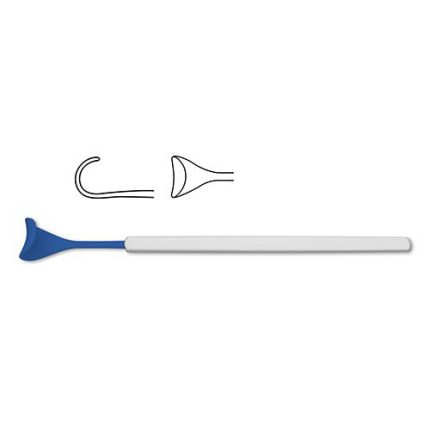
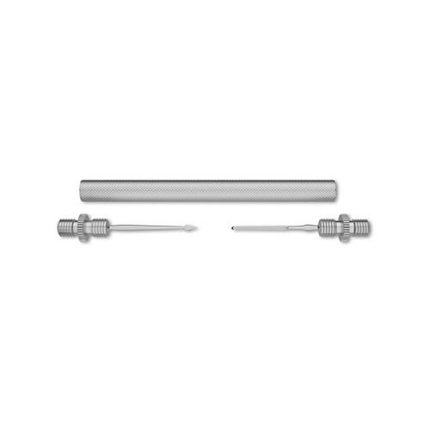
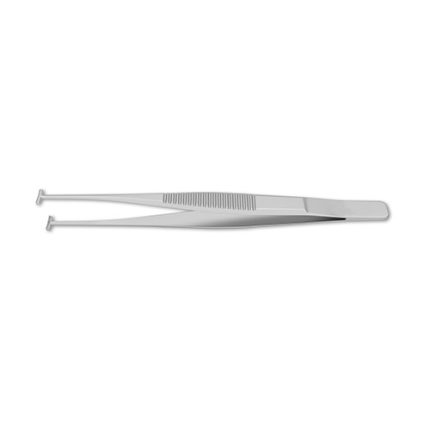
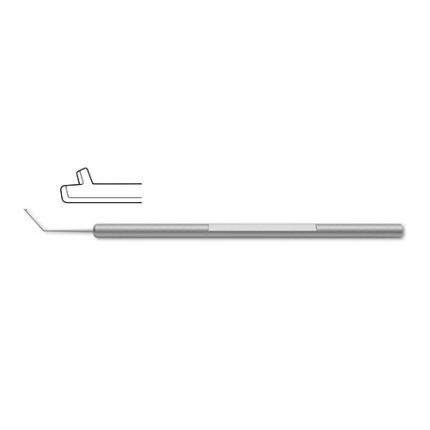
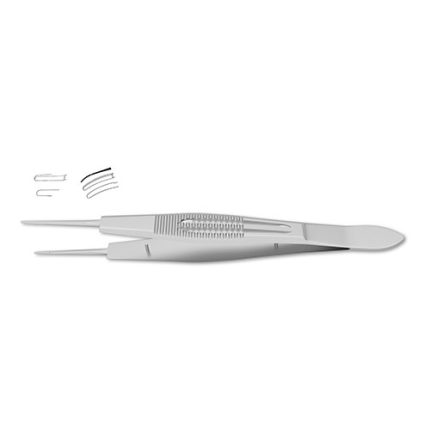
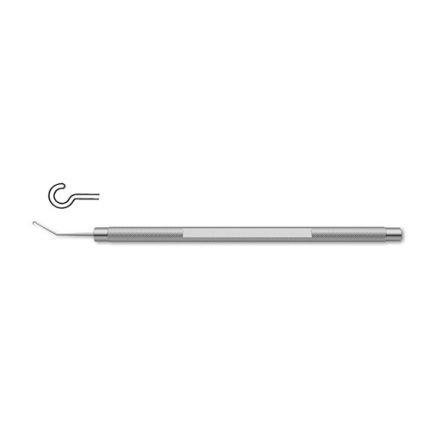
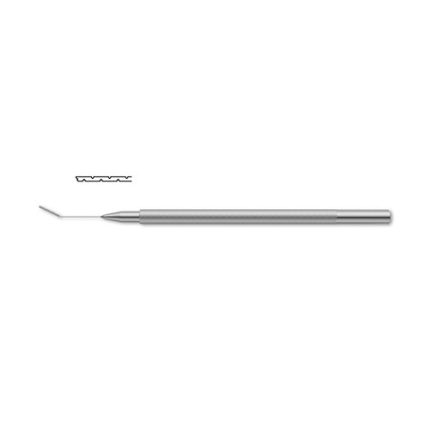
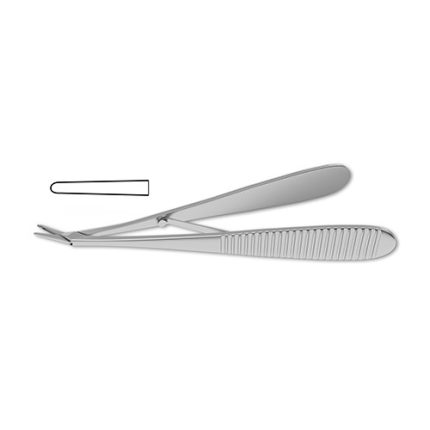
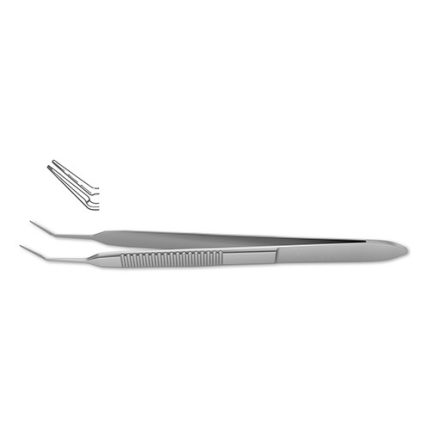
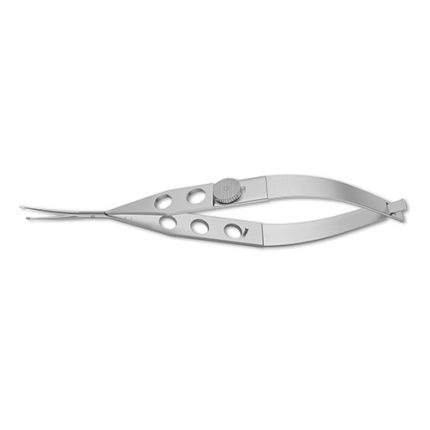
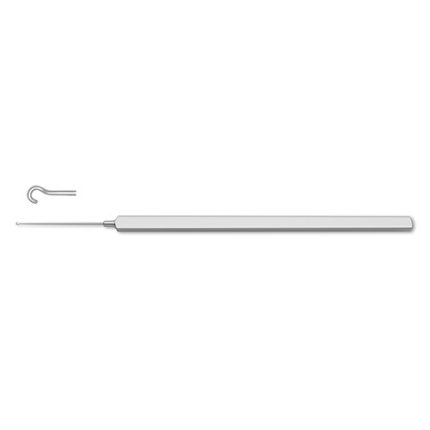
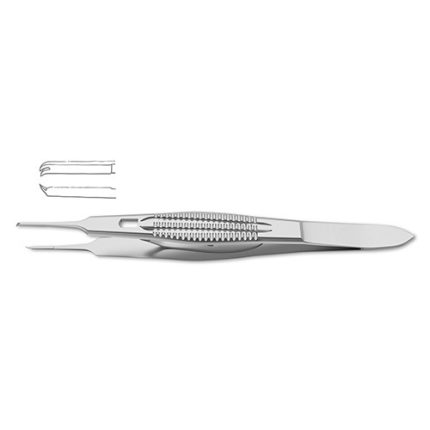
Skip to content
-
-
- Scissors
-
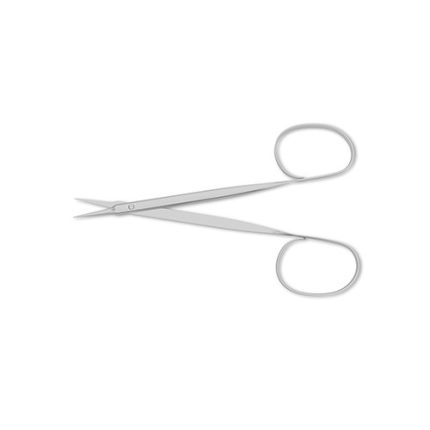
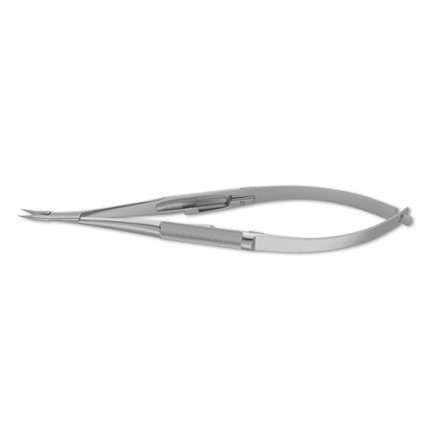
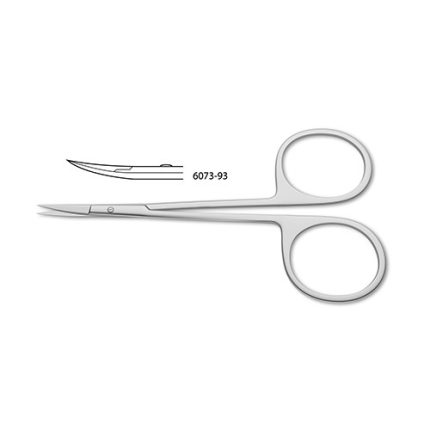
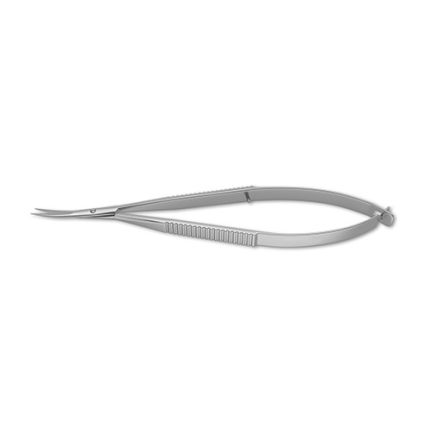
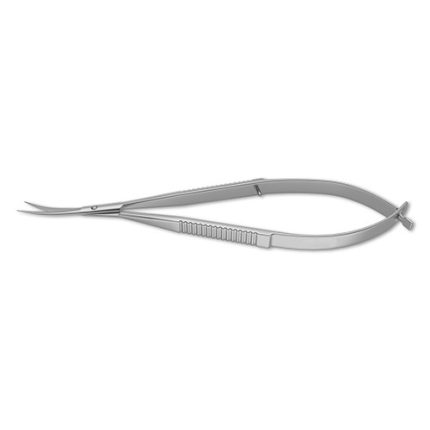
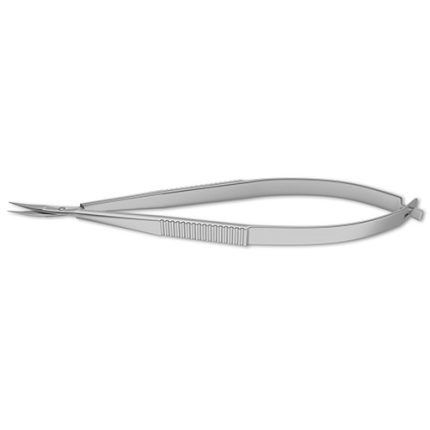
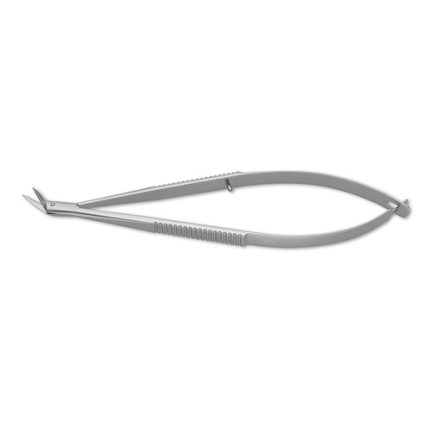
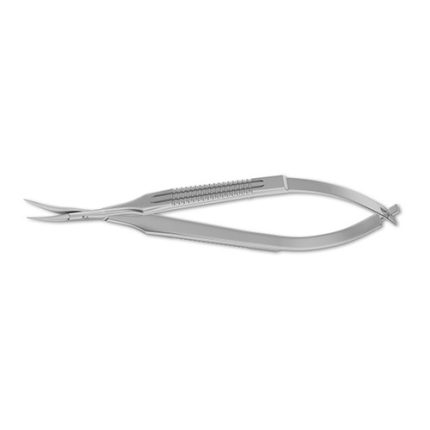
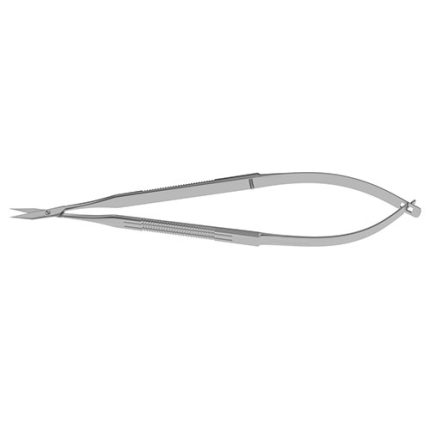
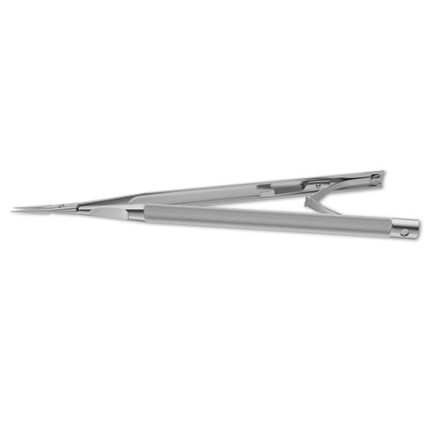
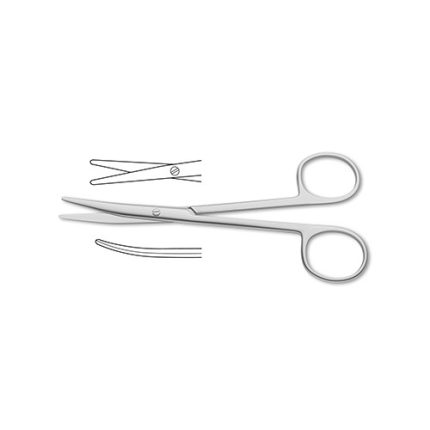
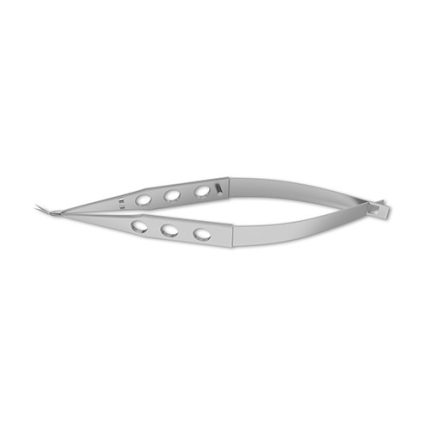
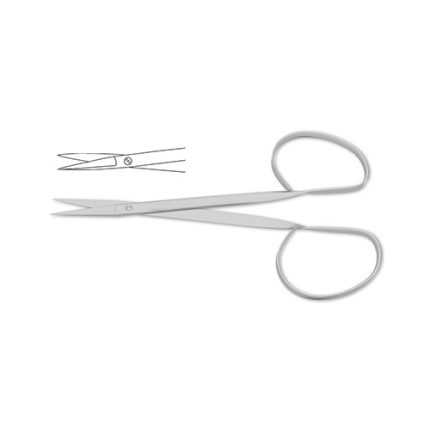
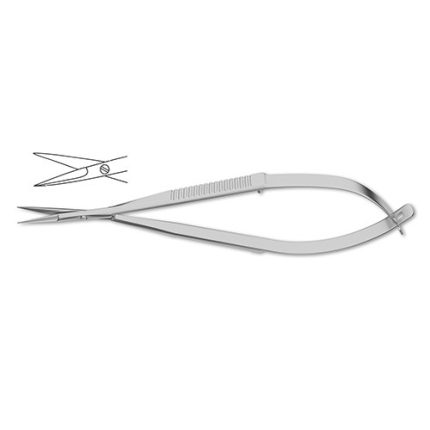
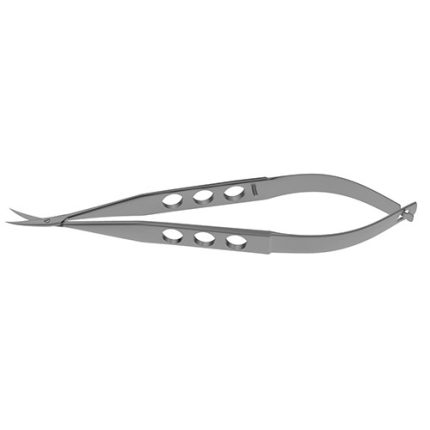
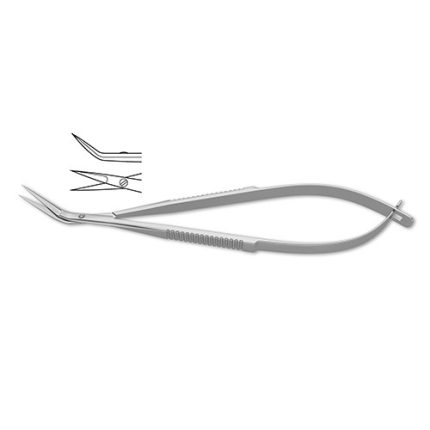
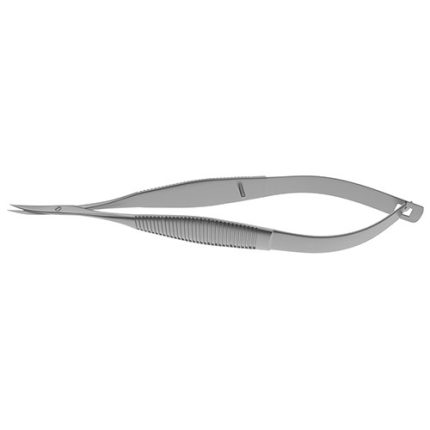
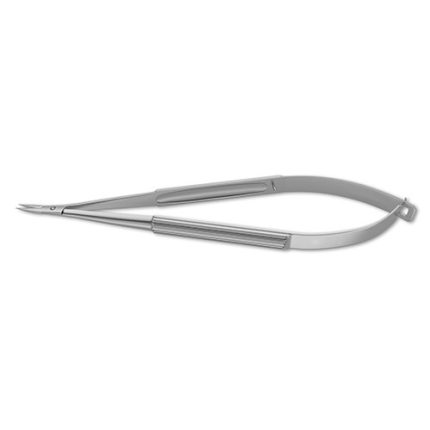
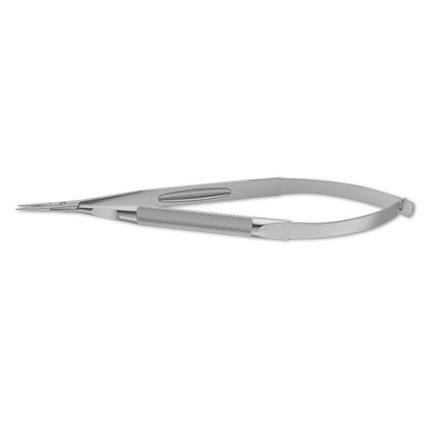
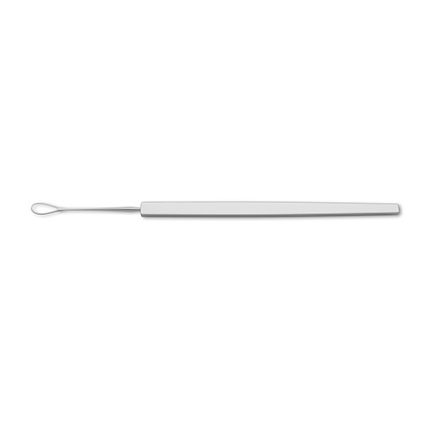
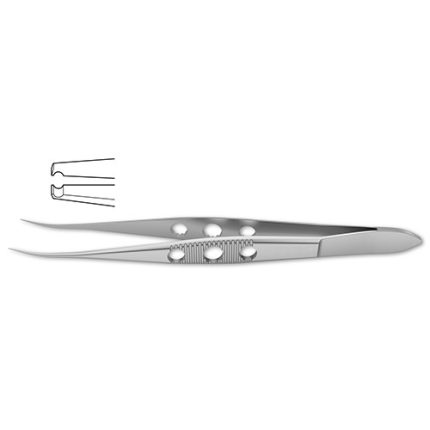
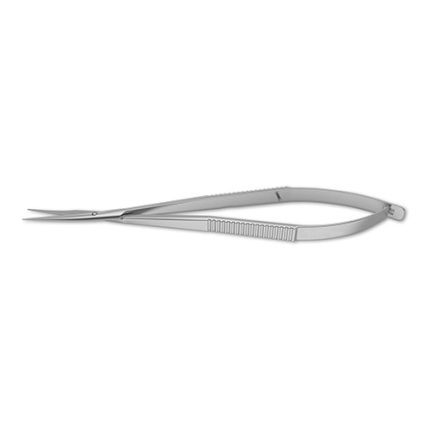
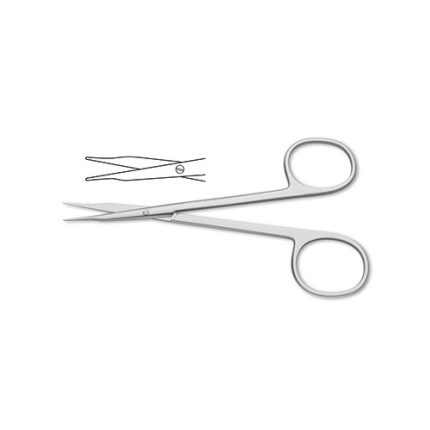
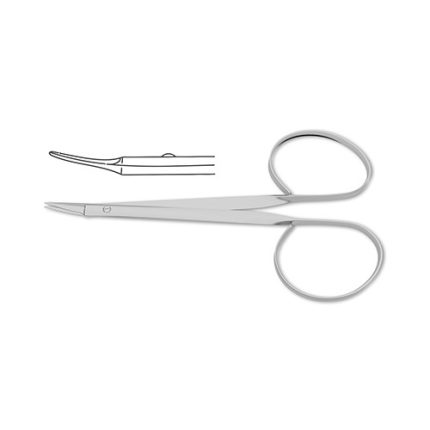
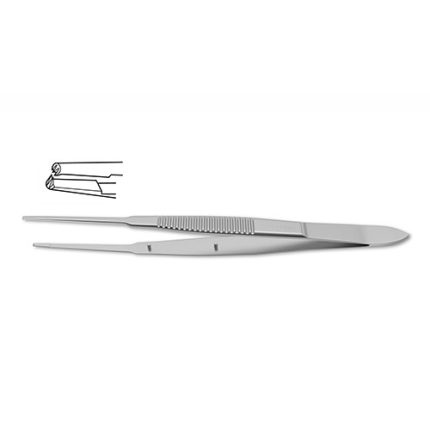
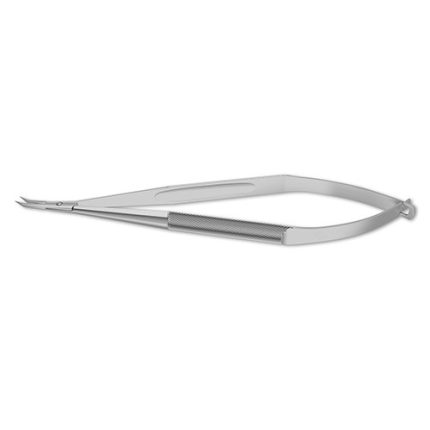
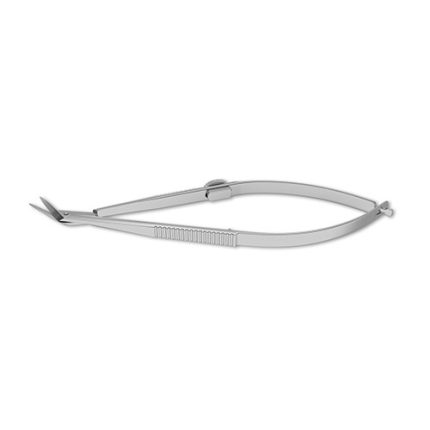
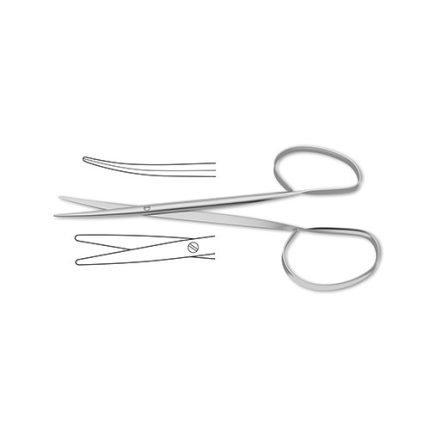
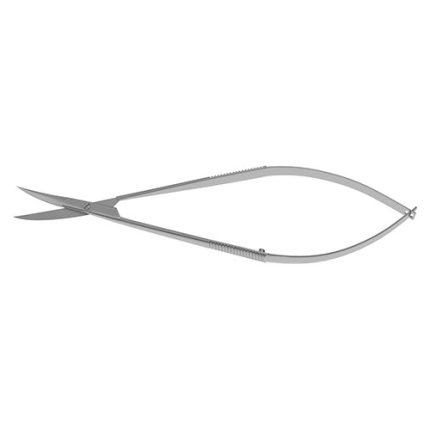
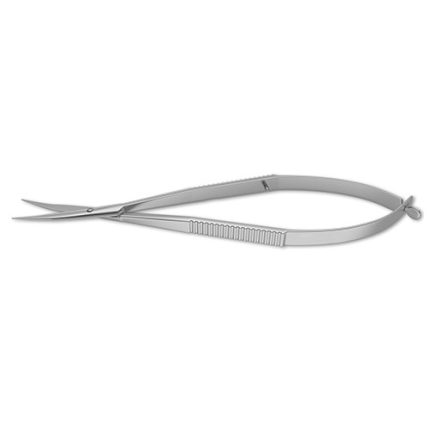
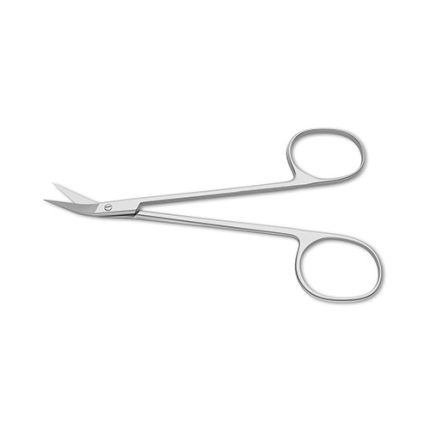
- large ribbon ring handles with flat shanks, smooth rounded blades, 4" (10.0 cm)?Aebli Corneal Scissors are a multipurpose tool used in a variety ophthalmologic operations. The scissors may be used to excise the insertion of the extra-ocular muscles. The large ribbon handles combined with smooth rounded blades ensure a flush cut on the ocular surface. The scissors are available in…
- Read more
-
-
- Scissors
-
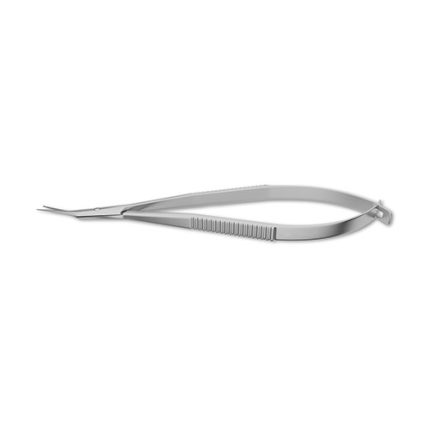
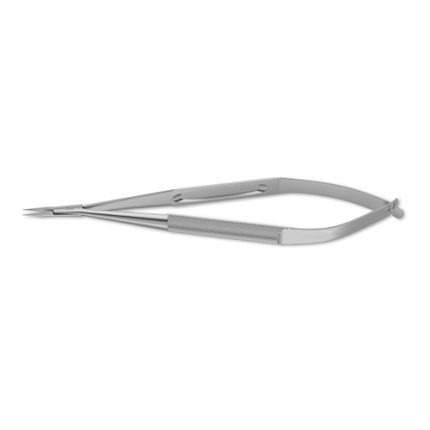
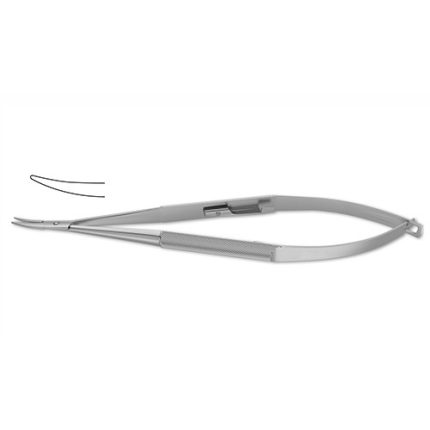
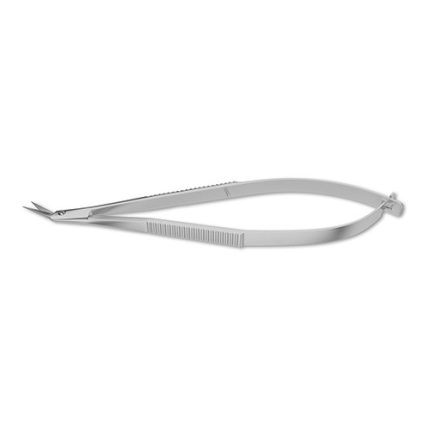
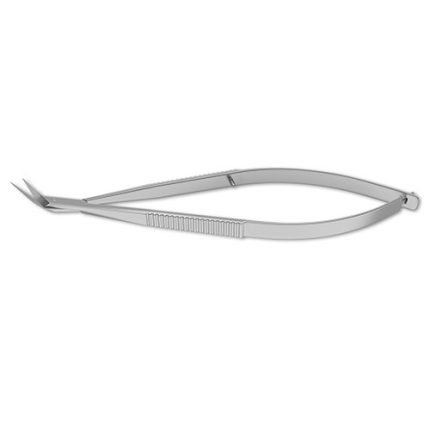
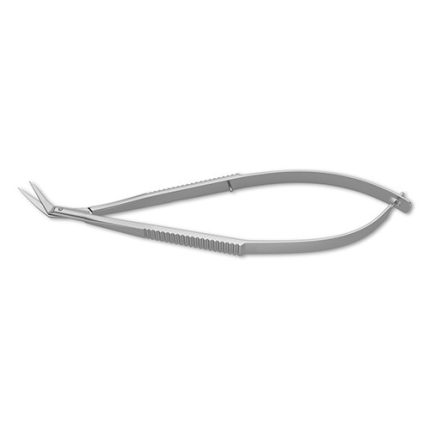
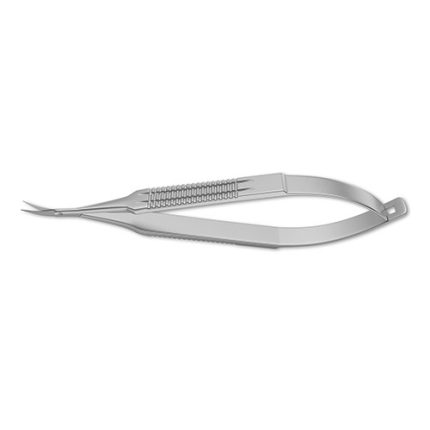
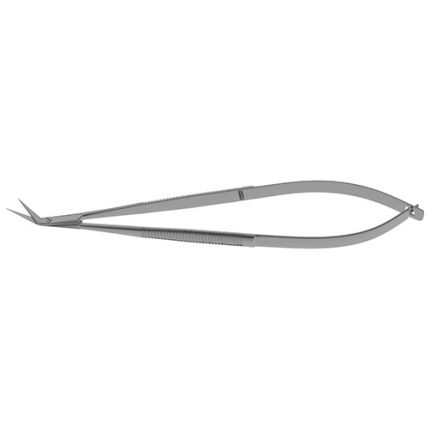
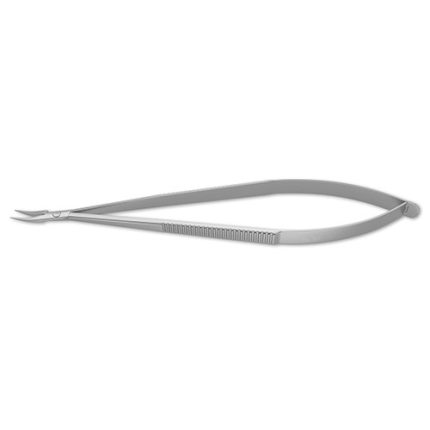
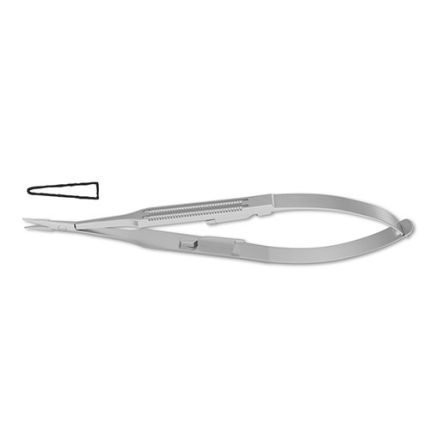
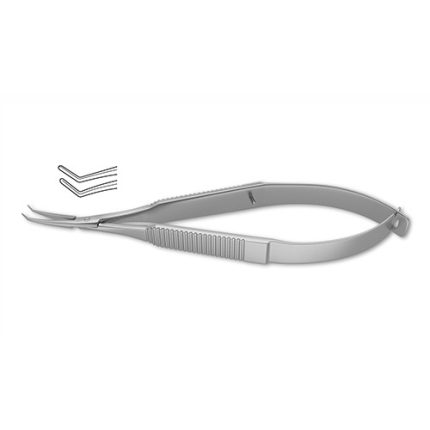
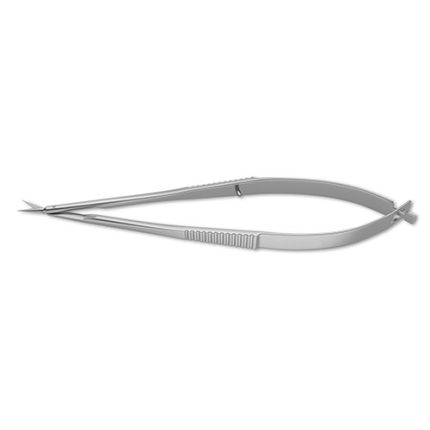
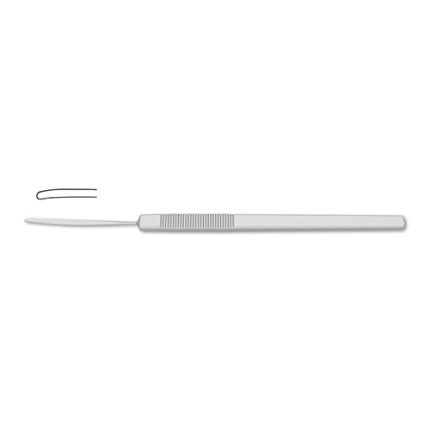
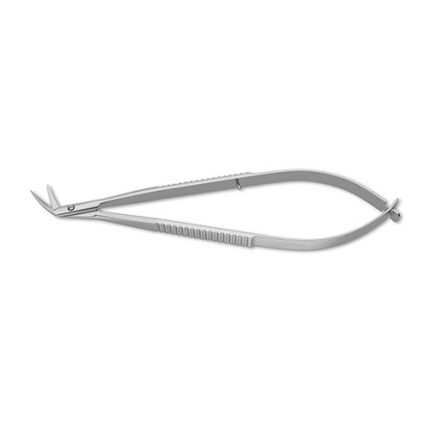
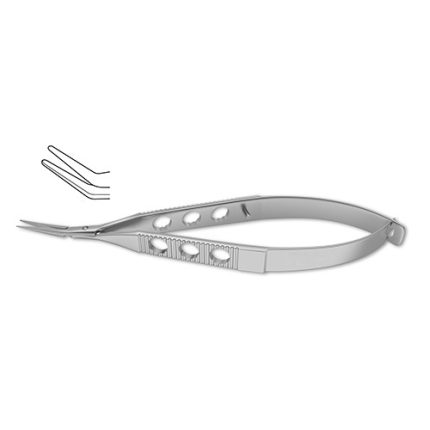
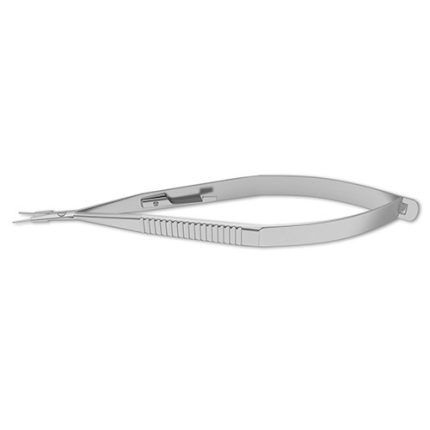
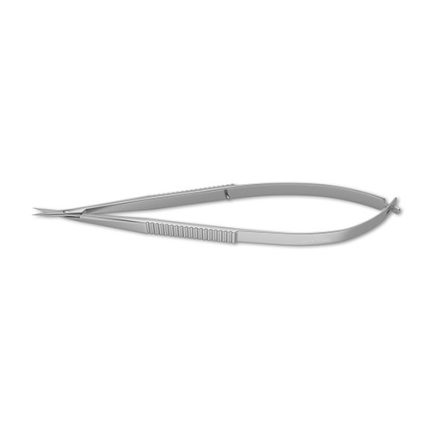
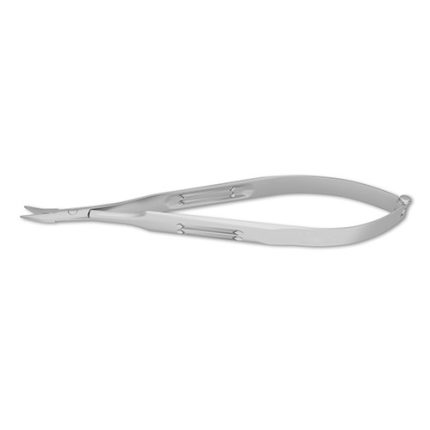
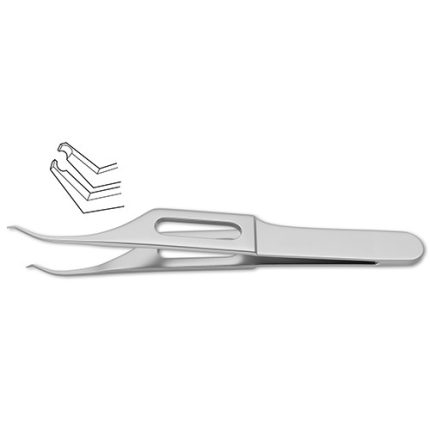
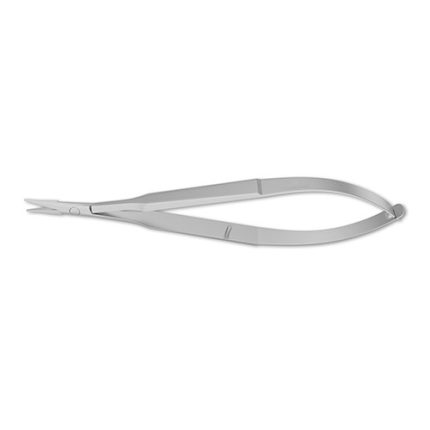
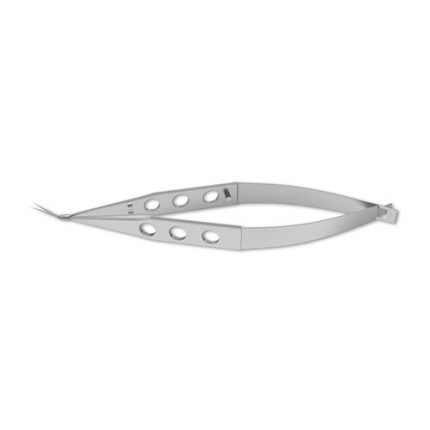
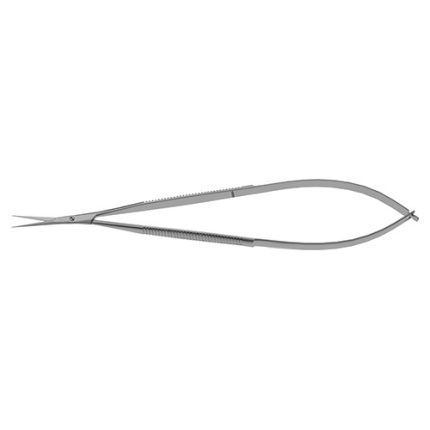
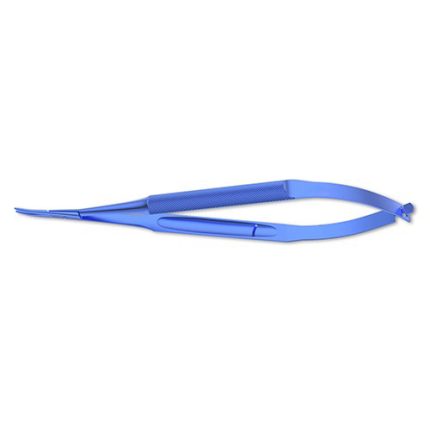
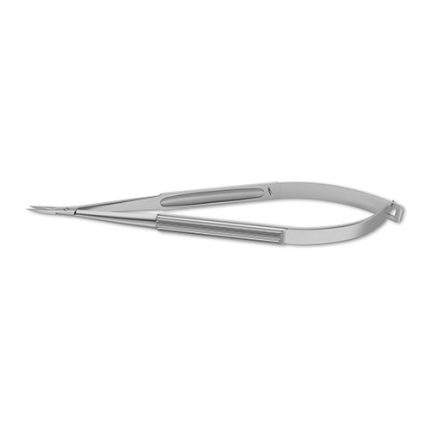
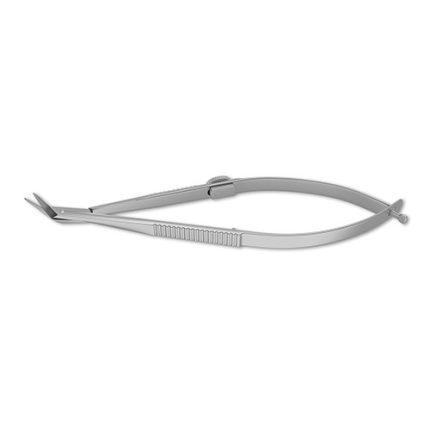
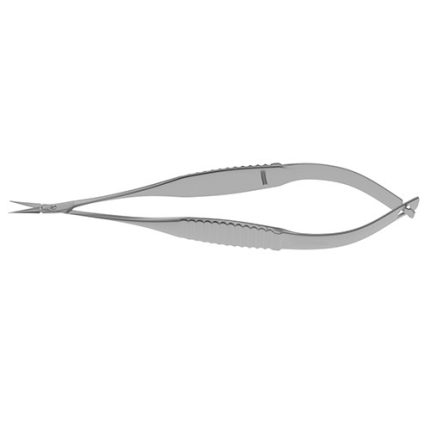
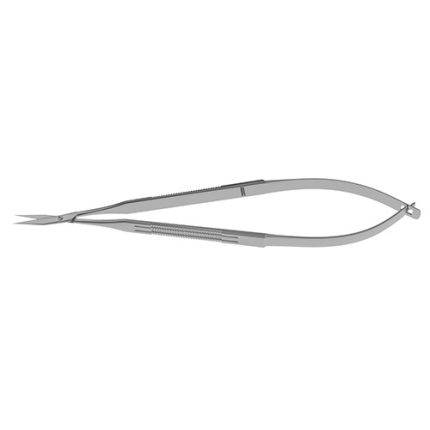
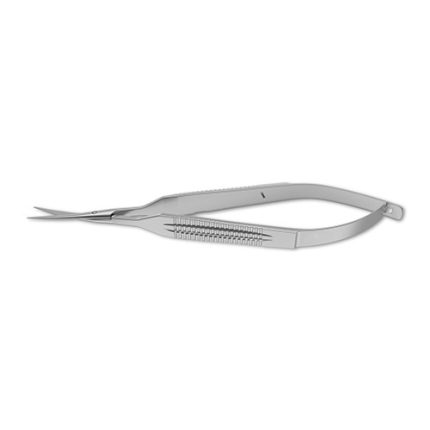
- delicate, blunt tips, 4-1/2" (11.5 cm)?Aebli Corneal Section Scissors are a useful tool in performing a sclerocorneal section to gain access to the anterior chamber of the eye or lens during a cataract operation. The scissors feature delicate blunt tips for controlled cuts of the corneal tissue without damaging the globe. Both left and right angles are available on the…
- Read more
-
-
- RETRACTORS
-
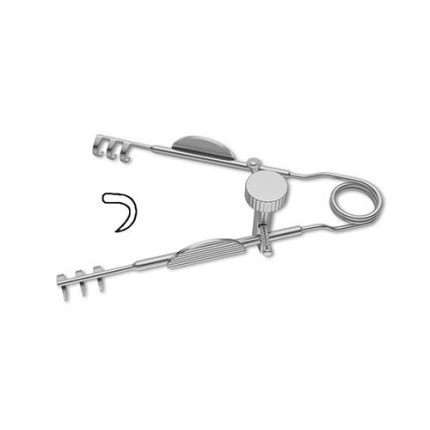
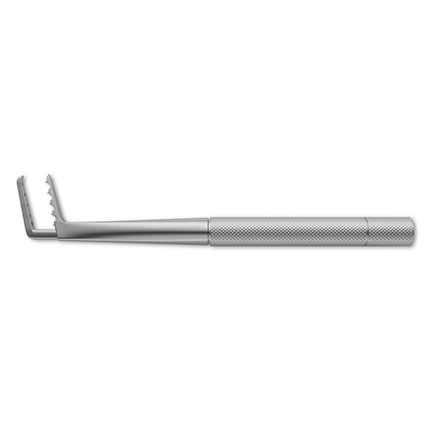
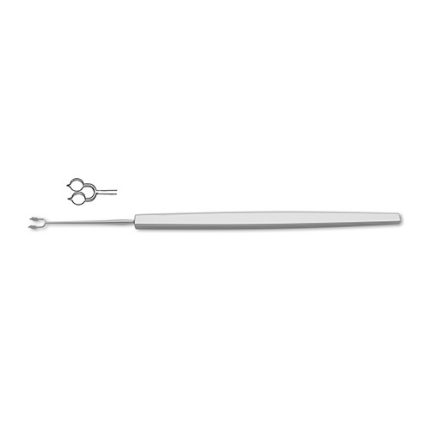
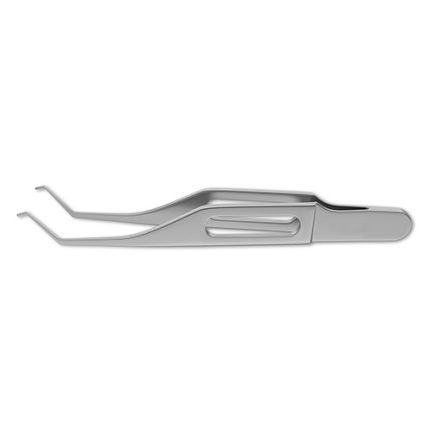
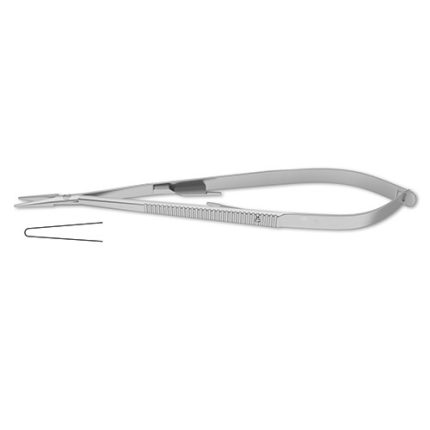
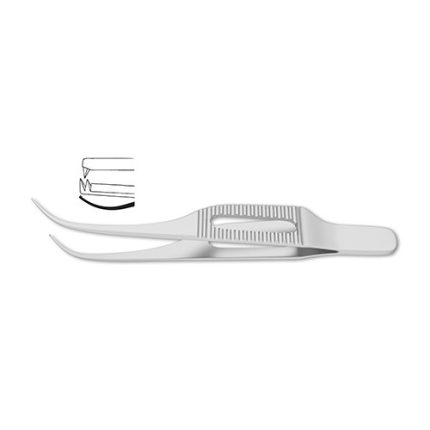
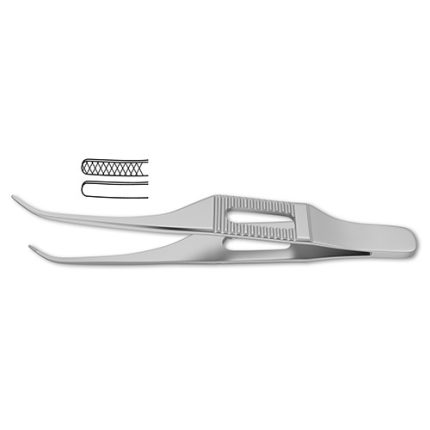
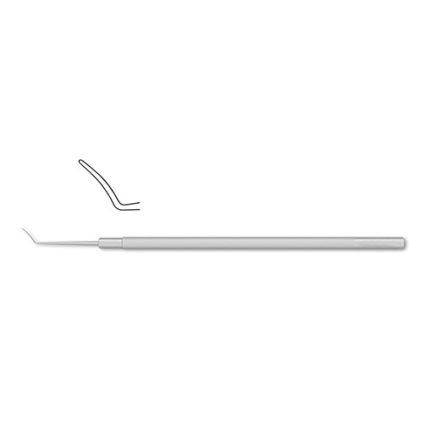
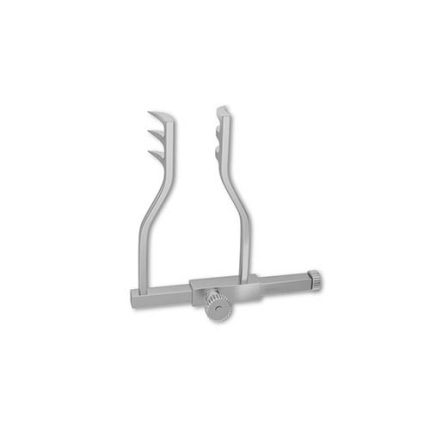
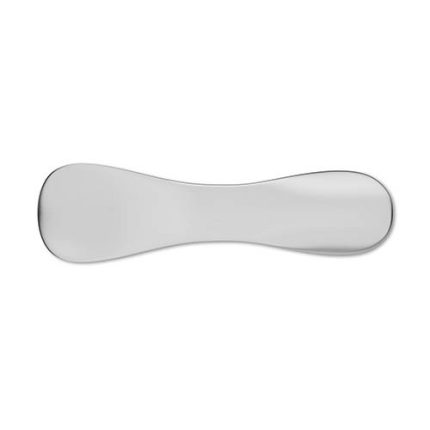
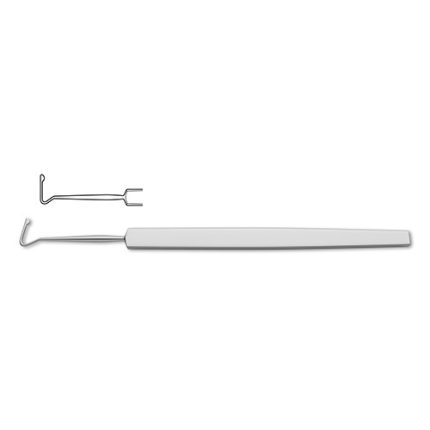
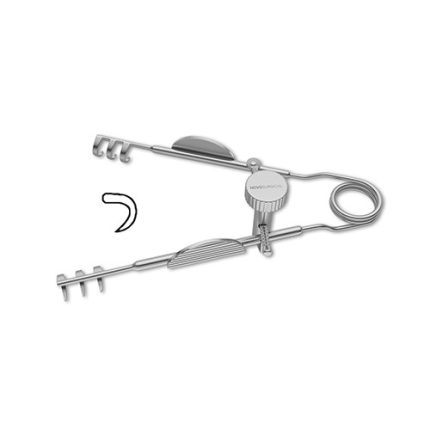
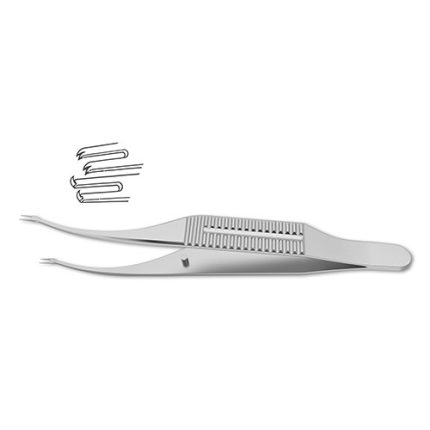
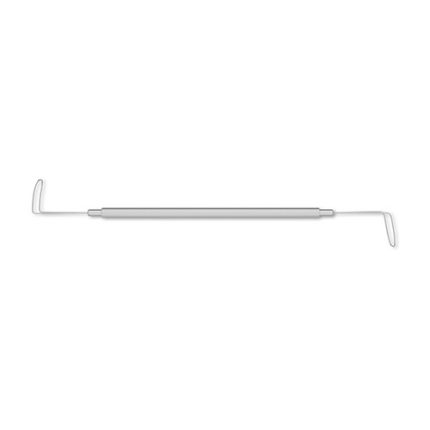
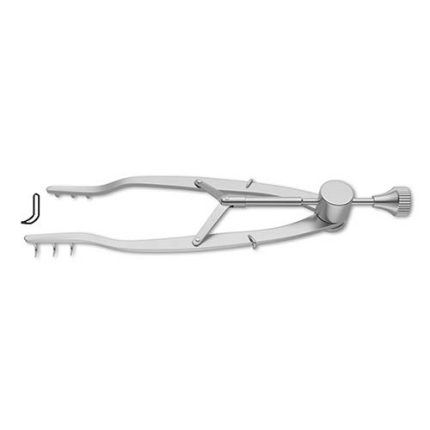
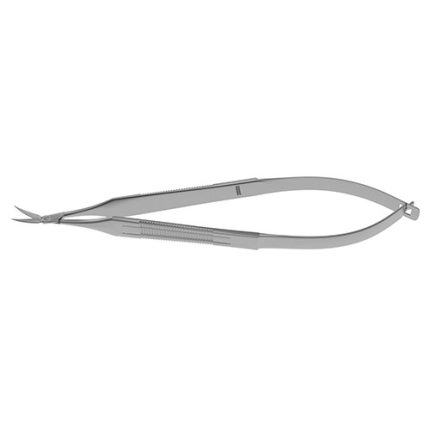
- 3x3 sharp prongs, 1-9/16" (4.0 cm)?Agricola Lacrimal Sac Retractor is a specialized tool during dacryocystectomy procedures. The instrument is designed to widen the edges of the skin incision, exposing the lacrimal sac. The retractor features 3x3 sharp prongs designed to quickly and effectively spread tissue for maximum exposure.
- Read more
-
-
- Cannulas, OPHTHALMOLOGY
-
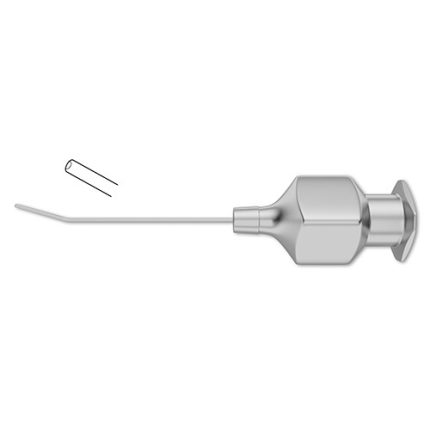
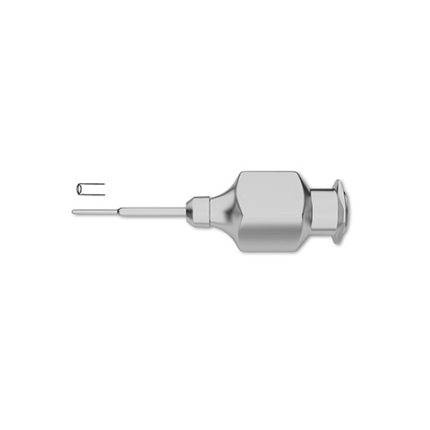
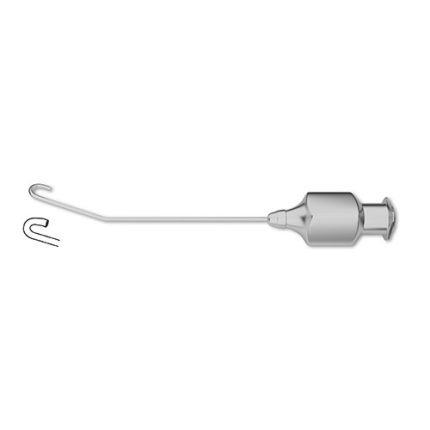
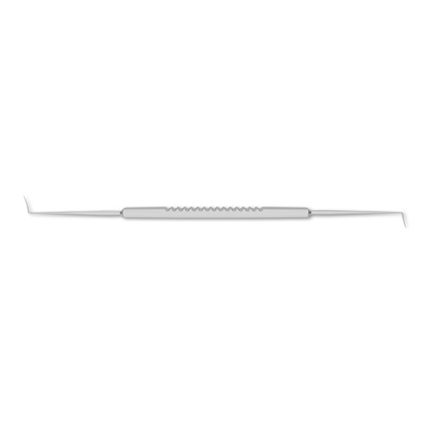
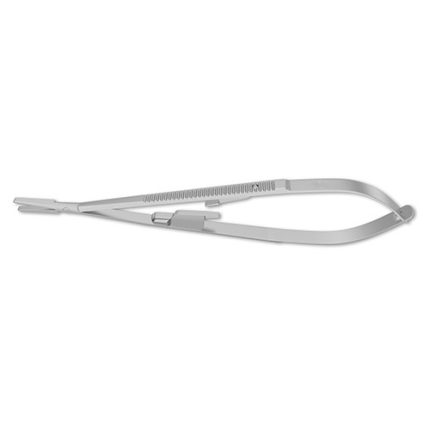
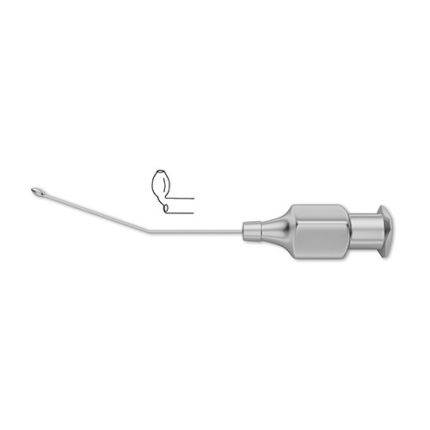
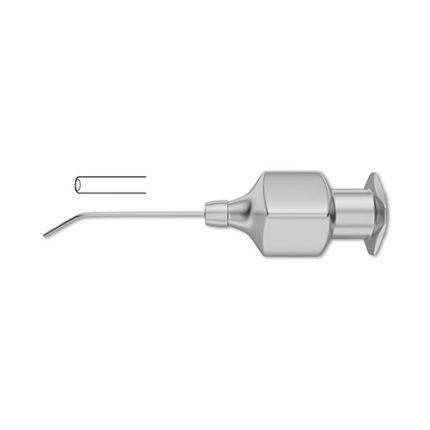
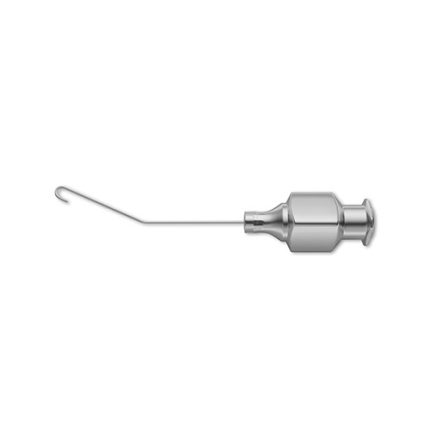
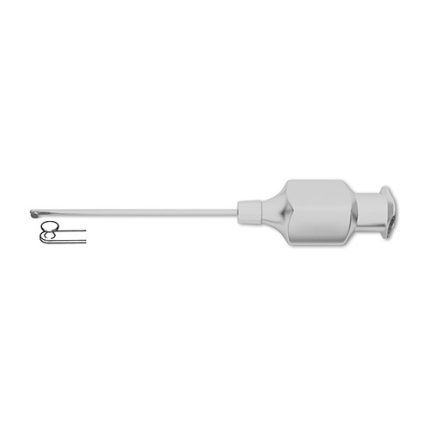
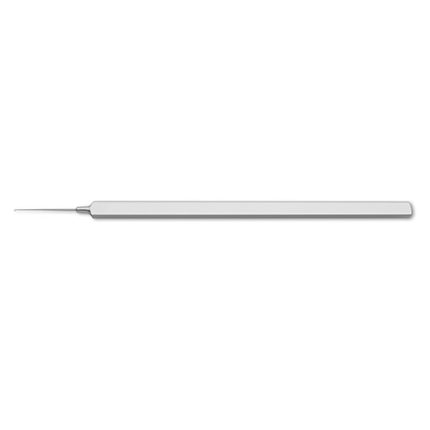
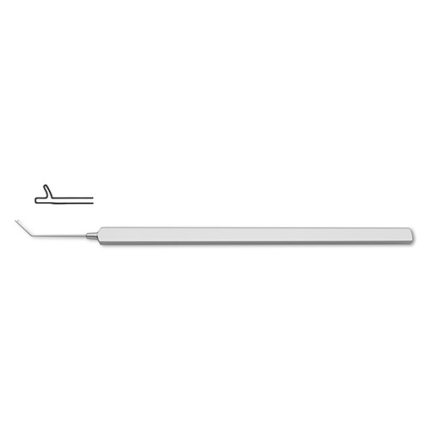
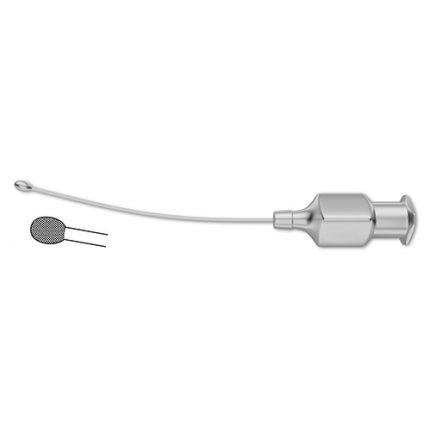
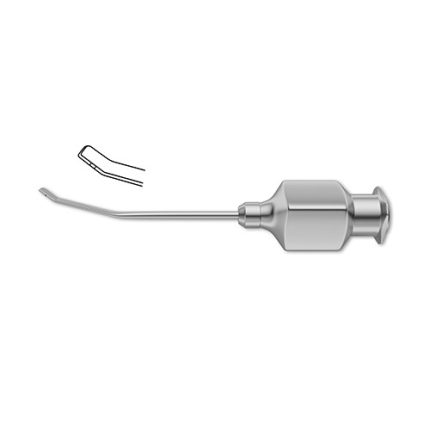
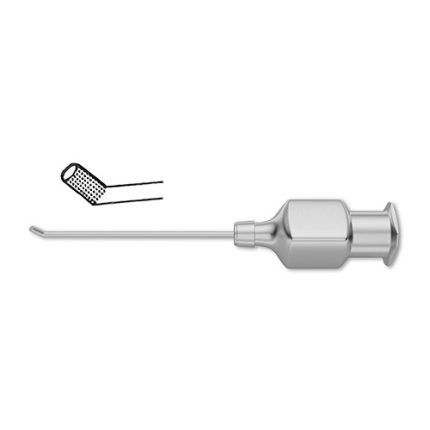
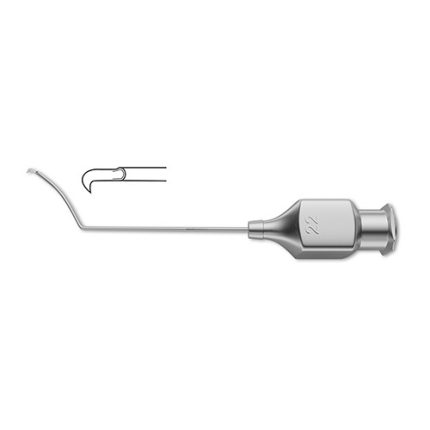
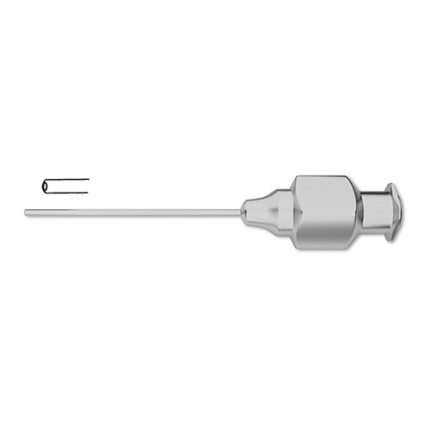
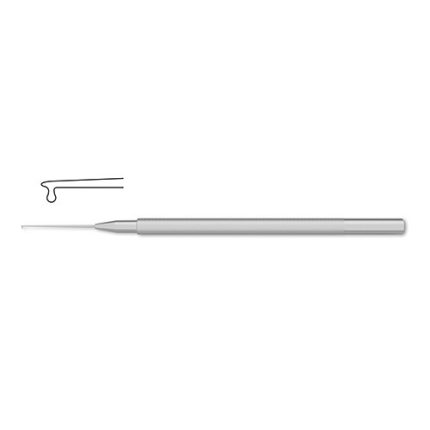
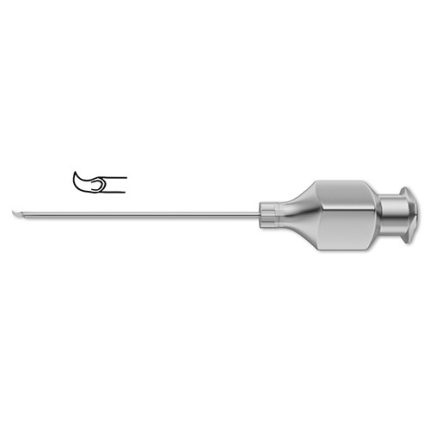
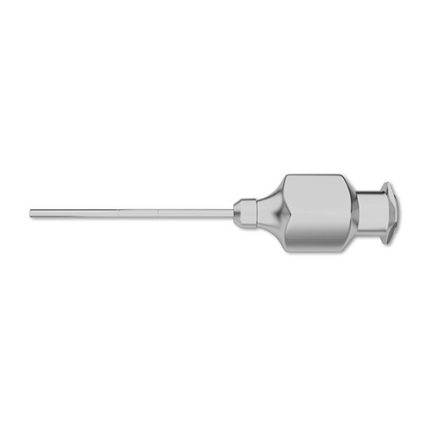
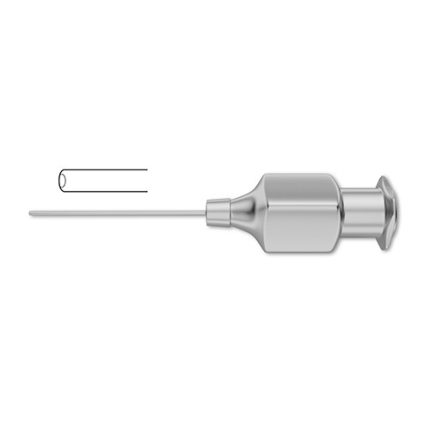
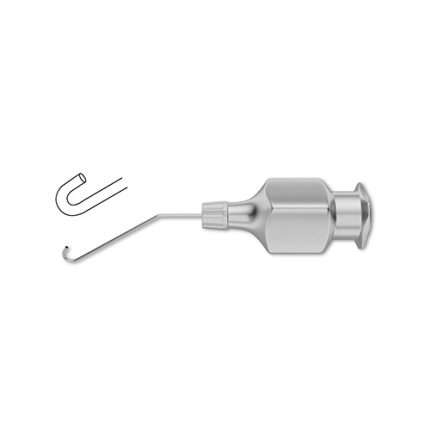
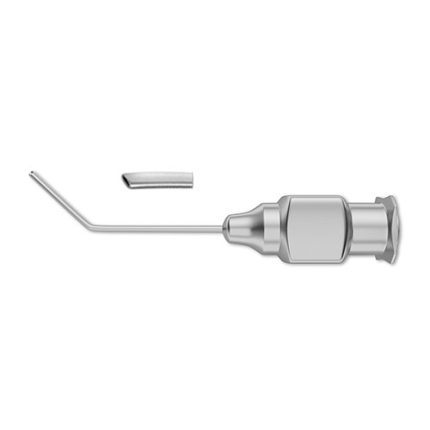
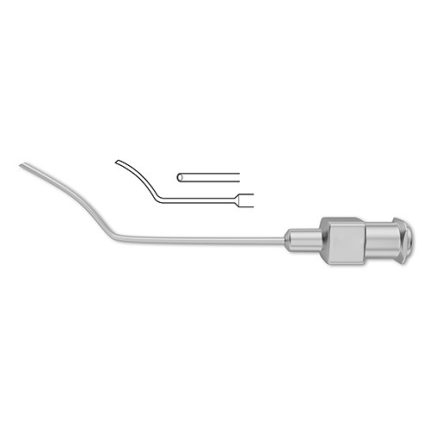
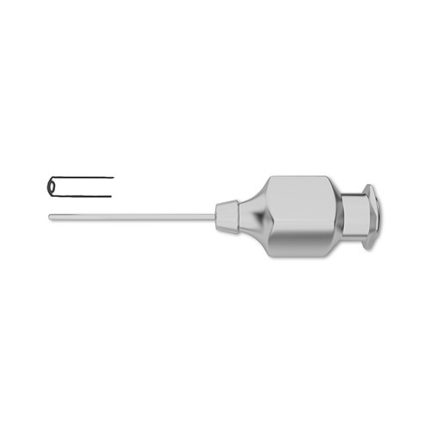
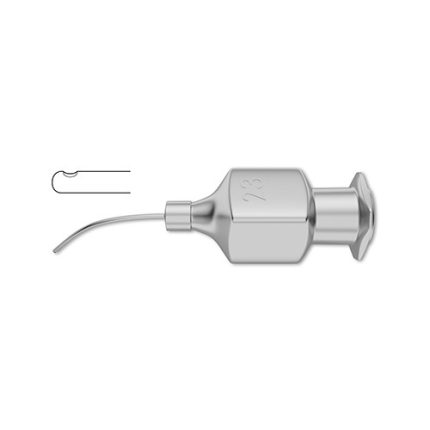
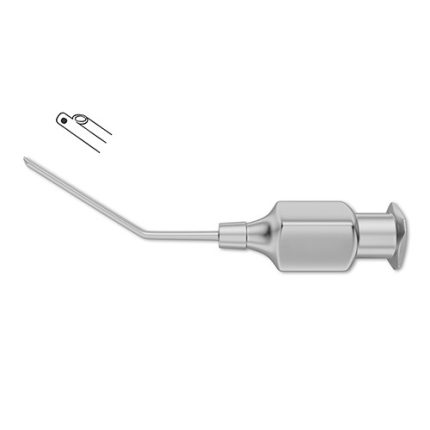
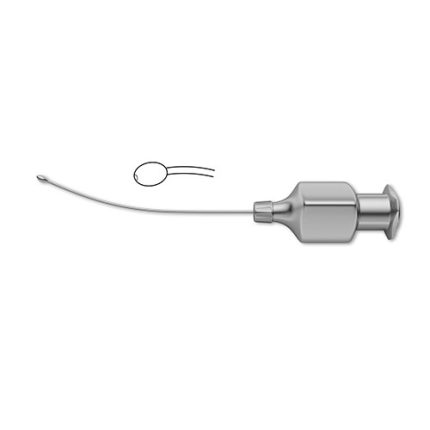
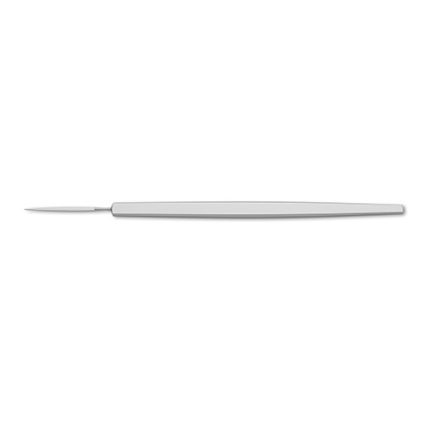
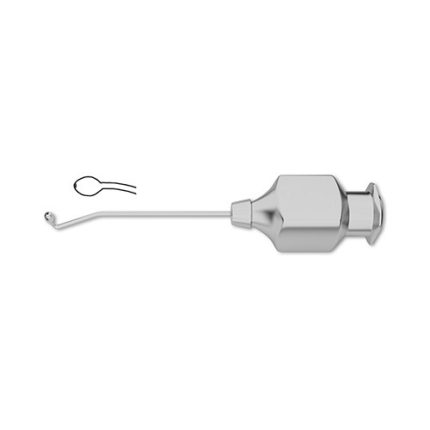
- Air Injection Cannula is an extremely useful tool in deep anterior lamellar keratoplasty procedures. The cannula is designed to inject air into the corneal stroma to help dissect down to Descemet's Membrane. Two different cannula gauges are available depending on patient variation.
- Read more
-
-
- Specula
-
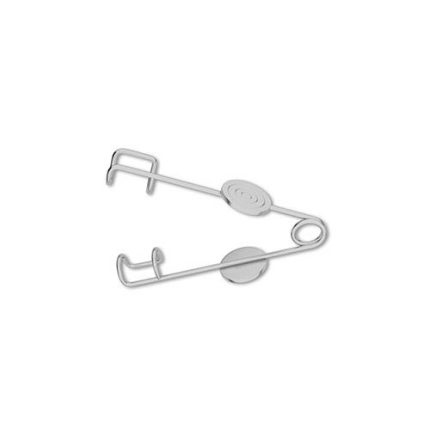
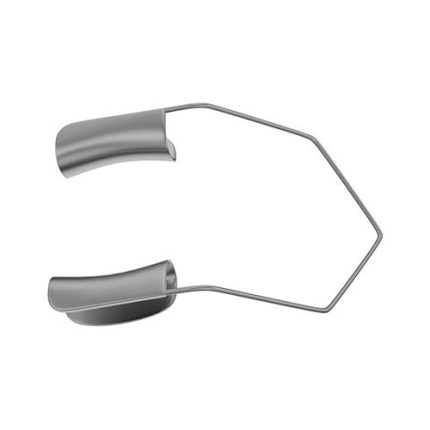
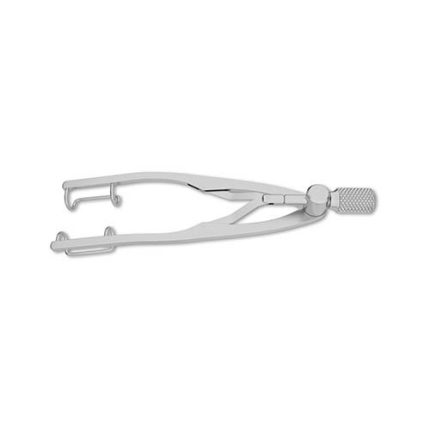
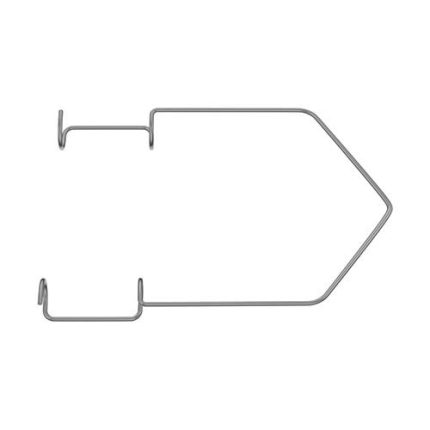
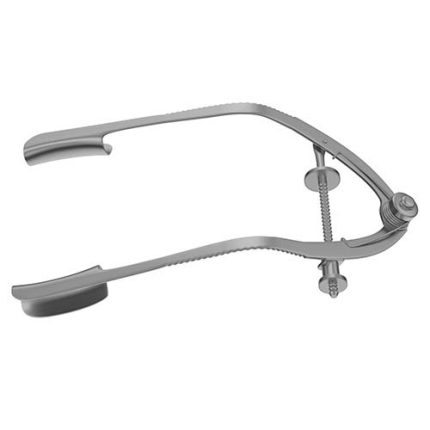
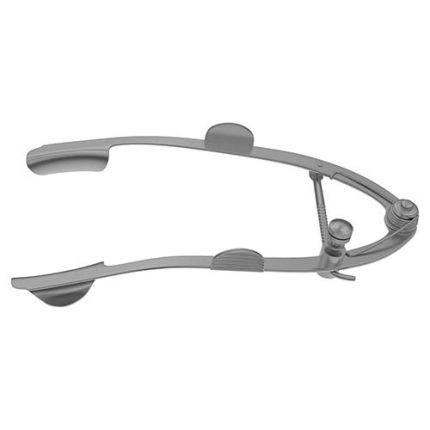
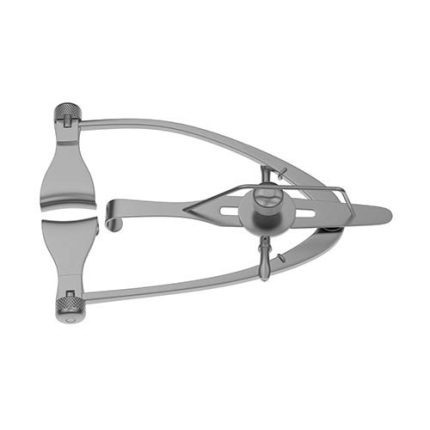
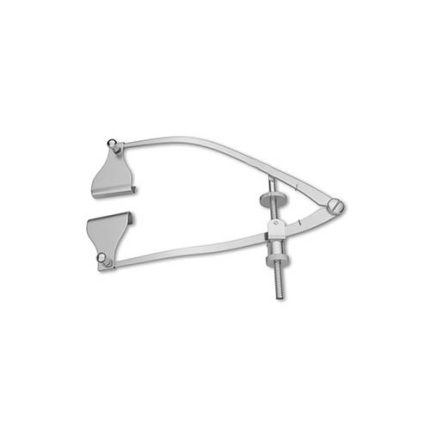
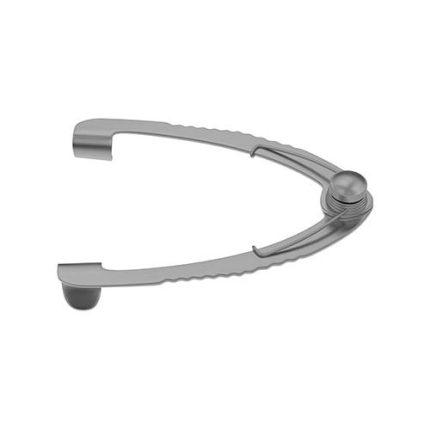
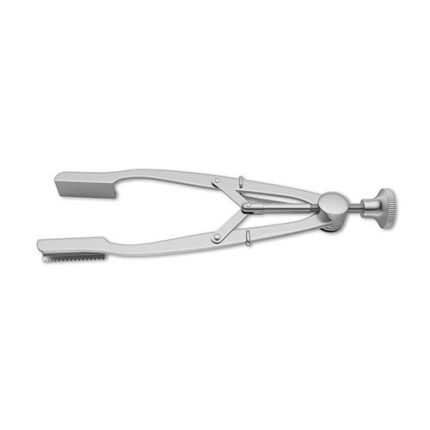
- blades 5.0 mm wide, spread 25.0 mm?Alfonso Eye Speculum is a frequently used tool in pediatric ophthalmologic procedures needing extended visualization of the globe. The lightweight frame of the speculum is easy to insert and features thumb rests to facilitate handling by the physician or assistant.
- Read more
-
-
- Eye Speciatly Instrumentatio
-
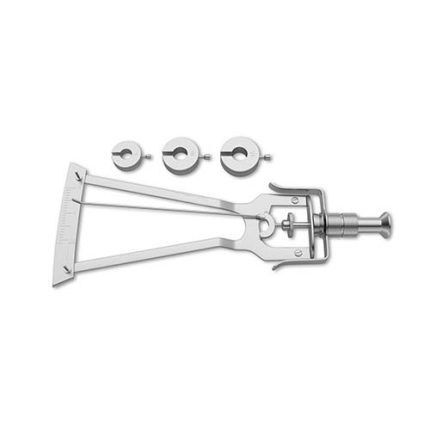
- w/ 3 weights (5.5, 7.5 & 10.0 grams), plunger, footplate & test block?Allen-Schoitz Tonometer is a unique tool used in a variety of ophthalmologic procedures. The tool may be used to estimate the scleral rigidity or the resistance to stretch of the outer tunic of the eyeball. The resistance is measured using the three different weights provided combined with an…
- Read more
-
-
- Needle Holders
-
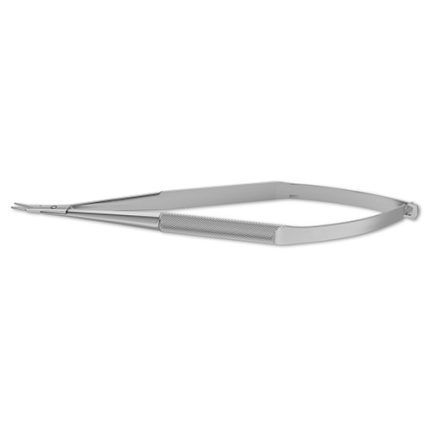
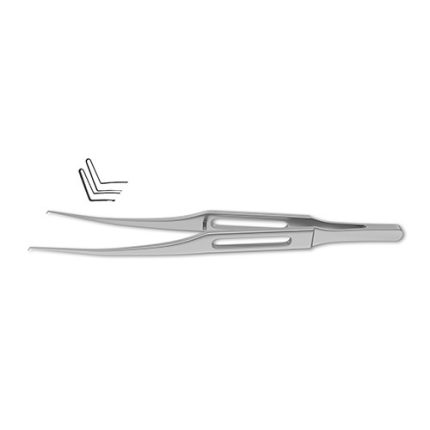
- extra delicate, 8.0 mm jaws, 5" (12.5 cm)?Anis Needle Holder is a frequently used instrument in posteroperative management of ophthalmologic procedures. The holder feature extra delicate 8.0mm jaws and are specifically designed for handling fine suturing material in IOL operations. Both straight and curved models are available depending on surgical preference.
- Read more
-
-
- Forceps
-
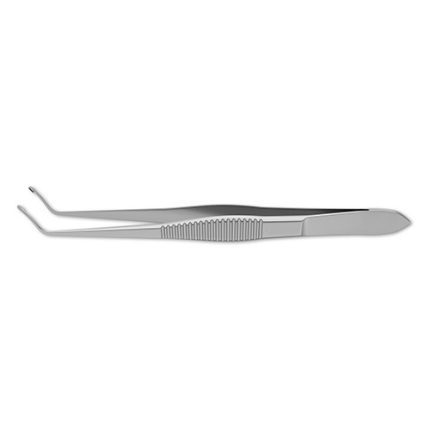
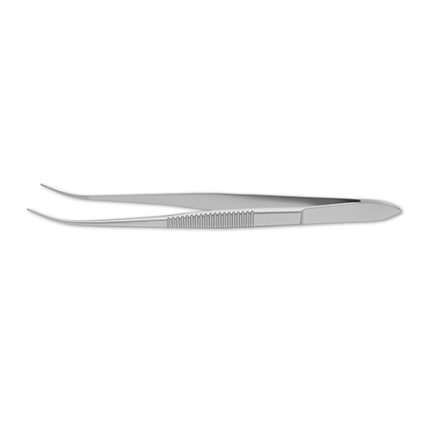
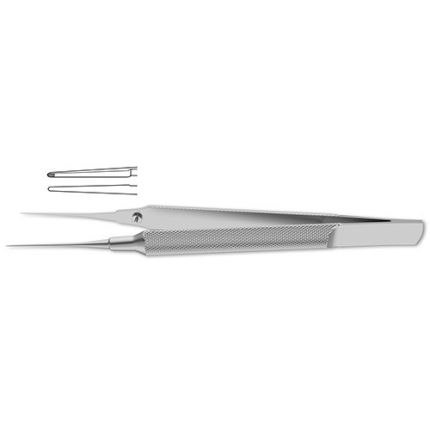
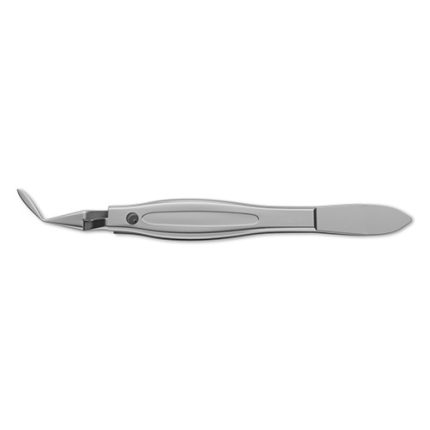
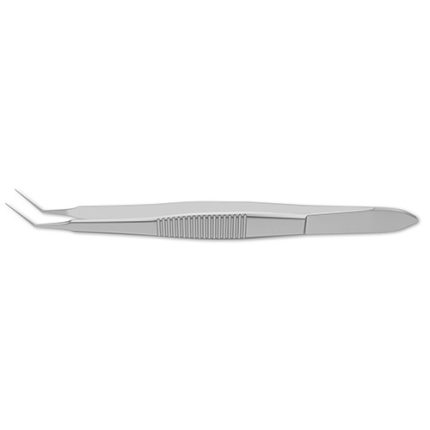
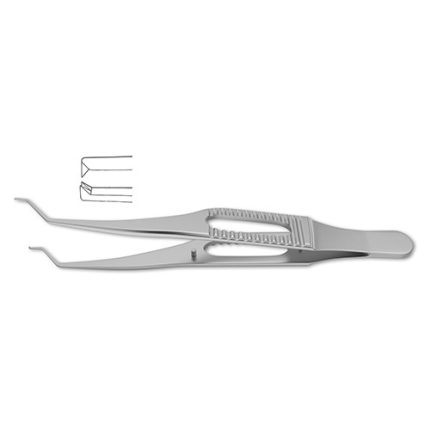
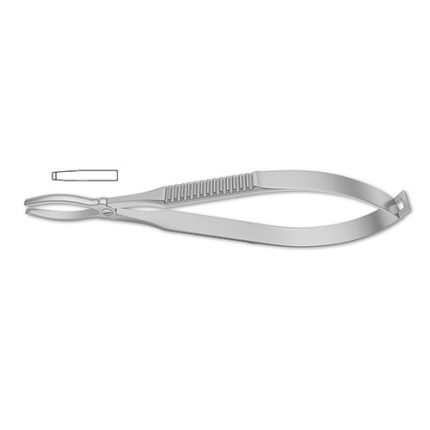
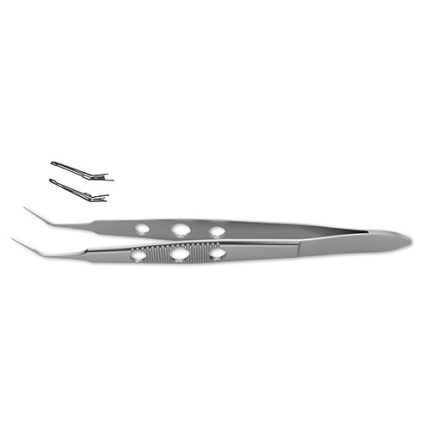
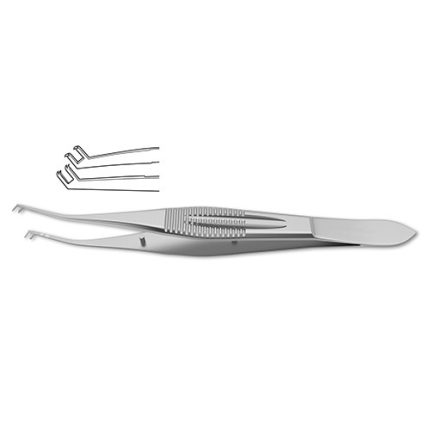
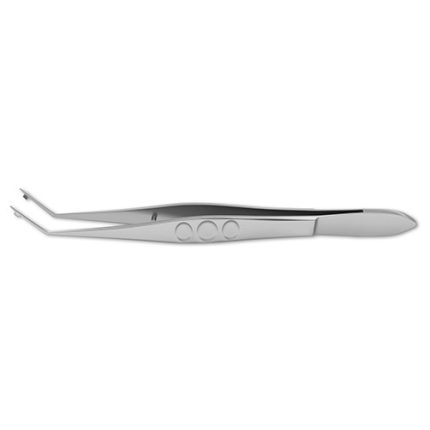
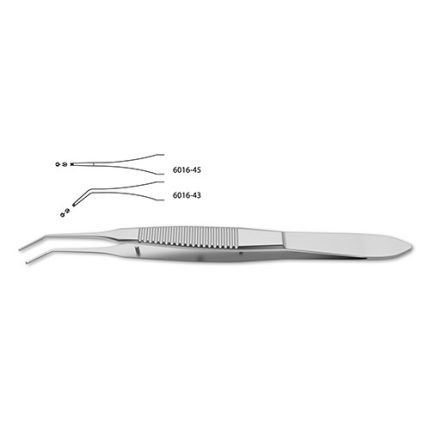
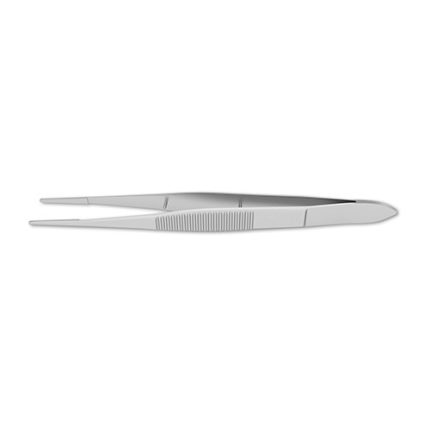
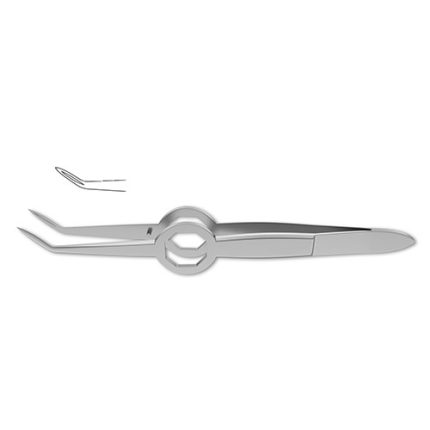
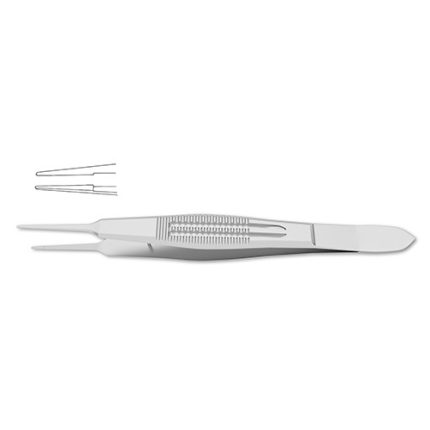
- 4" (10.2 cm)?Arruga Capsule Forceps are a commonly used tool in cataract procedures. The forceps feature delicate spoon shaped ends used for cupping and extracting capsular fragments or commonly used for removing the nuclei fragments of the native lens.
- Read more
-
-
- Cannulas, OPHTHALMOLOGY
-
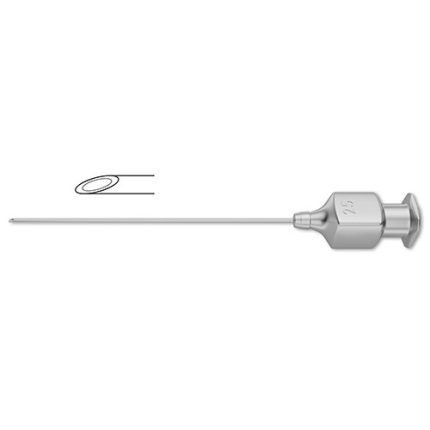
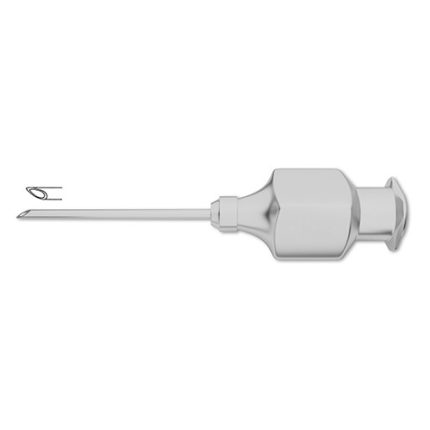
- sharp rounded point, 25-gaugeAtkinson Retrobulbar Needle is a commonly used tool in preoperative treatment of ophthalmologic procedures. The needle may be used to perforate the orbital septum in administering an anesthetic or alcohol. Two different gauges are available with the needle depending on surgical preference.
- Read more
-
-
- Cannulas, OPHTHALMOLOGY
-
- reinforced shaft, 23-gauge, 1/2" (1.5 cm)?Bailey Cannula is an extremely useful tool in treating tear duct obstructions. The cannula may be used to investigate blockage of lacrimal gland damage or more frequently, obstruction of the nasolacrimal duct. The cannula features a reinforced shaft to prevent bending and kinking during the procedure, while the shorter working length affords the surgeon more…
- Read more
-
-
- Forceps
-
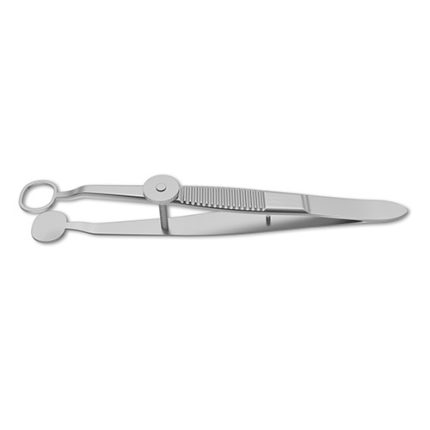
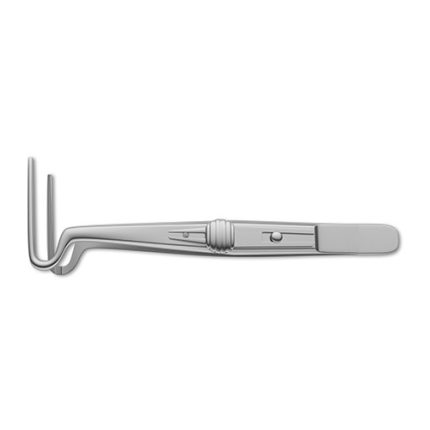
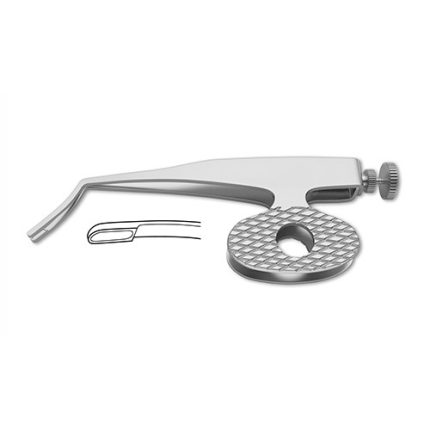
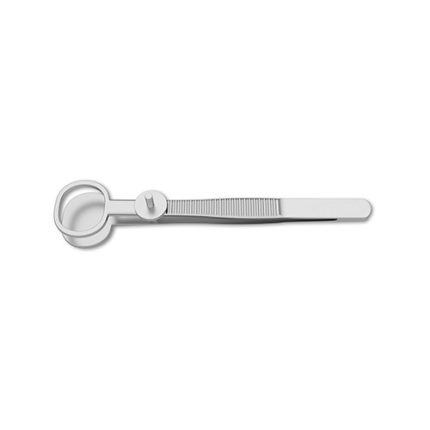
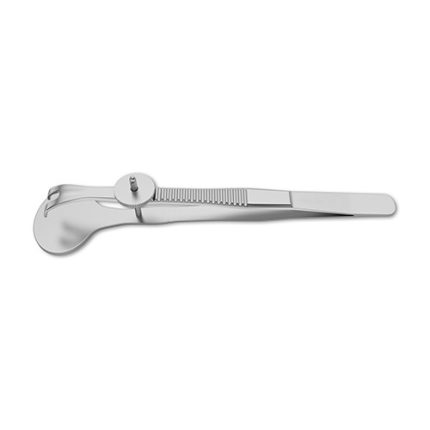
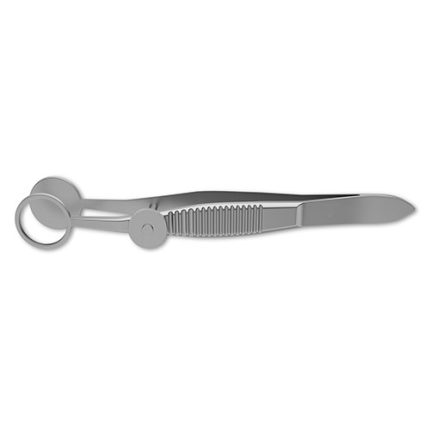
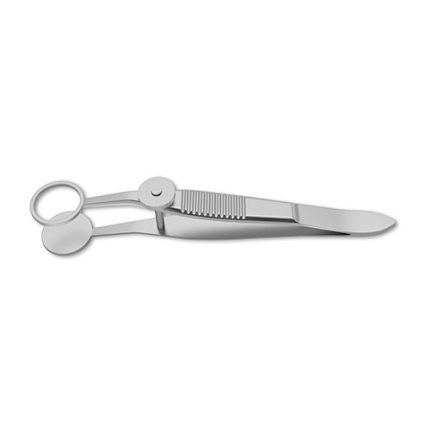
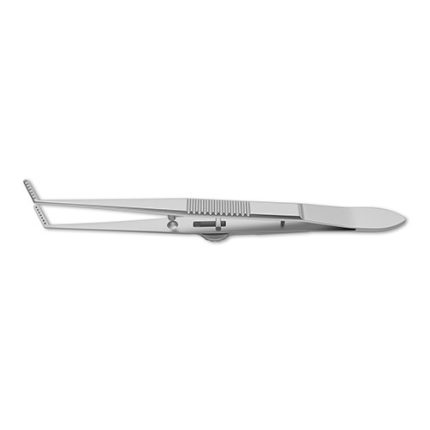
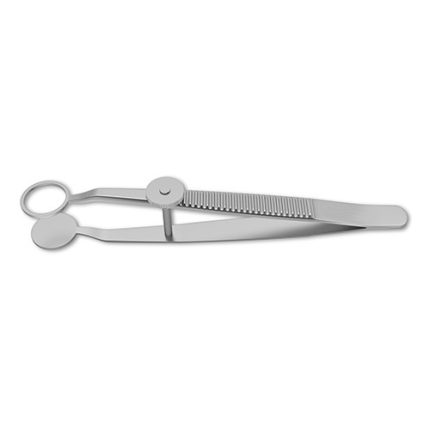
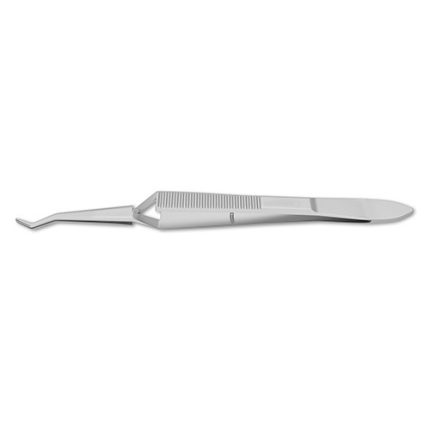
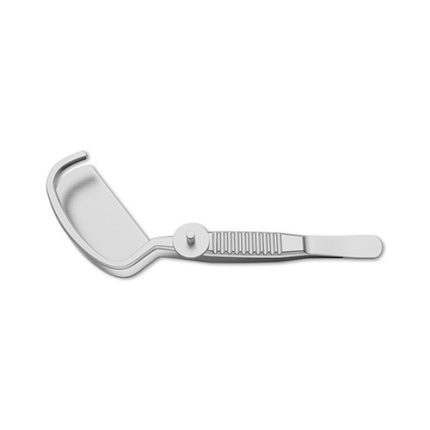
- slightly curved jaws with platform, 4-1/4" (11.0 cm)Baird Chalazion Forceps are a commonly used tool in diseases of the eyelid. The forceps are meant to expose a chalazion or other cysts of the lid. The forceps feature an open blade meant to encircle the cyst and tightened so the lid is everted. The model also features a locking thumb screw…
- Read more
-
-
- Forceps
-
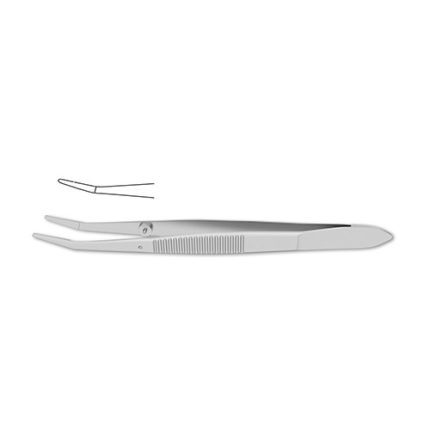
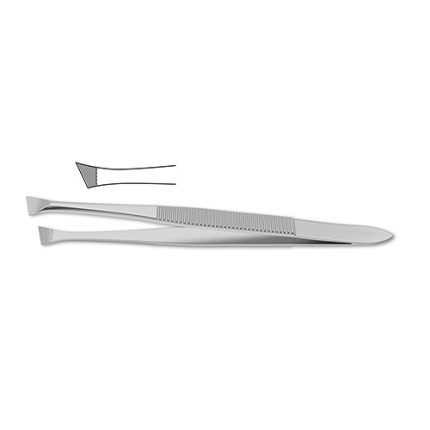
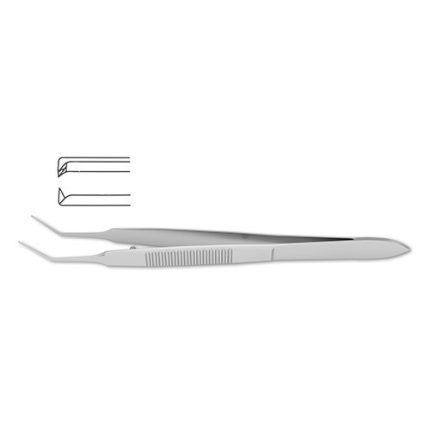
- angled, smooth jaws, 10.0 mm tying platform, 3-1/8" (8.0 cm)?Barraquer Cilia Forceps are an ideal tool for ophthalmologic procedures involving the eyelid. The forceps feature slightly curved jaws with smooth tips to provide a good grasp of the cilia for blepharoplasty or management of blepharitis marginalis. The flat serrated handle gives the surgeon increased control and maneuverability.
- Read more
-
-
- Spatulas & Spoons
-
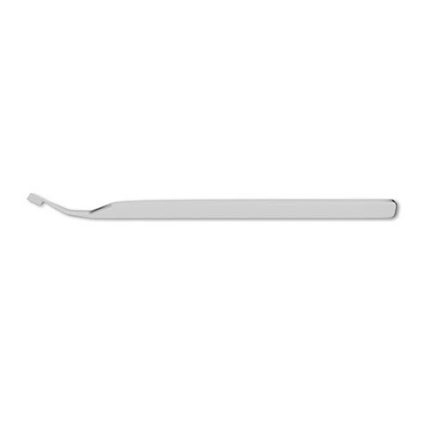
- 4-3/4" (12.0 cm)?Barraquer Cyclodialysis Spatula is a commonly used tool in the treatment of glaucoma. The spatula is used in the procedure to dissociate the ciliary body from the sclera. Further, the tool may be used to enlarge an incision from a sclerectomy if desired. The spatula features an angled tip for easier manipulation while minimizing surgical obstruction. Two sizes…
- Read more
-
-
- Specula
-
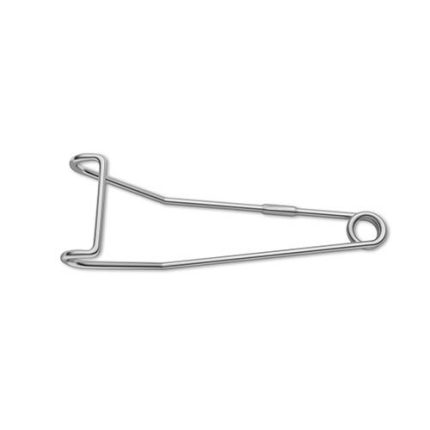
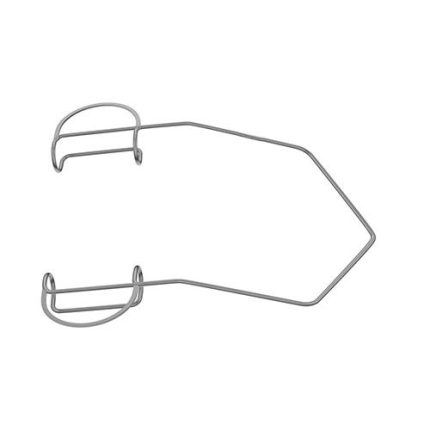
- open wire blades?Barraquer Eye Speculum is a commonly used tool in visualizing the ophthalmologic surgical field. The speculum features solid blades for more efficient spreading without chance of tissue obstruction. The variable compression of the spring allows the surgeon to adjust the degree of spreading. Both child and adult sizes are available depending on surgical need.
- Read more
-
-
- Scissors
-
- delicate blunt blades, 2-1/8" (5.5 cm)?Barraquer Iris Scissors are a specialized tool for ophthalmologic operations of the Iris. The unique offset handle minimizes surgical obstruction while entering the anterior chamber to access the iris. The scissors feature delicate blades specialized for handling iris tissue. Two blade sizes are available for the scissors depending on surgical preference.
- Read more
-
-
- Spatulas & Spoons
-
- hexagonal handle, 3-1/2" (9.0 cm)?Barraquer Iris Spatula is a commonly used tool in cataract surgery. The spatula is used to hold the iris in place while manipulating the lens capsule and nucleus. The spatula is commonly used to rotate the nucleus to a desired position for extraction. The spatula features an angled tip for easier manipulation while minimizing surgical obstruction.…
- Read more
-
-
- Needle Holders
-
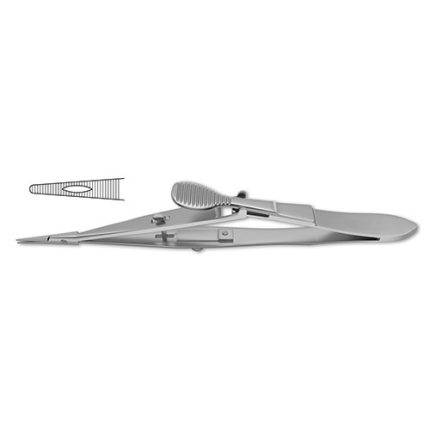
- delicate, 10.0 mm jaws, round handle, 5-1/2" (13.9 cm)?Barraquer needle holder is a often used tool in postoperative management of ophthalmologic surgeries. The holder may be used for suturing the conjunctiva, sclera, or extraocular muscles. This model features 10 mm jaws for use with standard or fine suturing needles. A locking mechanism is included to free the surgeon's hands as…
- Read more
-
-
- Needle Holders
-
- Barraquer needle holder is a often used tool in postoperative management of ophthalmologic surgeries. The holder may be used for suturing the conjunctiva, sclera, or extraocular muscles. This model features delicate jaws for fine or standard suturing needles, and features a locking mechanism as desired. Both straight and curved profiles are available depending on surgical preference.
- Read more
-
-
- Needle Holders
-
- extra delicate, 9.0 mm tapered jaws, round handle, 5-1/4" (13.3 cm)?Barraquer needle holder is a often used tool in postoperative management of ophthalmologic surgeries. The holder may be used for suturing the conjunctiva, sclera, or extraocular muscles. This model features extra delicate jaws for fine suturing needles, and features a locking mechanism as desired. Both straight and curved profiles are…
- Read more
-
-
-
- Lens Loops, Pushers & Rotators
-
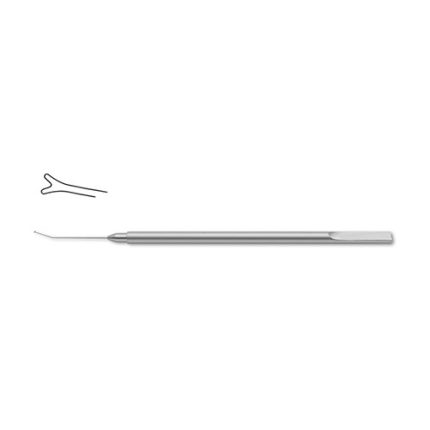
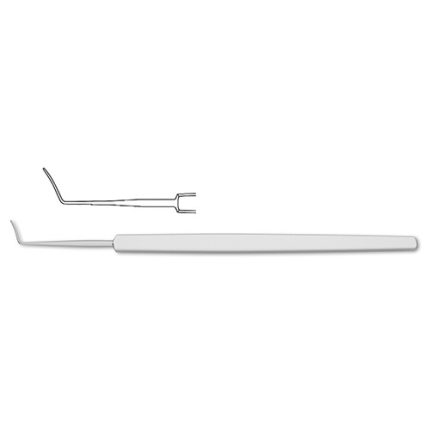
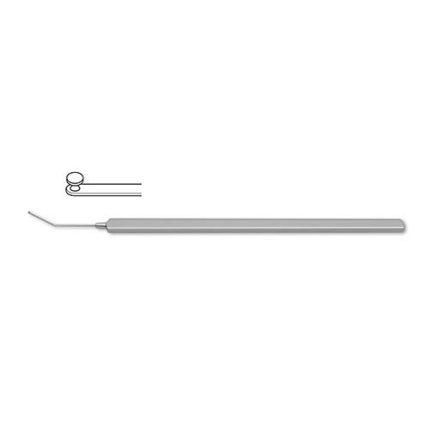
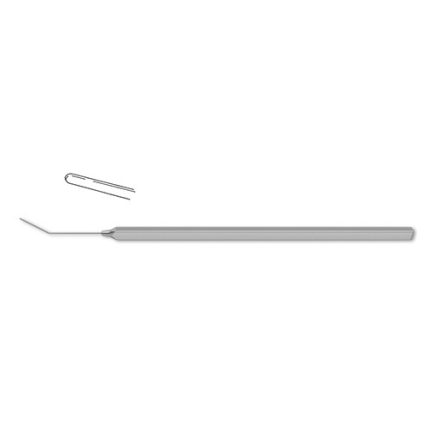
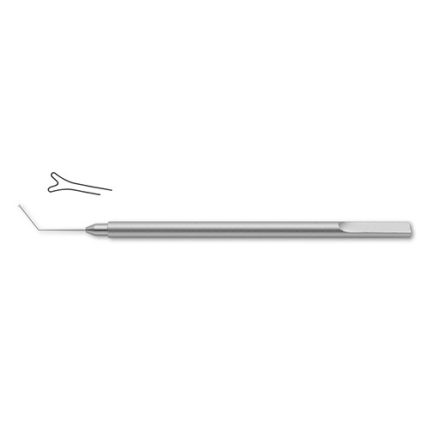
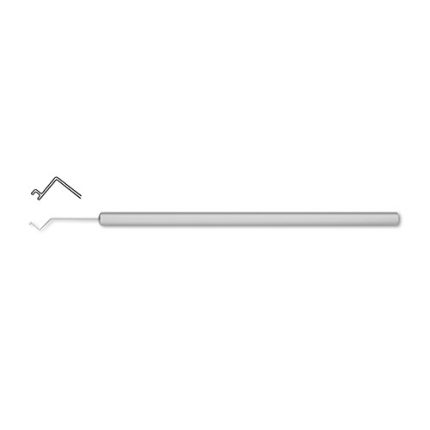
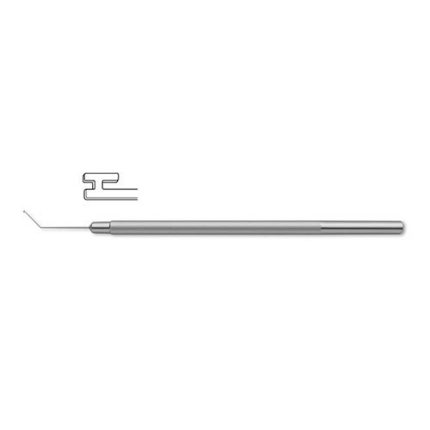
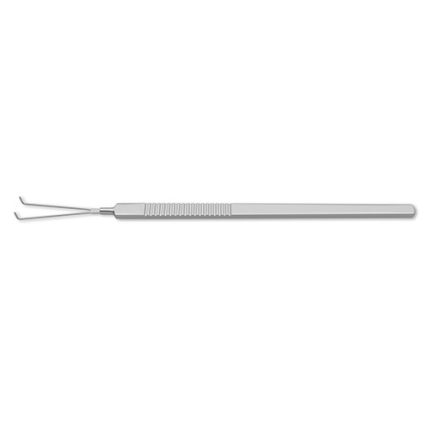
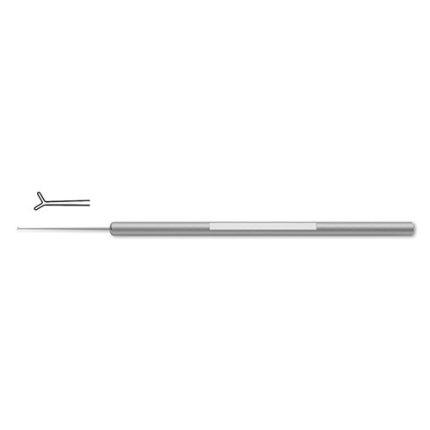
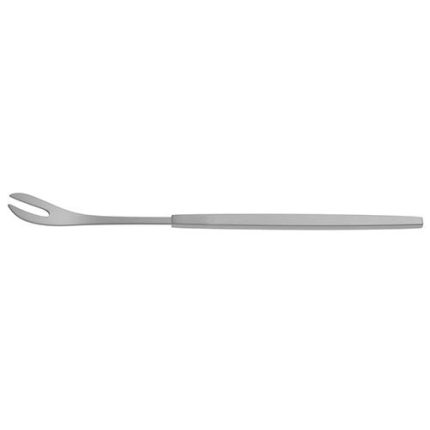
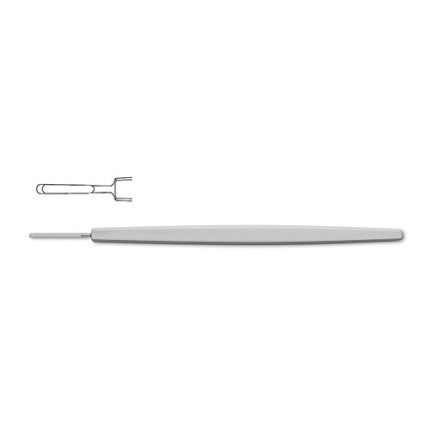
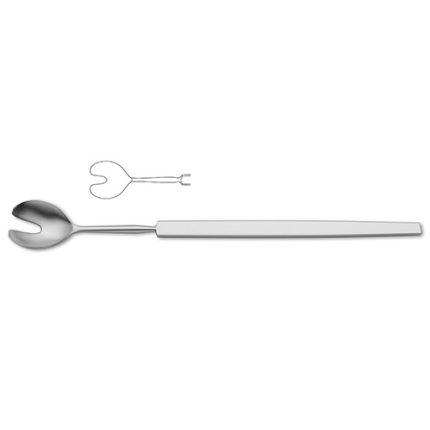
- fork on front, 5" (12.5 cm)?Bechert Lens Nucleus Rotator is a commonly used tool in cataract procedure. The instrument is commonly used to rotate the lens slightly in the small intracapsular space for extraction or further manipulation. In addition, the rotator features a fork on front for easier control and handling.
- Read more
-
-
- Forceps
-
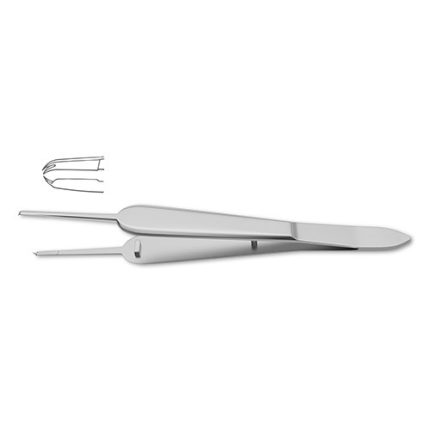
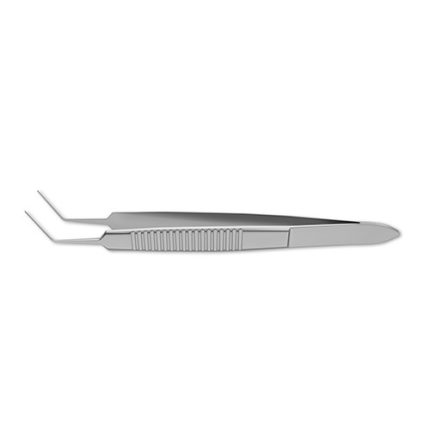
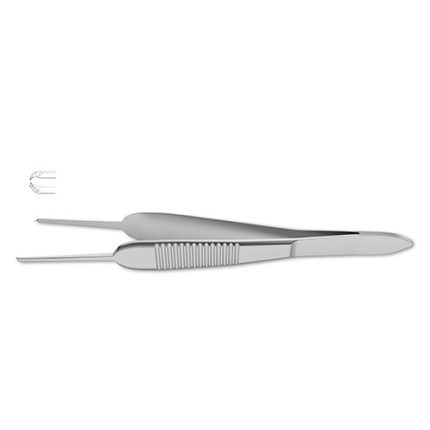
- horizontal serrations, 3-1/2" (8.9 cm)?Bechert-McPherson Tying Forceps are a useful tool in ophthalmologic procedures, particularly cataract surgeries. The smooth tips are ideal for handling the anterior capsular flap during removal of the native lens as well as handling both 8-0 and 11-0 sutures. The ribbed handle provides a more ergonomic grip during the procedure.
- Read more
-
-
- Forceps
-
- w/ slide lock, 4" (10.0 cm)?Berens Muscle Clamp is a unique tool designed to handle the muscle insertions of the eye. The clamp features 13.5 mm blades, wide enough to handle the extraocular and levator muscles. The teeth on the bottom blades are specially designed to avoid slipping and hold the muscle for further manipulation.
- Read more
-
-
- Forceps
-
- cross-serrated tips, delicate, 3-3/8" (8.6 cm)?Bergh Cilia Forceps are a multipurpose instrument for ophthalmologic procedures involving the eyelid. The forceps feature a serrated jaw that can be used for removing the cilia for trichiasis or management of blepharitis marginalis. The heavy spring pattern gives the surgeon increased power during the operation.
- Read more
-
-
- Cannulas, OPHTHALMOLOGY
-
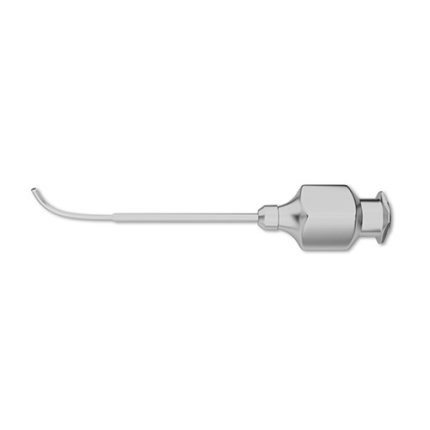
- Binkhorst Irrigating Cannula is a useful tool in cataract procedures. The curved tip of the cannula is used for loosing the peripheral cortex of the lens during difficult extraction. Right and left curvatures of the cannula are also available depending on surgical preference.
- Read more
-
-
- Cannulas, OPHTHALMOLOGY
-
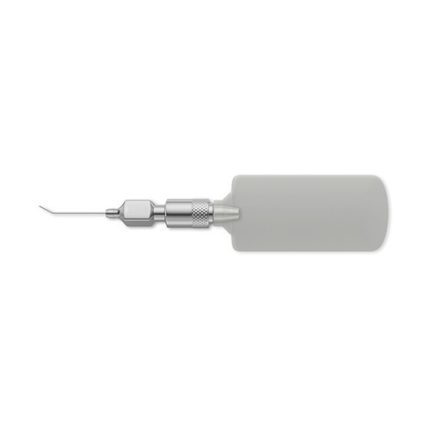
- Bishop Harmon Anterior Chamber Irrigator is a frequently used tool in cataract IOL implantation procedures. Following nucleus fragmentation, the irrigator may be used to aspirate any remaining debris from the anterior chamber. The complete set features and adaptor, irrigating cannula, and silicone bulb.
- Read more
-
-
- Forceps
-
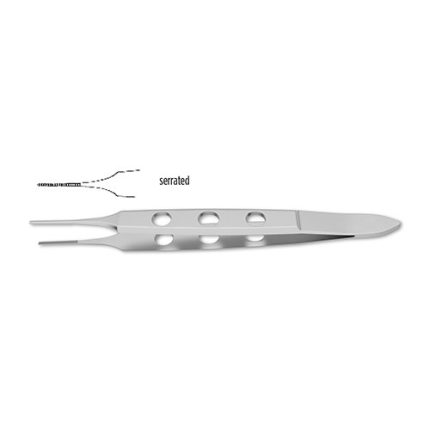
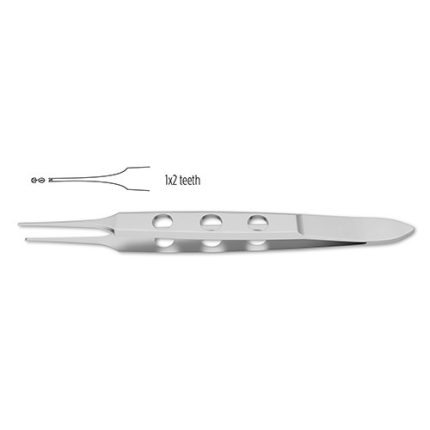
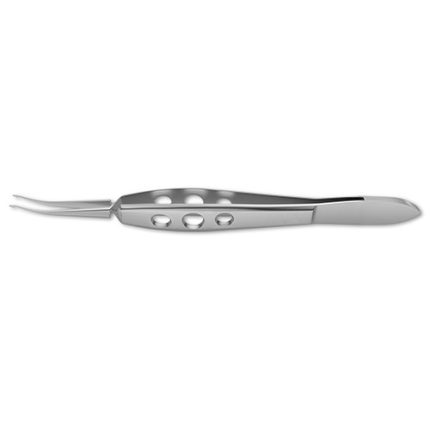
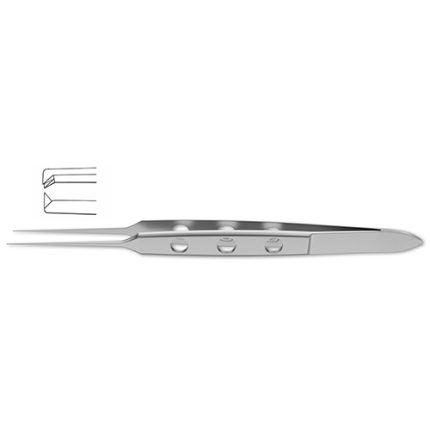
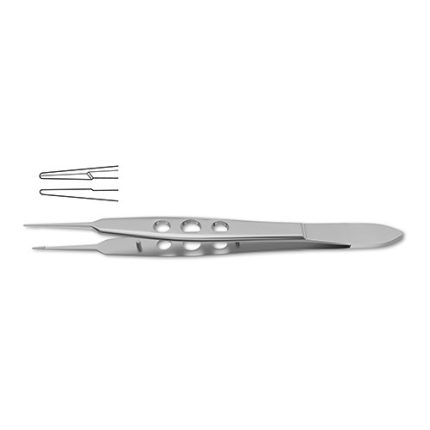
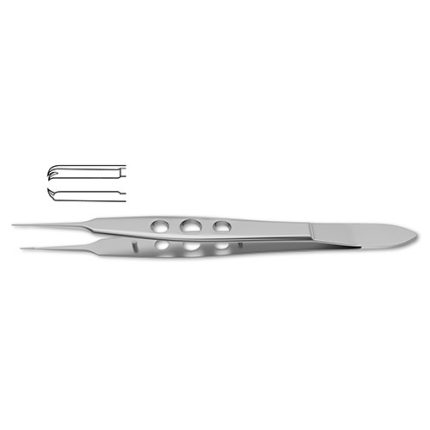
- 1x2 teeth, 3-3/8" (8.6 cm) ?Bishop-Harmon Tissue Forceps are a commonly used tool in a variety of ophthalmologic procedures. The forceps are designed for grasping delicate tissue in a small surgical field. Three finger holes on the handle allow the surgeon to adjust his or her grip during the procedure as desired. The forceps are available in straight or curved…
- Read more
-
-
- Forceps
-
- very delicate narrow, smooth jaws, angled 45 degrees, 4-1/2" (11.5 cm) ?Bishop-Harmon Tissue Forceps are a commonly used tool in a variety of ophthalmologic procedures. The forceps are designed for grasping delicate tissue in a small surgical field. Three finger holes on the handle allow the surgeon to adjust his or her grip during the procedure as desired. The forceps…
- Read more
-
-
- Forceps
-
- cross-serrated at tip, rear of jaw fluted, 4-1/8" (10.5 cm) Blaydes Lens Holding Forceps are a tool used primarily for cataract and IOL procedures. The very delicate narrow jaws are designed to grip the IOL firmly yet atraumatically. The cross action precision handle is complete with finger holes to give the surgeon increased control during the operation.
- Read more
-
-
- Hooks &Manipulators
-
- 3.0 mm hook, curved, 5" (12.5 cm)Bonn Iris Hook is a commonly used tool during cataract procedures and operations needing access to the lens capsule. The 3.0mm hook is provides additional traction by pulling underneath the iris, minimizing slippage and fatigue.
- Read more
-
-
- Forceps
-
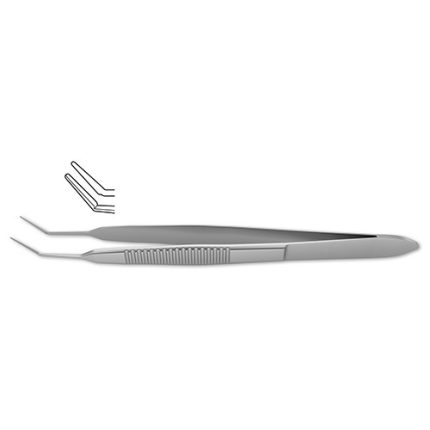
- 1x2 teeth, 0.12 mm teeth?Bonn Micro Iris Suture Forceps are a commonly used tool in ophthalmologic operations of the iris. The micro profile combined with 1X2 teeth aid in the grasping of iris tissue or suturing needle during the procedure. The forceps are available with a tying platform, designed to grasp both the tissue and suturing equipment without changing instruments.…
- Read more
-
-
- Scissors
-
- stainless, w/ 15.0 mm blades, 3-1/2" (8.9 cm)?Bonn Miniature Iris Scissors are a useful tool in a variety of ophthalmologic operations, particularly during an iridectomy. The ultra-sharp point of the scissors combined with the small profile allows for controlled incision and removal of the delicate iris tissue. The scissors are available in either a straight or curved profile depending on…
- Read more
-
-
- Forceps
-
- bayonet-shaped, cross-serrated, 3" (7.5 cm)?Botvin Iris Forceps are a useful tool in ophthalmologic procedures involving repair of the iris following trauma. The forceps are designed to handle the long needle necessary for iris suturing, commonly used with 10-0 polypropelene or 4-0 silk sutures. The bayonet style design is meant to minimize surgical obstruction during the operation.
- Read more
-
-
- Cannulas, OPHTHALMOLOGY
-
- curved, 19-gauge, overall length excluding hub 13/16" (2.1 cm) ?Bracken Anterior Chamber Cannula is a frequently used tool in cataract extraction procedures. The small gauge cannula is nimble enough to fit into a small limbal incision accessing the anterior chamber. It may be used to aspirate fluid within the anterior chamber exposing the lens capsule. The curved nature of the…
- Read more
-
-
- Forceps
-
- cross-serrated tips, 3-7/8" (9.8 cm)?Bracken Iris Forceps are a useful tool in ophthalmologic procedures involving repair of the iris following trauma. The forceps are designed to handle the long needle necessary for iris suturing, commonly used with 10-0 polypropelene or 4-0 silk sutures. The cross-serrated tips provided additional grip and ensure minimal slippage during the procedure.
- Read more
-
-
- Spatulas & Spoons
-
- Bunge Evisceration Spoon is a frequently used tool during enucleation procedures. The spoon is designed to help ease the globe out of the orbit and to assist in visualizing the tendonous insertion of the ocular muscles for incision. Both large and small sized spoons are available to accommodate for patient variation.
- Read more
-
-
- Hooks &Manipulators
-
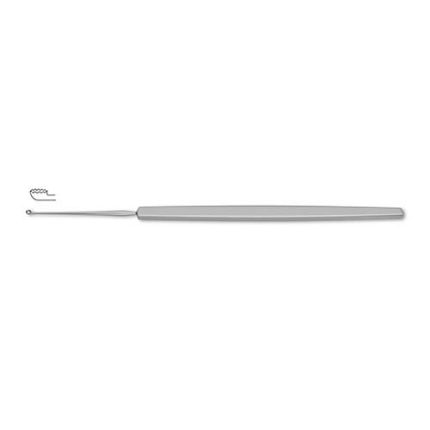
- 4-1/4" (11.0 cm)?Burch Fixation Pick is a commonly used instrument for support in ophthalmologic procedures. The Pick may be used to on the sclera to fixate the globe during surgery. The extended working length ensures minimal surgical obstruction.
- Read more
-
-
- Forceps
-
- 2.0 mm platform & microscopic cups on inner jaw surface, 2-1/4" (5.6 cm) Capsule Fragment & Clot Forceps are a unique tool for cataract and other ophthalmologic procedures. The cupped tips are specially designed for the handling of capsular fragments or small blood clots arising during the procedure. The unique offset handle is designed to give the surgeon more visibility…
- Read more
-
-
- Scissors
-
- delicate, blunt tips, angled, 4-1/8" (10.5 cm)?Castroviejo Corneal Scissors are a commonly used tool in ophthalmologic procedures. The delicate pattern is designed to give the surgeon increased control in making incisions around the cornea to gain access to the anterior chamber. The scissors feature blunt tips designed to reduce trauma to the surrounding sections of the globe.
- Read more
-
-
- Scissors
-
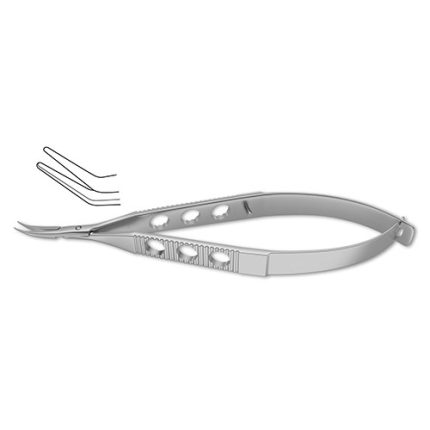
- curved, blunt tips, 4" (10.0 cm), 8.0 mm blades?Castroviejo Corneal Scissors are a commonly used tool in ophthalmologic procedures. The spring loaded design allows the surgeon to quickly and efficiently complete incisions around the cornea to gain access to the anterior chamber. The scissors feature blunt tips designed to reduce trauma to the surrounding sections of the globe. Finally, three…
- Read more
-
-
- Scissors
-
- medium pattern, blunt tips, strongly curved, 4-1/2" (11.5 cm)?Castroviejo Corneal Scissors are a commonly used tool in ophthalmologic procedures. The medium pattern is designed to quickly and efficiently complete incisions around the cornea to gain access to the anterior chamber. The scissors feature blunt tips designed to reduce trauma to the surrounding sections of the globe. Finally, the strongly curved…
- Read more
-
-
- Scissors
-
- extra delicate, 9.0 mm tapered jaws, round handle, 5-1/4" (13.3 cm)?Castroviejo Corneal Scissors are a commonly used tool in ophthalmologic procedures. The miniature pattern is designed to complete the incisions around the cornea to gain access to the anterior chamber. The scissors feature blunt tips designed to reduce trauma to the surrounding sections of the globe. Finally, the scissors are…
- Read more
-
-
- Scissors
-
- lower blade 0.5 mm longer than upper blade, 10.0 mm lower blade, 4-1/4" (11.0 cm)?Castroviejo Corneal Section Scissors are a useful tool in performing a sclerocorneal section to gain access to the anterior chamber of the eye or lens during a cataract operation. The 0.5 mm difference in length between the lower and upper blades give the surgeon increased control…
- Read more
-
-
- Scissors
-
- lower blade 1.0 mm longer than upper blade, 14.0 mm lower blade, 4-1/4" (11.0 cm)?Castroviejo Corneal Section Scissors are a useful tool in performing a sclerocorneal section to gain access to the anterior chamber of the eye or lens during a cataract operation. The uneven blades are designed to accommodate the curvature and thickness of the cornea. Both right and…
- Read more
-
-
- Scissors
-
- micro pattern, lower blade 0.5 mm longer than upper blade, 6.0 mm lower blade, blunt tips, 4-1/8" (10.5 cm)?Castroviejo Corneal Section Scissors are a unique tool in performing a sclerocorneal section to gain access to the anterior chamber of the eye or lens during a cataract operation. The micro pattern of the blades is intended for extremely delicate cuts of…
- Read more
-
-
- Scissors
-
- miniature model w/ curved blades & blunt tips, 10.0 mm from mid-screw to tip, wide serrated handle, right, 4.9" (12.5 cm)Castroviejo Corneal Section Scissors are a useful tool in performing a sclerocorneal section to gain access to the anterior chamber of the eye or lens during a cataract operation. This miniature model is only 10mm from mid-screw to tip, lending…
- Read more
-
-
- Forceps
-
- 6 mm tying platform, 1.5 mm teeth, 4" (10.2 cm)?Castroviejo Corneoscleral Suturing Forceps are a multipurpose tool for a variety of ophthalmologic procedures. The heavy set teeth ensure the firm grasp of tissue or suturing equipment without slippage and are designed specifically for coreno-scleral attachment. The forceps are available with a tying platform, designed to grasp both the tissue and…
- Read more
-
-
- Spatulas & Spoons
-
- double-ended, 5-1/4" (13.5 cm)Castroviejo Cyclodialysis Spatula is a frequently used tool in the treatment of glaucoma. The spatula is used in the procedure to dissociate the ciliary body from the sclera. Further, the tool may be used to enlarge an incision from a sclerectomy if desired. The spatula features a double-ended design with three different blade sizes depending on surgical…
- Read more
-
-
- Forceps
-
- wide handle, w/ out platform, 1x2 teeth, 4-1/8" (10.5 cm)Castroviejo Fixation Forceps are a useful tool in a variety of ophthalmologic procedures. The toothed design aids in the grasping and handling of the conjunctiva and episcleral tissue. In addition, the forceps may be used to hold the globe in place, aiding in other surgical maneuvers. Two different tooth sizes are…
- Read more
-
-
- Scissors
-
- Castroviejo Keratoplasty & Keratectomy Scissors?Castroviejo Corneal Section Scissors are a unique tool in performing a sclerocorneal section to gain access to the anterior chamber of the eye or lens during a cataract operation. The miniature pattern of the blades delivers maximum precision for delicate cuts of the corneal tissue. Both right and left curvatures are available on the scissors to…
- Read more
-
-
- Scissors
-
- probe tip, lower blade 1.0 mm longer than upper blade, blunt angled blades, 4-1/4" (11.0 cm)?Castroviejo Kertoplasty-Utility Scissors are a useful tool in in ophthalmologic operations. The delicate sharp tips are ideal for fine incisions of the corneal tissue for transplant. The lower blade is 1.0mm longer designed to accommodate the corneal thickness and curvature. The blunt angled blades are…
- Read more
-
-
- Specula
-
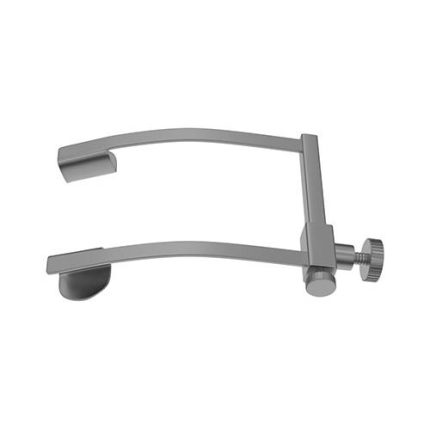
- Castroviejo Lid Speculum is an excellent tool for visualizing the ophthalmologic surgical field. The heavyset design ensures minimal slippage once the desired spread is achieved. Curved arms contour to the orbital rim and come in three different sizes depending on surgical preference. In addition, an adjustment screw is provided to increase control during the procedure.
- Read more
-
-
- Scissors
-
- wide handle, delicate sharp tips, curved, 5-1/8" (13.0 cm)?Castroviejo Mini Kertoplasty-Utility Scissors are a useful tool in in ophthalmologic operations. The delicate sharp tips are ideal for fine incisions of the corneal tissue for transplant. The miniature design combined with the wide handle allows for increased control while reducing physician fatigue.
- Read more
-
-
- Needle Holders
-
- delicate, 10.0 mm smooth jaws, flat handle, 5.6" (14.1 cm)?Castroviejo Needle Holder is a commonly used instrument in postoperative ophthalmologic procedures. The holder is commonly used for suturing corenoscleral wounds. The forceps feature delicate 10 mm tips and a locking mechanism as desired. Both straight and curved profiles are available depending on physician preference.
- Read more
-
-
- Needle Holders
-
- standard, 12.0 mm smooth jaws, flat handle, 5.6" (14.1 cm)?Castroviejo Needle Holder is a commonly used instrument in postoperative ophthalmologic procedures. The holder is commonly used for suturing corenoscleral wounds. The forceps feature standard length 12 mm tips for use with a variety of suturing needles and a locking mechanism as desired. Both straight and curved profiles are available depending…
- Read more
-
-
- Needle Holders
-
- heavy, 16.0 mm smooth jaws, flat handle, 5.9" (14.9 cm), straight w/ lock?Castroviejo Needle Holder is a commonly used instrument in postoperative ophthalmologic procedures. The holder is commonly used for suturing corenoscleral wounds. The forceps feature heavy set 16mm tips for use with thicker suturing needles and a locking mechanism as desired. Both straight and curved profiles are available depending…
- Read more
-
-
- Needle Holders
-
- 9.0 mm jaws, round handles, 4-3/4" (12.0 cm), straight w/ lock?Castroviejo Needle Holder is a commonly used instrument in postoperative ophthalmologic procedures. The holder is commonly used for suturing corenoscleral wounds. The forceps feature delicate 9mm tips and a rounded handle for a more ergonomic and controlled grip. The forceps also feature a locking mechanism to free the surgeon's hands…
- Read more
-
-
- Needle Holders
-
- very delicate, 9.0 mm smooth jaws, flat wide handle, 5.1" (13.0 cm)?Castroviejo Needle Holder is a commonly used instrument in postoperative ophthalmologic procedures. The holder is commonly used for suturing corenoscleral wounds. The forceps feature very delicate tips and a locking mechanism as desired. Both straight and curved profiles are available depending on physician preference.
- Read more
-
-
- Scissors
-
- curved, sharp blades, 8.0mm, 4" (10.2 cm)?Castroviejo Scissors are a general purpose tool in a variety of ophthalmologic procedures. The spring action design allows for the delicate incision of tissue and is commonly used during Mohs procedures. The sharp blades allow for quick and accurate cuts with minimal extraneous damage. The curved profile of the blades allows for the contouring…
- Read more
-
-
- Scissors
-
- curved, sharp blades, 8.0mm, 4" (10.2 cm)?Enucleation Scissors are ideal for excising the globe following an infection or trauma. The scissors feature a thick concave blade and a thin convex one. The thick blade allows the surgeon to push the globe anteriorly, gaining access to sever the optic nerve. The scissors are available in three different curvatures depending on surgical…
- Read more
-
-
- Forceps
-
- w/ platform, 1x2 teeth, 4-1/4" (11.0 cm)Castroviejo Suturing Forceps are a multipurpose tool for a variety of ophthalmologic procedures. The heavy set teeth ensure the firm grasp of tissue or suturing equipment without slippage, while the slightly extended length aids in accessing difficult areas. The forceps are available with a tying platform, designed to grasp both the tissue and suturing…
- Read more
-
-
- Forceps
-
- wide handle, 1x2 teeth on angled shaft, w/ platform, 4-1/8" (10.5 cm)Castroviejo Suturing Forceps are a multipurpose tool for a variety of ophthalmologic procedures. The heavy set teeth ensure the firm grasp of tissue or suturing equipment without slippage. The forceps are available with a tying platform, designed to grasp both the tissue and suturing equipment without changing instruments. Three…
- Read more
-
-
- Forceps
-
- wide handle, bayonet shape, 6.0 mm tying platform, 0.3 mm teeth, 4-1/8" (10.5 cm)?Castroviejo Suturing Forceps are a multipurpose tool for a variety of ophthalmologic procedures. The delicate teeth are designed for the handling of fine tissue, such as corneal tissue during a keratoplasty. The forceps are available with a tying platform, designed to grasp both the tissue and suturing…
- Read more
-
-
- Forceps
-
- wide handle, delicate, 1x2 teeth w/ tying platform, 4-1/4" (10.8 cm)?Castroviejo Suturing Forceps are a multipurpose tool for a variety of ophthalmologic procedures. The delicate teeth are designed for the handling of fine tissue, such as corneal tissue during a keratoplasty. The forceps are available with a tying platform, designed to grasp both the tissue and suturing equipment without changing…
- Read more
-
-
- Spatulas & Spoons
-
- double ended, 0.5 mm x 10.0 mm & 0.5 mm x 15.0 mm blades, 5-1/2" (14.0 cm)?Synechia Spatula is a frequently used tool in the treatment and management of an occulr synechia. The spatula is used to carefully dislodge the abnormal connection between the iris and either the lens or cornea. The spatula is double-ended with two different blade sizes…
- Read more
-
-
- Forceps
-
- 4-1/4" (11.0 cm)?Castroviejo Titanium Suturing Forceps are a multipurpose tool for a variety of ophthalmologic procedures. The heavy set teeth ensure the firm grasp of tissue or suturing equipment without slippage, while the slightly extended length aids in accessing difficult areas. The forceps are available with a tying platform, designed to grasp both the tissue and suturing equipment without changing…
- Read more
-
-
- Forceps
-
- round handle, 6.0 mm platform w/ cross-serrations at tip, 4-1/2" (11.4 cm)Catalano Micro Tying Forceps are an ideal tool during ophthalmologic procedures and post-operative care. The micro profile along with cross serrations are ideal for gripping suturing equipment as well as delicate tissue. The extended length allows access to difficult to reach areas, while the round handle is designed to…
- Read more
-
-
-
- Forceps
-
- angled 70 degrees, 3.0 mm tips, 4-3/4" (12.1 cm)Clayman IOL Folding Forceps are a unique tool used in artificial lens implantation techniques. The forceps are designed to fold the IOL either horizontally or longitudinally to allow for easier implantation. The rounded soft curve of the forceps aids in gripping the IOL with minimal damage or alteration. The angled tips provide…
- Read more
-
-
- Hooks &Manipulators
-
- angled 45 degrees, 9.0 mm from tip to angle, 4-3/4" (12.0 cm)Clayman Iris Hook is a commonly used tool during cataract procedures and operations needing access to the lens capsule. The 45 degree hook is ideal for grasping and retracting the delicate iris tissue and without tissue trauma.
- Read more
-
-
- Hooks &Manipulators
-
- 9.0 mm shaft w/ 0.2 mm hook, angled 45 degrees, 4-3/4" (12.0 cm)s Clayman-Jaffe Lens Manipulating Hook is a commonly used tool during cataract procedures. The hook is used to manipulate the opacified native lens during a phacoemulsification procedure. The 45 degree angled hook is ideal for moving the lens into a desired position for removal.
- Read more
-
-
- Needle Holders
-
- micro, 7.0 mm jaws, round handles, curved, 4-1/8" (10.5 cm)?Cohan Needle Holder is a commonly used tool in postoperative management of delicate ophthalmologic procedures. The holder features 7.0mm tips designed for handling microsutures. The spring handle with finely serrated jaws firmly grasp the needle and ensure minimal slippage. The forceps feature a locking mechanism to free the surgeon's hands if…
- Read more
-
-
- Forceps
-
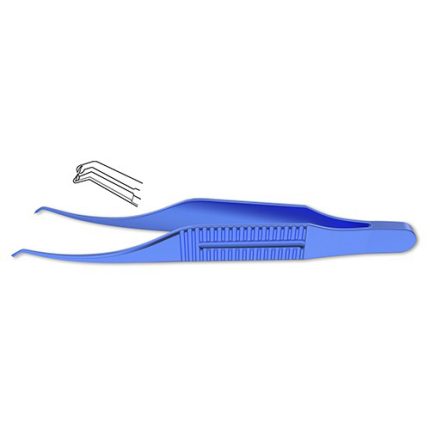
- angled tipsColibri Titanium Forceps are an excellent instrument during corneal surgery. The curved tip aides in grasping corneal tissue with minimal trauma or crushing, and are also useful for corneo-scleral suturing. Two different working lengths are available with the forceps depending on surgical preference. Forceps manufactured with a lightweight, titanium alloy body offer advantages for procedures that require delicate precision.…
- Read more
-
-
- Forceps
-
- 0.12 mm angled 45 degrees, 6.0 mm tying platform, 4-1/8" (10.5 cm)?Colibri Type Corneal Utility Forceps are a commonly used instrument for handling the corneal tissue during keratoplasty or repair. These forceps feature fine 0.12 teeth for the manipulating delicate tissue during cornea-scleral suturing, while the 6.0 mm tying platform allows for the handling of both tissue and sterile material.…
- Read more
-
-
- Forceps
-
- jaws w/ fine teeth, 4" (10.2 cm)Converse (Green) Eye Fixation Forceps are a commonly used tool in ophthalmologic procedures needing an extensive view of the globe. The forceps are generally applied at the limbus and then fixed gained the sclera for a secure hold. The forceps feature jaws with fine teeth for a atraumatic grip of the globe tissue. Three…
- Read more
-
-
- Specula
-
- w/ lock nut?Cook Speculum is a frequently used tool to visualize the ophthalmologic surgical field. The speculum's blades may be placed under each lid and then spread to a desired length to gain access to the globe. A locking nut feature aids in maintaining the spread, freeing surgeon or assistant's hands. Infant, child, and adult sizes are available depending on…
- Read more
-
-
- Hooks &Manipulators
-
- round handle, 5-5/8" (14.3 cm)?Crawford Retrieving Hook is a frequently used tool in occuloplastic procedures. The hook is used primarily to engage a silicone shut placed through the lacrimal apparatus from the nose. The extended length of the hook is designed to accommodate a variety of patient sizes.
- Read more
-
-
- Spatulas & Spoons
-
- sterling, 5" (12.5 cm)?Culler Iris Spatula is a commonly used tool in cataract surgery. The spatula is used to hold the iris in place while manipulating the lens capsule and nucleus. The spatula is commonly used to rotate the nucleus to a desired position for extraction. Two different sizes are available with the spatula depending on surgical preference.
- Read more
-
-
- Forceps
-
- 3.5" (8.9 cm)Desmarres Chalazion Forceps are a commonly used tool in diseases of the eyelid. The forceps are meant to expose a chalazion or other cysts of the lid. The ring blade of the forceps surrounds the cyst and tightened so the lid is everted. Three different ring sizes are available depending on the patient.
- Read more
-
-
- RETRACTORS
-
- stainless, 5-1/2" (14.0 cm)?Desmarres Lid Retractor is a specialized tool for a variety of ophthalmologic procedures. The retractor is placed on the conjunctival surface to pull the lid away from the cornea and deeper structures during a procedure. Five different sizes are available depending on patient variation.
- Read more
-
-
- RETRACTORS
-
- insulated, non-conductive, 5-1/2" (14.0 cm)?Desmarres Lid Retractor is a specialized tool for a variety of ophthalmologic procedures. The retractor is placed on the conjunctival surface to pull the lid away from the cornea and deeper structures during a procedure. The insulated, non-conductive tip is ideal for surgeries involving electrodes or cauterization. Three different sizes are available depending on patient variation.
- Read more
-
-
- Spuds
-
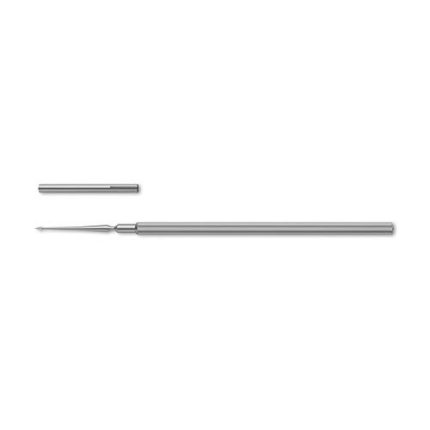
- in reversible screw handleDix Needle & Gouge is a commonly used tool during foreign body removal of the eye. The tool features a reversible screw handle to place the needle or gouge in either end to remove debris from the cornea or sclera. The set is available with each individual part sold separately as needed.
- Read more
-
-
- Forceps
-
- serrated paddle jaws, 4-1/8" (10.5 cm)?Dodick Nucleus Splitter is a commonly used tool for phacoemulsifcation. The serrated paddle jaws are designed to break up the nucleus of the lens for eventual aspiration. The splitter the features finger holes in the handle to adjust traction and grip during the procedure.
- Read more
-
-
- Hooks &Manipulators
-
- 5-1/4" (13.5 cm)?Double Fixation Hook is a useful tool in ophthalmic and occuloplastic procedures. The instrument may be used to atraumatically fix the lid or other skin flaps for manipulation of deeper tissues. Two different hook widths are available depending on surgical preference and patient variation.
- Read more
-
-
- Forceps
-
- 3-1/2" (8.9 cm)Douglass Cilia Forceps are an ideal tool for ophthalmologic procedures involving the eyelid. The forceps feature a slightly rounded tip for removing the cilia for blepharoplasty or management of blepharitis marginalis. The wide serrated handle gives the surgeon an ergonomic grip during the operation, minimizing fatigue.
- Read more
-
-
- Forceps
-
- 14.0 mm oval lower plate, straight 9.0 mm serrated upper jaw, 4" (10.0 cm)Ehrhardt Lid Forceps are a tool used to expose the upper fornix of the eye. The forceps are commonly used to doubly evert the upper lid to gain more access to the upper fornix for examination or to retrieve foreign bodies. The forceps feature a serrated upper…
- Read more
-
-
- Spuds
-
- curved, 1.0 mm blade?Ellis Foreign Body Spud is a popular tool to removed foreign material from the eye. The spud features a curved blade to atraumatically scrape foreign material from the cornea following penetration. The curvature of the blade accommodates to the natural shape of the cornea, ensuring precise control and minimal irritation.
- Read more
-
-
-
- Forceps
-
- standard handle, heavy, 1x2 angled teeth, 4-1/4" (11.0 cm)?Elschnig Fixation Forceps are ideal for holding in place tissue during ophthalmologic procedures. The teeth on the forceps are ideal for handling and fixing the conjunctiva and episcleral tissue, or holding the globe in place. The handle features finger holds for adjusting grip and traction during the procedure.
- Read more
-
-
- Forceps
-
- wide handle, heavy, 1x2 angled teeth, 4-1/4" (11.0 cm)?Elschnig Fixation Forceps are ideal for holding in place tissue during ophthalmologic procedures. The teeth on the forceps are ideal for handling and fixing the conjunctiva and episcleral tissue, or holding the globe in place. The handle features finger holds for adjusting grip and traction during the procedure and a wider set…
- Read more
-
-
- Scissors
-
- miniature pattern, blunt tips, 4-1/8" (10.5 cm)?Enucleation Scissors are ideal for excising the globe following an infection or trauma. The scissors feature a thick concave blade and a thin convex one. The thick blade allows the surgeon to push the globe anteriorly, gaining access to sever the optic nerve. The scissors are available in three different curvatures depending on surgical…
- Read more
-
-
- Forceps
-
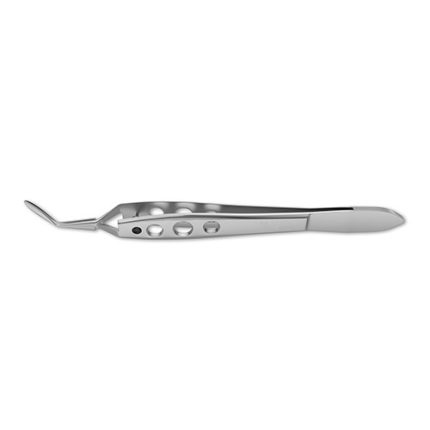
- 4" (10.0 cm)Ernest-McDonald Soft IOL Holding Forceps are a unique tool used in artificial lens implantation techniques. Often, the lower jaw of the forceps is lubricated with a viscoelastic and used to grasp the lens. The rounded soft curve of the forceps aids in gripping the IOL with minimal damage or alteration. In addition, the forceps feature finger holes in…
- Read more
-
-
- Eye Speciatly Instrumentatio
-
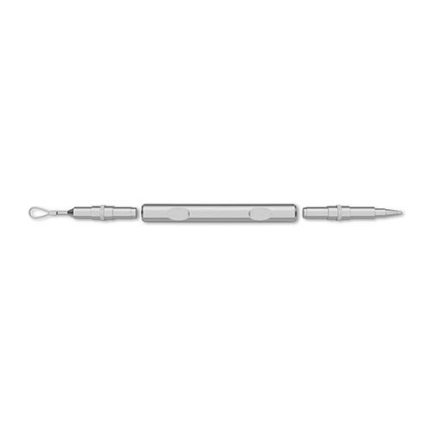
- w/ foreign body loop?Eye Magnet is a novel tool for removing foreign objects from the eye. The magnet is designed to remove fragments of metal lodged in the superficial eye. The instrument features a double-ended design, including a foreign body loop used to encircle the object for extraction.
- Read more
-
-
- Forceps
-
- 4-1/2" (11.5 cm)?Faulkner Lens Folding Forcep is a unique tool used in artificial lens implantation techniques. Often, the lower jaw of the forceps is lubricated with a viscoelastic and used to grasp the lens. The rounded soft curve of the forceps aids in gripping the IOL with minimal damage or alteration.
- Read more
-
-
- Hooks &Manipulators
-
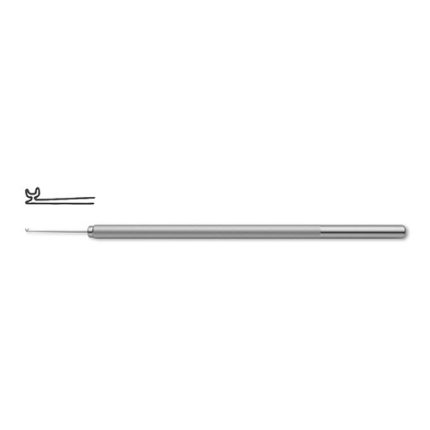
- 10.0 mm shaft w/ 0.2 mm t-shaped hook, 4-3/4" (12.0 cm)?Fenzel Lens Manipulator is a commonly used tool during cataract procedures. The manipulator features an additional stabilizing bar on the tip to aid in controlling the lens to an appropriate position for extraction. Both straight and angled models are available depending on surgical preference.
- Read more
-
-
- Forceps
-
- wide handle, curved tips with tying surface, 4-1/4" (10.8 cm)?Fine Tying forceps are a multipurpose tool designed to handle either suture or microsuture material during an ophthalmologic procedure. The tying surface platform facilitates in grasping the suture. Curved tips ensure easy access to the surgical field on a level surface.
- Read more
-
-
-
- Forceps
-
- octagonal grip, 0.5 mm width, 3-3/4" (9.5 cm)?Foerster Eye Forceps are a unique tool for ophthalmologic surgeries. The forceps come available with serrated tips designed to handle sterile dressing material, or 1x2 teeth manufactured to firmly grip tissue. The unique octagonal grip provides differential traction for the surgeon during the procedure, allowing for greater manipulation of the instrument. Finally, both…
- Read more
-
-
- Spuds
-
- arrowhead shape, w/ guard, 4-3/4" (12.0 cm)?Foreign Body Spud is a popular tool to removed foreign material from the eye. The spud features an arrowhead tip to scrape or excise foreign material from the cornea following deeper penetration. The small profile of the design ensures precise control and minimal irritation, while the built in guard protects the surrounding tissue from…
- Read more
-
-
- Eye Speciatly Instrumentatio
-
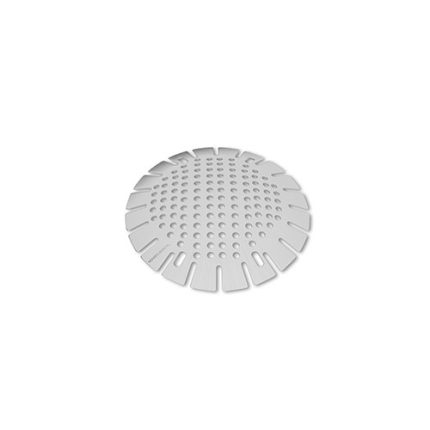
- aluminum?Fox Eye Shield is a commonly used tool to protect an unoperated eye in both ophthalmologic and various other surgeries. The shield is typically applied to the eye after sterile gauze and alcohol have been draped across the lid surface. Care should be taken that no eyelashes have been turned under during the procedure as to not cause excess irritation.
- Read more
-
-
- Eye Speciatly Instrumentatio
-
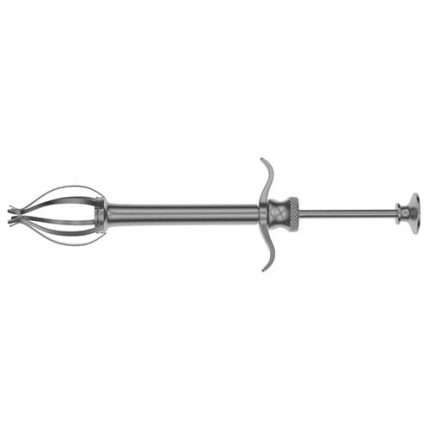
- 4-7/8" (12.4 cm)Sphere Introducer & Holder is a tool of choice when performing enucleation procedures. The instrument can be use to grip the globe prosthetic and introduce it into the orbital cavity for future securing. An adjustable raking mechanism on the handle allows for grip control with different sized prosthetics.
- Read more
-
-
- Forceps
-
- smooth blade, inside dimensions 12.0 mm x 14.0 mm long, locking thumb screw, 3-3/4" (9.5 cm)?Francis Chalazion Forceps are a commonly used tool in diseases of the eyelid. The forceps are meant to expose a chalazion or other cysts of the lid. The ring blade of the forceps surrounds the cyst and tightened so the lid is everted. This model…
- Read more
-
-
- Spuds
-
- flag-shaped, sharp, 4-3/4" (12.0 cm)Francis Spud is a frequently used tool to removed foreign material from the eye. The spud features a slanted sharp tip to scrape foreign material from the cornea following deeper penetration. The small profile of the design ensures precise control and minimal irritation to the surrounding tissue.
- Read more
-
-
- Forceps
-
- 11.0 mm angled smooth jaws, very delicate, 0.3 mm tips, 4" (10.0 cm)?Gaskin Fragment Forceps are a specialty tool used in cataract extraction procedures. The ultra-delicate 11.0 mm tips can be used to extract fragments of the native lens before subsequent implantation of the IOL. The wide set ribbed handle creates an ergonomic grip for the surgeon, designed to reduce…
- Read more
-
-
- Punches
-
- Gass Corneoscleral PunchGass Corneoscleral Punch is a commonly used instrument in patients with glaucoma. The punch is used to perform a sclerectomy at the corneoscleral junction to drain excess fluid from the anterior chamber. The benefit of the punch is there is no need to hold the scleral flap during the procedure. The punch bite diameter is 0.75 mm and…
- Read more
-
-
- Hooks &Manipulators
-
- 5-3/4" (14.5 cm)?Gass Retinal Detachment Hook is a multipurpose tool used for procedures involving the retina and extraoccular muscles. The rounded hook may be used to examine the delicate retinal tissue for manipulation following detachment. IN addition, the wide tip is handy for the lifting of extraocular muscles for the passing of sutures.
- Read more
-
-
- Knives
-
- 3.0 mm wide, 5-1/4" (13.5 cm)?Gill Corneal Knife is a commonly used blade in corneal surgeries. The blade may be used to scrape the anterior corneal surface to remove the epithelium, frequently done following a corneal lesion. With proper surgical technique, the knife may also be used to dissect the deeper layers of the cornea as needed. Both straight and…
- Read more
-
-
- Forceps
-
- curved, 0.6 mm tip, 1x2 teeth down, 3" (7.5 cm)?Gills Iris Forceps are a specially designed tool for handling iris tissue during ophthalmologic procedures. This particular model features a strongly curved shaft accommodating the natural curvature of the tissue. The forceps also feature 1x2 teeth that drop below the level of the shaft upon closure, causing minimal protrusion.
- Read more
-
-
- Scissors
-
- extra thin long blades, sharp tips, 3-3/8" (8.5 cm)?Gill-Vannas Capsulotomy Scissors are a commonly used tool in ophthalmologic surgical procedures. The extra-long thin blades are designed to incise either the anterior or posterior capsule for trimming or removal. The scissors are available in either straight, curved, or angled forward designs to accommodate a variety of patient needs.
- Read more
-
-
- Cannulas, OPHTHALMOLOGY
-
- angled 45 degrees, 25-gauge ?Gills-Welsh Olive Tip Cannula is a commonly used tool in a variety of cataract procedures. The cannula is used to gently manipulate the lens tissue while aspirating remaining debris following phacoemulsification. The 45 degree angled shaft aids in visualization during the procedure.
- Read more
-
-
- Scissors
-
- micro pattern, angled blades, 3-1/8" (8.0 cm)?Gill-Welsh Vannas Scissors are a commonly used tool in ophthalmologic surgical procedures. The extra-long thin blades are designed to cut either the anterior or posterior capsule for trimming or removal. The sharp tips facilitate in the incision of delicate corneal tissue. The handle of the scissors feature finger holes to provide a more ergonomic…
- Read more
-
-
- Forceps
-
- slight curved, 2-3/4" (7.0 cm)Gills Iris Forceps are a specially designed tool for handling iris tissue during ophthalmologic procedures. These delicate forceps have rough serrations lending the surgeon a firmer grip of the tissue. The forceps also feature a model with 1x2 teeth that drop below the level of the shaft upon closure, causing minimal protrusion.
- Read more
-
-
- Forceps
-
- 1x2, 0.12 mm forward teeth, bayonet tips, 2-3/4" (7.0 cm)Gills?Hess Iris Forceps are a specially designed tool for handling iris tissue during ophthalmologic procedures. The bayonet tips allow for increased surgical view during the procedure, while the wide serrated handle allows for a more firm grip. The forceps also feature 1x2 teeth that drop below the level of the shaft…
- Read more
-
-
- Scissors
-
- sharp tips, extra-thin (delicate) 7.0 mm long blades, angled forward, 3-1/8" (8.0 cm)?Gill-Vannas Scissors are a commonly used tool in ophthalmologic surgical procedures. The extra-long thin blades are designed to cut either the anterior or posterior capsule for trimming or removal. The sharp tips facilitate in the incision of delicate corneal tissue.
- Read more
-
-
- Cannulas
-
- 25-gauge, angled ?Gills-Welsh Cannula is a commonly used tool in cataract and various other ophthalmologic procedures. The small gauge of the cannula may be used to aspirate fluid in the anterior chamber of the eye following a limbal incision. Four different angles are available with the cannula depending on surgical preference.
- Read more
-
-
- Forceps
-
- smooth tips, 2-3/4" (7.0 cm) ?Gills-Welsh Capsule Forceps are a tool used frequently in cataract procedures. The smooth, fine tips are used to grip and manipulate capsular tissue during nucleus extraction or IOL implantation. A large hole in the handle allows for grip adjustment during the operation.
- Read more
-
-
- Lens Loops, Pushers & Rotators
-
- double-ended, 5 mm wide x 7 mm loop, olive tip on opposite end, 4-3/4" (12.1 cm)?Gills-Welsh Lens Loop is a commonly used tool during cataract and lens extraction procedures. The loop is used to hold the lens in place to prevent it from falling back into the vitreous and for eventual extraction. The loop also features an olive tip to…
- Read more
-
-
- Cannulas
-
- 30 gauge u-tip, overall length 28.0 mm (excluding hub)Gimbel Irrigating Cannula is a useful tool during cataract and IOL implantation procedures. The cannula may be used to perfuse fluid for easier manipulation of the IOL or easier access to debride nuclear fragments. The ultra-small gauge facilitates entrance into the lens capsule.
- Read more
-
-
- Forceps
-
- tying platform, 4-1/4" (10.8 cm), 0.50 mm smooth tips?Girard Corneoscleral Forceps are a commonly used instrument for handling the corneal tissue during keratoplasty or repair. These forceps feature fine 0.50 mm smooth tips for the handling of sterile material during corneo-scleral suturing. The round knurled handle provides a delicate but secure grip and the forceps are available in both right…
- Read more
-
-
- Forceps
-
- round knurled handle, 1x2 0.12 mm teeth, 6.0 mm tying platform, 4-1/4" (10.8 cm)?Girard Corneoscleral Forceps are a commonly used instrument for handling the corneal tissue during keratoplasty or repair. These forceps feature fine 0.12 teeth for the manipulating delicate tissue and for corneo-scleral suturing. The round knurled handle provides a delicate but secure grip and the forceps are available…
- Read more
-
-
- Spatulas & Spoons
-
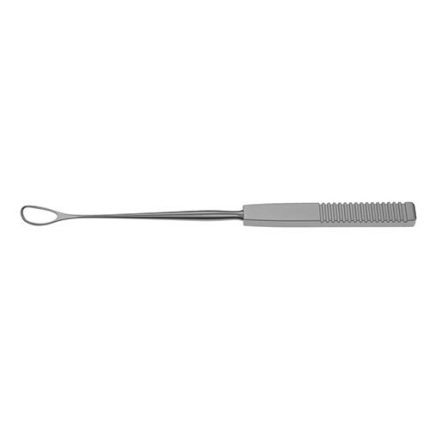
- semi-sharp tip, 0.5 mm, 4-1/2" (11.4 cm)?Elschnig Cyclodialysis Spatula is a commonly used tool in the treatment of glaucoma. The spatula is used in the procedure to dissociate the ciliary body from the sclera. Further, the tool may be used to enlarge an incision from a sclerectomy if desired. The spatula features a slender 10mm blade for ease of use.
- Read more
-
-
- Specula
-
- 4.0 mm sharp prongs, 16.0 mm spreadGoldstein Lacrimal Sac Retractor is a commonly used tool in occuloplastic procedures. The retractor is used to expose the lacrimal sac during obstruction or infection. The sharp teeth are designed to reach the periosteum and give deeper exposure. In addition, a locking screw mechanism allows the spread to be held in place.
- Read more
-
-
- Spuds
-
- small, sharp?Gold Club Spud is a frequently used tool to removed foreign material from the eye. The spud features a slanted blunt tip to atraumatically scrape foreign material from the cornea. The small profile of the design ensures precise control and minimal irritation to the surrounding tissue.
- Read more
-
-
- Forceps
-
- cross-action jaws with guard, 3-3/4" (9.5 cm)Gradle Cilia Forceps are a multipurpose instrument for ophthalmologic procedures involving the eyelid. The forceps feature a smooth that can be used for removing the cilia for trichiasis or management of blepharitis marginalis. In addition, the forceps feature a grip designed to minimize trauma to the surrounding conjunctiva and globe. The cross action jaw…
- Read more
-
-
- Forceps
-
- fine, multiple atraumatic teeth, 4-1/8" (10.5 cm)?Graefe Fixation Forceps are a commonly used tool in ophthalmologic procedures needing an extensive view of the globe. The forceps are generally applied at the limbus and then fixed gained the sclera for a secure hold. Two different jaw sizes are available with the forceps as well as a locking feature as desired.
- Read more
-
-
- Forceps
-
- 2-3/4" (7.2 cm)Graefe Iris Forceps are a commonly used instrument during iridectomy and other ophthalmologic procedures involving the iris. The delicate tips feature either cross serrations or 1x2 teeth to gently but firmly grip the iris tissue following incision for either manipulation or extraction. Both straight and curved profiles are available depending on surgical preference.
- Read more
-
-
- Cannulas
-
- iris retractor, posterior surface for capsule polishing, 23-gauge, 1" (2.5 cm)?Graether Collar Button is a useful tool in a variety of anterior chamber procedures. The button is used to gently grip the iris tissue and pull to enlarge the pupil. Both straight and angled models are available depending on surgical preference.
- Read more
-
-
- RETRACTORS
-
- Graether Collar Button On Handle is a useful tool for cataract and refractive surgeries. The collar is useful to stretching the pupil by selectively retracting portions of the iris tissue, effectively exposing the underlying lens capsule. Both straight and angled models are available depending on surgical preference.
- Read more
-
-
- Hooks &Manipulators
-
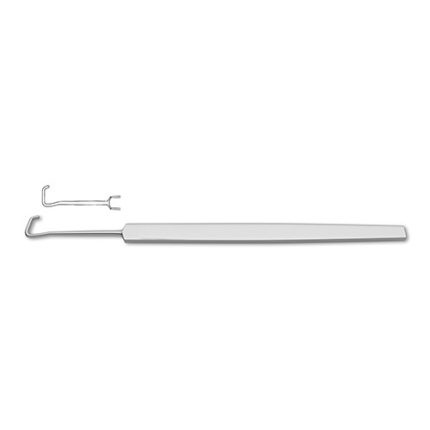
- flat handle, 5-1/8" (13.0 cm)?Green Strabismus hook is a commonly used instrument in performing procedures involving the ocular muscles. The hook can be used to elevate the muscle tissue for dissection and reattachment. The toe of the hook is designed to press against the sclera and "ski" along the surface until the full muscle width has been discerned.
- Read more
-
-
- Forceps
-
- delicate, brown-adson type teeth, castroviejo body, 4.75" (12.1 cm)?Griffith Brown Forceps are a commonly used fine forceps for many occuloplastic operations. The delicate teeth may be used to grasp and manipulate fat tissue during a blepharoplasty. The wide, ribbed handle provides the surgeon and ergonomic grip during the procedure, minimizing fatigue.
- Read more
-
-
- Specula
-
- horizontal suture posts, blade spread 38.0 mm, 14.0 mm wide blades, 3-3/8" (8.5 cm)Guyton-Park Speculum is a commonly used ophthalmologic tool when visualization of the entire globe is desired. Both end pieces of the blade can be fit into the upper and lower lid, achieving a spread of 28.0 mm. The speculum is self-retaining, designed to hold in place once…
- Read more
-
-
- Forceps
-
- colibri style, 1x2 teeth, 45 degree angle, slightly overlapping, 3" (7.6 cm)?Harms Corneal Utility Forcep is a specialized tool designed for handling corneal tissue during ophthalmologic procedures. The delicate 1x2 teeth provide a firm yet atraumatic grip to the delicate corneal epithelium during surgery or cornea-scleral suturing. The ribbed handle with finger hole allows the surgeon to adjust grip for…
- Read more
-
-
- Forceps
-
- wide handle, 6.5 mm tying platform, 4-1/4" (10.8 cm)?Harms-Tubingen Tying Forceps are an excellent instrument for handling fine suturing material during ophthalmologic procedures. The smooth platform with rounded edges are ideal for holding sutures securely and atraumatically. The forceps may be used for monofilament suturing material for penetrating keratoplasty. A wider handle allows for a more ergonomic and sure grip…
- Read more
-
-
- Forceps
-
- 4-1/8" (10.5 cm)?Harms-Tubingen Tying Forceps are an excellent instrument for handling fine suturing material during ophthalmologic procedures. The smooth platform with rounded edges are ideal for holding sutures securely and atraumatically. The forceps may be used for monofilament suturing material for penetrating keratoplasty. Both curved and straight profiles are available with the forceps depending on physician preference.
- Read more
-
-
- Hooks &Manipulators
-
- 0.25 mm diameter, blunt tip, angled?Harris-Sinskey Lens Manipulating Hook is a useful tool in cataract procedures. The hook may be used to maneuver lens tissue in order to facilitate extraction of the opacified tissue. The smaller diameter hook affords the surgeon increased control during the procedure. In addition, the blunt tip ensures minimal tissue damage or posterior capsule tear.
- Read more
-
-
- Cannulas
-
- flat tip, 21-gauge, overall length excluding hub 1-1/4" (3.0 cm)?Gimbel Irrigating Cannula is a useful tool during cataract and IOL implantation procedures. The cannula may be used to perfuse fluid for easier manipulation of the IOL or easier access to debride nuclear fragments. The ultra-small gauge facilitates entrance into the lens capsule.
- Read more
-
-
- Curettes
-
- 5" (12.5 cm)Heath Chalazion Curette is a popular tool used to remove cysts or masses of the lid. The curette features a sharp rounded blade helping to excise the lid mass and are best used with a chalazion clamp. The deeper cup aids in collecting tissue from larger cysts without risk of losing debris into the globe. Three different sizes…
- Read more
-
-
- Forceps
-
- 12.0 mm x 14.0 mm inside diameter of fenestrated jaw, 3-3/4" (9.5 cm)?Heath Chalazion Forceps are a commonly used tool in diseases of the eyelid. The forceps are meant to expose a chalazion or other cysts of the lid. The forceps feature an open blade meant to encircle the cyst and tightened so the lid is everted. A 12x14 mm…
- Read more
-
-
- Hooks &Manipulators
-
- 0.75 mm hook, angled, 4-3/4" (12.0 cm)?Hirschman Iris Hook is a commonly used tool during cataract procedures and operations needing access to the lens capsule. The 0.75mm hook provides fine control while retracting only a selected portion of iris tissue. A blunted tip assures minimal tissue damage to the surrounding globe.
- Read more
-
-
- Spatulas & Spoons
-
- 10 mm angled blade, notched on sides & tip, 4-7/8" (12.4 cm) Hirschman Iris Lens Spatula is a commonly used tool in cataract and other ophthalmologic procedures. The spatula can be used to either handle the lens nucleus or hold back the iris tissue. The spatula features notches that help atraumatically grip tissue.
- Read more
-
-
- Punches
-
- 1.0 mm wide 7.0 mm long punch, 3-1/2" (9.0 cm)?Holth Corneoscleral Punch is a commonly used instrument in patients with glaucoma. The punch is used to perform a sclerectomy at the corneoscleral junction to drain excess fluid from the anterior chamber. The benefit of the punch is there is no need to hold the scleral flap during the procedure. The…
- Read more
-
-
- Forceps
-
- open smooth blade, locking thumb screw, 12.0 mm blade?Hunt Chalazion Forceps are a commonly used tool in diseases of the eyelid. The forceps are meant to expose a chalazion or other cysts of the lid. The ring blade of the forceps is open and surrounds the cyst and tightened so the lid is everted. This model also features a locking…
- Read more
-
-
- Scissors
-
- 4" (10.2 cm)Iris Micro Dissecting Scissors are a multipurpose tool used in ophthalmologic and general surgery procedures. The scissors may be used for manipulating and incising tissue in an iridectomy or iridotomy. The spring loaded design with widely spaced handle gives the surgeon optimal control during the procedure, while the micro pattern affords the surgeon maximal precision. The scissors come…
- Read more
-
-
- Scissors
-
- standard pattern, 4" (10.0 cm)?Iris Scissors are a multipurpose tool used in ophthalmologic and general surgery procedures. The scissors may be used for manipulating and incising tissue in an iridectomy or iridotomy. In addition, the sharp tip design is also useful to incising and removing lesions in primary care procedures. The smaller profile of the scissors affords the surgeon more…
- Read more
-
-
- Scissors
-
- large ribbon ring handles with flat shanks, 4-1/4" (11.0 cm)?Iris Scissors are a multipurpose tool used in ophthalmologic and general surgery procedures. The scissors may be used for manipulating and incising tissue in a iridectomy or iridotomy. In addition, the sharp tip design is also useful for incising and removing lesions in primary care procedures. The scissors are available with…
- Read more
-
-
- Scissors
-
- standard pattern, sharp tips, 4-1/2" (11.5 cm)?Iris Scissors are a multipurpose tool used in ophthalmologic and general surgery procedures. The scissors may be used for manipulating and incising tissue in an iridectomy or iridotomy. The spring loaded design with widely spaced handle gives the surgeon optimal control during the procedure. The scissors come in straight or curved patterns depending on…
- Read more
-
-
- Spatulas & Spoons
-
- malleable, 1.0 mm x 30.0 mm, 5" (12.5 cm)Iris Spatula is a commonly used tool in cataract surgery. The spatula is used to hold the iris in place while manipulating the lens capsule and nucleus. The spatula is commonly used to rotate the nucleus to a desired position for extraction. The spatula is malleable for increased maneuverability or for accessing…
- Read more
-
-
- RETRACTORS
-
- 21.0 mm & 24.0 mm wide ends, 4-1/4" (10.8 cm)?Jaeger Lid Plate is a useful tool in a multitude of ophthalmologic procedures. The transparent nature of the plate allows for the visualization of orbital contents during retraction of lid or other tissue. The ends of the plate are of different size to switch between depending on physician preference.
- Read more
-
-
- Hooks &Manipulators
-
- 0.15 mm diameter, straight, 4-1/2" (11.5 cm)?Jaffe Lens Manipulating Hook is a commonly used tool during cataract procedures. The hook is used to manipulate the opacified native lens during a phacoemulsification procedure. The thin shaft of the hook is meant to maximize control of the instrument while providing enough leverage to maneuver the lens into a desired position.
- Read more
-
-
- Spatulas & Spoons
-
- flat, smooth, 5.0 mm wide, 4-3/4" (12.0 cm)Jaffe Lens Spatula is a useful tool for cataract procedures and other ophthalmologic procedures involving the lens. The spatula may be used to handle the nucleus during extraction or rotation.
- Read more
-
-
- RETRACTORS
-
- 9.0 mm wide, set of 2?Jaffe Lid Retractor is a commonly used tool during ophthalmologic surgery. The instrument is designed to pull the lid back with a secure hold to expose the anterior aspect of the globe. The retractor is available in a set of two for simultaneous upper and lower lid retraction.
- Read more
-
-
- Scissors
-
- medium blades, very sharp tips, curved, 4-1/8" (10.5 cm)?Jaffe Stich Scissors are a particularly useful tool in posteroperative management of ophthalmologic procedures. The curved sharp blade is designed to remove stitches from the conjunctiva or eyelids following an incision. Finger slots are included in the scissors to adjust the grip as necessary during the procedure.
- Read more
-
-
- Forceps
-
- very delicate smooth jaws w/ platform, 4-1/8" (10.5 cm)?Jaffe Tying forceps are a commonly used tool in ophthalmologic operations. The long tying platform is intended to the handling of fine monofilament nylon and prolene sutures during wound closure or repair. The forceps are available in curved or straight models depending on surgical preference.
- Read more
-
-
- Lens Loops, Pushers & Rotators
-
- blunt forked tip angled 9.0 mm from tip?Jaffe-Bechert Lens Nucleus Rotator is a commonly used tool in cataract procedure. The instrument is commonly used to rotate the lens slightly in the small intracapsular space for extraction or further manipulation. In addition, the angled tip is designed to minimize surgical obstruction.
- Read more
-
-
- Forceps
-
- 1x2 teeth w/ platform, 4-1/8" (10.5 cm)?Jaffe-Castroviejo Suture Forceps are a multipurpose tool for a variety of ophthalmologic procedures. The heavy set teeth ensure the firm grasp of tissue or suturing equipment without slippage, while the added finger holes allow the surgeon to adjust the grip during the procedure. The forceps are available with a tying platform, designed to grasp…
- Read more
-
-
- Hooks &Manipulators
-
- 0.15 mm v-shaped angled tip, flat handle, 4-3/4" (12.0 cm)?Jaffe-Maltzman Lens Manipulating Hook is a commonly used tool during cataract procedures. The hook features a "V" shaped design for adjustable traction and stability while manipulating the lens into a desired position. The flat handle provides a sure grip during the operation.
- Read more
-
-
- Hooks &Manipulators
-
- 5-1/8" (13.0 cm)?Jameson Muscle Hook is a useful tool in performing strabismus or other ophthalmologic procedures involving the ocular muscles. The hook can be used to elevate the muscle tissue for dissection and reattachment. The rounded tip ensures atraumatic entrance underneath the desired muscle. Two different sizes are available with the hook depending on surgical preference.
- Read more
-
-
- Forceps
-
- slide lock, 4" (10.0 cm)?Jameson Muscle Recession Forceps are commonly used during strabismus surgeries. The forceps are designed to handle the muscle insertions for subsequent removal and repositioning on the globe. Two different jaw sizes are available with the forceps and are angled right or left depending on surgical necessity.
- Read more
-
-
- Cannulas
-
- tip flattened, 19-gauge Jensen Capsule Polisher is a useful tool in cataract procedures. The polisher is used to remove opacity on the posterior capsule leading to improved surgical outcome. The diamond dusted tip is delicate enough to prevent rupture of the capsule. Two sizes are available with the polisher depending on surgical preference.
- Read more
-
-
- Needle Holders
-
- straight serrated jaws, serrated thumb plate w/ lock, 5-1/4" (13.5 cm)?Kalt Needle Holder is a commonly used tool in postoperative management of ophthalmologic procedures. The instrument is used to grip the needle in strabismus, lid, or lacrimal operations. Also, it is often used for passing bridle sutures in extraocular muscles. Two jaw sizes are available depending on surgical preference.
- Read more
-
-
- Scissors
-
- miniature pattern, uneven blunt blades, upper blade shorter than lower blade,?Katzin Corneal Transplant Scissors are a useful tool during Keratoplasty operations. The miniature pattern of the blades allows for precise incisions of the corneal tissue. The uneven blades are designed to accommodate the curvature and thickness of the cornea, producing a minimally altered graft. In addition, the scissors are available…
- Read more
-
-
- Punches
-
- produces a precise 0.75 mm round hole w/ out tissue tags, serrated squeeze handle?Kelly Descemet Punch is a commonly used instrument in patients with glaucoma. The punch is used to perform a sclerectomy to drain excess fluid from the anterior chamber. The benefit of the punch is there is no need to hold the scleral flap during the procedure. The…
- Read more
-
-
- Cannulas
-
- 19-gauge cannula, marked at 5.0, 6.0, & 7.0 mm, 2 irrigating ports ?Kelman Cyclodialysis Cannula is a commonly used tool in glaucoma procedures. The cannula is frequently used to irrigate the anterior chamber once a communication has been established between the anterior chamber and the suprachoroidial space. The cannula features a port on both the right and left side depending…
- Read more
-
-
- Knives
-
- sharp edge, 22 gauge shaft, 1.3" (3.2 cm)?Kelman Cystotome Knife is a useful tool in cataract procedures. The knife features a curved blade with a sharp tip used to perforate the anterior lens capsule. From this point, an anterior capsulotomy can be performed. The knife also features an additional cannula feature to grasp the capsular fragments.
- Read more
-
-
- Cannulas
-
- angled tip, 2.0 mm, 30 gauge, 3/4" (1.9 cm) Kelman Dipstick is a commonly used tool in IOL cataract procedures. The dipstick features markings at 5,6, and 7 mm and placed through the scleral incision to measure the size of the IOL implant needed.
- Read more
-
-
- Forceps
-
- angled, 1x2 teeth, 5.0 mm platform, 3" (7.5 cm)?Kelman McPherson Corneal Suturing Forceps are a useful tool in ophthalmologic procedures, particularly cataract surgeries. The angled teeth are ideal for grasping the capsular fragment or suturing equipment during the procedure. The built in tying platform allows the surgeon the handle both tissue and sutures with the same instrument.
- Read more
-
-
- Forceps
-
- standard pattern, smooth jaws, 7.5 mm tying platform, angled, 3-1/8" (8.0 cm)?Kelman-McPherson Tying Forceps are a useful tool in ophthalmologic procedures, particularly cataract surgeries. The smooth tips are ideal for handling the anterior capsular flap during removal of the native lens as well as handling both 8-0 and 11-0 sutures. In addition, the 7.5 mm tying platform provides the surgeon…
- Read more
-
-
- Forceps
-
- very delicate, wide handle, smooth jaws, 7.5 mm tying platform, angled, 3-3/4" (9.5 cm)?Kelman-McPherson Tying Forceps are a useful tool in ophthalmologic procedures, particularly cataract surgeries. The smooth, very delicate tips are perfect for fine handling of the capsular flap during removal of the native lens as well as handling both 8-0 and 11-0 sutures. In addition, finger holes on…
- Read more
-
-
- Spatulas & Spoons
-
- 4.0 mm x 17.5 mm flat platinum spatula with 34.0 mm shaft, 5-3/4" (14.5 cm)?Kimura Platinum Spatula is a commonly used tool for eye pathologies. The spatula is commonly used to obtain conjunctival scrapings. The tip of the spatula is designed to typically run along the inferior palpebral conjunctiva without causing excess tissue damage or irritation.
- Read more
-
-
- Lens Loops, Pushers & Rotators
-
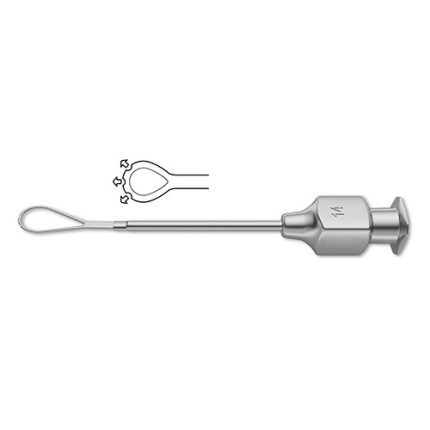
- long, slender loop, 5-1/2" (14.0 cm)?Kirby Intra-capsular Lens Loop is a commonly used tool during cataract and lens extraction procedures. The loop is used to hold the lens in place to prevent it from falling back into the vitreous and for eventual extraction. The slender loop design minimizes obstruction during the procedure.
- Read more
-
-
- Specula
-
- blades 14.0 mm wide, spread 60.0 mm, 3-3/8" (8.5 cm)?Knapp Eye Speculum is a frequently used tool in visualizing the globe during ophthalmologic procedures. The open wire design minimizes tissue damage while still providing adequate retraction. The speculum is designed to accommodate up to a 60.0 mm spread with a locking screw to hold in place.
- Read more
-
-
- Cannulas
-
- irrigating ports at 12, 10 & 2 o'clock, 23-gauge, overall length tip to hub 1-1/2" (3.8 cm) Knolle Anterior Chamber Cannula is a frequently used tool in cataract extraction procedures. The small gauge cannula with angled tip is nimble enough to fit into a small limbal incision accessing the anterior chamber. It may be used to aspirate fluid within the…
- Read more
-
-
- Hooks &Manipulators
-
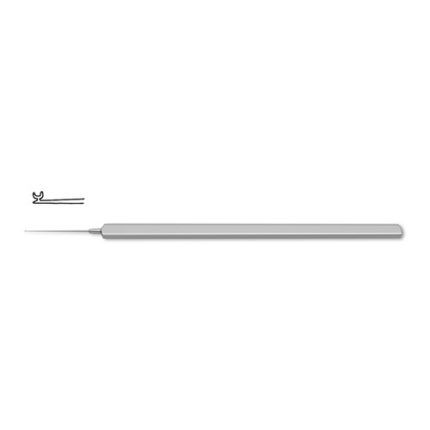
- 0.5 mm hook, 4-7/8" (12.4 cm)?Knolle Iris Hook is a commonly used tool in cataract surgeries. The hook is used to retract a portion of the iris tissue to gain access to the lens capsule. Often, multiple hooks are used at different positions around the iris and anchored, providing adequate visualization for lens removal. The Knolle hook has a slender…
- Read more
-
-
- Spatulas & Spoons
-
- 30 mm blade, with marking at 5 mm, 6 mm & 7 mm from tip, 5" (12.7 cm)?Knolle Lens Spatula & Gauge is a useful tool for cataract procedures and other ophthalmologic procedures involving the lens. The spatula may be used to handle the nucleus during extraction or rotation. The gauge feature on the lens allows the surgeon to track…
- Read more
-
-
- Cannulas
-
- 1.0 mm tip, angled 30 degrees, sandblasted, 23-gauge, 3/4" (2.0 cm)Knolle-Pearce Irrigating Lens Loop is a useful tool for cataract and lens extraction procedures. The loop is instated between the nucleus and the posterior capsule; fluid is allowed to pass into this space to allow for easier removal of the lens. Three irrigation ports provide ample fluid distribution.
- Read more
-
-
- Hooks &Manipulators
-
- angled shaft w/ 1.5 mm tip, 4-1/3" (11.2 cm)?Koch Stop & Chop Manipulator is a tool used exclusively for cataract procedures. The manipulator is used to facilitate the stop and chop technique, in which the lens nucleus is initially sculpted and then chopped into smaller pieces for extraction. The angled shaft aids in accessing the lens capsule.
- Read more
-
-
- Forceps
-
- 11.0 mm angled jaws, 15.0 mm smooth platform, 4" (10.0 cm)?Kraff Capsule Tag Forceps are a commonly used tool in cataract in IOL implantation procedures. The 11.0 mm angled jaws are ideal for handling tags of the capsule created by an incision. The jaws are delicate enough to prevent unwanted radial tears and capsulo-dialysis. The ribbed handle with finger holes…
- Read more
-
-
- Cannulas
-
- shaft w/ sharp top, shaft angled 60 degrees, 12.0 mm tip from angle to tip, 22-gauge, 1/2"?Kratz Capusle Scraper is a useful tool in phacoemulsification procedures. The sandblasted tip is designed to scrape the surface of the posterior capsule to remove and cellular debris following aspiration of the nucleus.
- Read more
-
-
- Cannulas
-
- 30-gauge?Kratz Cystotome is a commonly used tool during cataract phacoemulsification procedures. The cystotome may be used to create a circular incision in the anterior capsule before proceeding with aspiration of the lens. The sharp tip combined with 60 degree angled shaft allows for easy cutting and visualization.
- Read more
-
-
- Forceps
-
- very delicate narrow jaws, smooth, slightly curved, 4-1/2" (11.5 cm)?Kratz Lens Forceps are a unique tool used in artificial lens implantation techniques. The cross action jaw combined with smooth tips help in the controlled grasping of the IOL. The rounded soft curve of the forceps aids in gripping the IOL with minimal damage or alteration. In addition, the forceps feature…
- Read more
-
-
- Cannulas
-
- straight, 23-gauge, 1" (2.5 cm)?Kratz Lens Manipulator Cannula is a frequently used tool in cataract IOL implantation procedures. The cannula is designed to adjust for the amount of viscoelastic fluid placed between the implant and the corneal epithelium.
- Read more
-
-
- Specula
-
- open blades?Kratz-Barraquer Eye Speculum is a commonly used tool in visualizing the ophthalmologic surgical field. The speculum features open wire blades for atraumatic spreading of the lids. The variable compression of the spring allows the surgeon to adjust the degree of spreading. Both pediatric and adult sizes are available depending on surgical need.
- Read more
-
-
- Specula
-
- w/ wings?Kratz-Barraquer Eye Speculum is a commonly used tool in visualizing the ophthalmologic surgical field. The speculum features open wire blades for atraumatic spreading of the lids. The variable compression of the spring allows the surgeon to adjust the degree of spreading. In addition, the speculum features wings for increased control during lid retraction.
- Read more
-
-
- Hooks &Manipulators
-
- straight shaft, 0.5 mm hook, blunt, 4-3/4" (12.0 cm)?Kuglen Iris Hook & Lens Manipulator is a unique tool in cataract procedures. The tool may be used to pull the delicate iris tissue to expose the deeper lens capsule. In addition, the instrument is also meant to maneuver the native lens into a desirable position of phacoemulsification.
- Read more
-
-
- Hooks &Manipulators
-
- push-pull pattern, 4-1/2" (11.5 cm)?Kuglen Iris Hook & Lens Manipulator is a multipurpose tool used in a variety of cataract procedures. The rounded button end is delicate enough to retract iris tissue to expose the anterior capsule of the lens. In addition, the instrument can be used to maneuver the lens into an ideal position for retraction. Both straight and…
- Read more
-
-
- Cannulas
-
- 1.2" (3.1 cm) shaft w/ 2.0 cm reinforced, 23-gauge Lacrimal Cannula is an extremely useful tool in treating tear duct obstructions. The cannula may be used to investigate blockage of lacrimal gland damage or more frequently, obstruction of the nasolacrimal duct. The slender profile of the cannula allows access to the small entrances of the duct. Two different working lengths…
- Read more
-
-
- Cannulas
-
- 1.2" (3.1 cm) shaft w/ 2.0 cm reinforced, 23-gauge?Lacrimal Cannula is an extremely useful tool in treating tear duct obstructions. The cannula may be used to investigate blockage of lacrimal gland damage or more frequently, obstruction of the nasolacrimal duct. The cannula features a reinforced shaft to prevent bending and kinking during the procedure.
- Read more
-
-
- Forceps
-
- smooth blade, locking thumb screw, 3-1/2" (8.9 cm)?Lambert Chalazion Forceps are a commonly used tool in diseases of the eyelid. The forceps are meant to expose a chalazion or other cysts of the lid. The smooth ring blade surrounds the cyst and tightened so the lid is everted. This model also features a locking thumb screw designed to free the…
- Read more
-
-
- Forceps
-
- smooth 90 degree jaws, 4-1/8" (10.5 cm)?Lambert Sleeve Spreader is a specialty tool used primarily for retinal detachment procedures. The spreader is used to stretch the silicone sleeve placed around the eyeball to bring the wall and the detached retina closer. The smooth 90 degree jaws allow for adjustable tension to accommodate various patient sizes.
- Read more
-
-
- Specula
-
- blades 15.0 mm, spread 35.0 mm, 3-1/8" (8.0 cm)?Lancaster Speculum is a commonly used tool for visualizing the ophthalmologic surgical field. The solid blades are designed for more controlled retraction of the lids and minimize the chance of tissue obstruction. In addition, an adjustment screw is provided to increase control during the procedure.
- Read more
-
-
- Lens Loops, Pushers & Rotators
-
- u-shaped tip, 4-1/2" (11.5 cm)Leiske-Smith Lens Pusher is commonly tool during cataract procedures. The U-shaped tip is useful for both gripping the lens tissue and for further manipulation. The right-angled tip provides ample access during the operation.
- Read more
-
-
- Forceps
-
- 3-3/4" (9.5 cm)?Lester Fixation Forceps are ideal for holding in place tissue during ophthalmologic procedures. The teeth on the forceps are ideal for handling and fixing the conjunctiva and episcleral tissue, or holding the globe in place. Both 1x2 or 2x3 models are available depending on surgical preference.
- Read more
-
-
- Lens Loops, Pushers & Rotators
-
- 0.25 mm diameter, hourglass tip, 4-1/2" (11.5 cm)Surgical's Lester Lens Pusher is an extremely useful tool during cataract procedures. The hourglass shaped tip on the pusher is ideal for manipulating the IOL during implantation. Both straight and angled models are available depending on surgical preference.
- Read more
-
-
- Specula
-
- blades 21.0 mm wide, spread 32.0 mm, 3-1/8" (8.0 cm)?Lester Burch Speculum is a commonly used tool for visualizing the ophthalmologic surgical field. The solid blades are designed for more controlled retraction of the lids and minimize the chance of tissue obstruction. In addition, an adjustment screw and ribbed finger grip is provided to increase control during the procedure.
- Read more
-
-
- Hooks &Manipulators
-
- 9.0 mm shaft, 90 degrees angled 2.0 mm tip, curved, 4-1/2" (11.5 cm)?Lewicky Lens Manipulating Hook is a commonly used tool during cataract procedures. The hook is used to manipulate the opacified native lens during a phacoemulsification procedure. The extended length of the hook combined with the angled tip minimizes surgical obstruction during the procedure.
- Read more
-
-
- Lens Loops, Pushers & Rotators
-
- 5-1/2" (14.0 cm)?Lewis Lens Loop is a useful tool in a variety of cataract and lens extraction procedures. The loop is designed to surround and cup the lens for extraction. The serrated wire aids in gripping the lens to prevent it from slipping into the vitreous. Both a large and small sized loops are available to accommodate patient variation.
- Read more
-
-
- Specula
-
- Lieberman Open Wire Speculum is a commonly used ophthalmologic tool when visualization of the entire globe is desired. Both end pieces of the blade can be fit into the upper and lower lid respectively to achieve a needed spread. The open wire design ensures minimal tissue damage or crushing during the operation. Three different blade styles are available depending on…
- Read more
-
-
- Forceps
-
- colibri style, double toothed tips, 7.0 mm tying platform, 4-1/3" (11.0 cm)Lieberman Suturing Forceps are an ideal tool for a variety of postoperative ophthalmologic procedures. The double-toothed tips are meant for the grasping of sterile suturing material or suturing needle. The wide set, ribbed handle provides a ergonomic grip during the procedure, minimizing fatigue.
- Read more
-
-
- Cannulas
-
- w/ guard, 22-gauge, 2" (5.0 cm)Lieppman Cystotome is a commonly used tool during cataract phacoemulsification procedures. The cystotome may be used to create a circular incision in the anterior capsule before proceeding with aspiration of the lens. The tool features a guard to prevent extraneous damage to the surrounding iris or globe tissue.
- Read more
-
-
- Forceps
-
- 3-1/2" (8.9 cm)?Littauer Cilia Forceps are an ideal tool for ophthalmologic procedures involving the eyelid. The forceps feature a flat curved tip lending increased surface area for removing the cilia for blepharoplasty or management of blepharitis marginalis. The wide serrated handle gives the surgeon an ergonomic grip during the operation, minimizing fatigue.
- Read more
-
-
- Forceps
-
- angled, concave jaw surface?Livernois IOL Folding Forceps are a unique tool used in artificial lens implantation techniques. The forceps are designed to fold the IOL either horizontally or longitudinally to allow for easier implantation. The rounded soft curve of the forceps aids in gripping the IOL with minimal damage or alteration. Ledges on the forceps' tips help stabilize the folding…
- Read more
-
-
- Forceps
-
- 7.5 mm x 12 mm inside dimension of fenestrated jaw, 3-3/4" (9.5 cm)?Lordan Chalazion Forceps are a commonly used tool in diseases of the eyelid. The forceps are meant to expose a chalazion or other cysts of the lid. The forceps feature a non-circular shape for encircling irregularly shaped protrusions. Finally, the fenestrated jaw of the forceps aids in gripping…
- Read more
-
-
- RETRACTORS
-
- 1.0 mm hook suspended 0.5 mm from end of tip, 45 degrees angled shaft, 4-3/4" (12.0 cm)?Mackool Lens Capsule Retractor is a commonly used tool in cataract surgeries. The retractor is designed to expose the underlying lens by pulling on the edges of the anterior capsule. The 1.0mm hook provides ample traction power and resists slipping.
- Read more
-
-
- Hooks &Manipulators
-
- tear drop shape tip w/ post, 4-3/4" (12.0 cm)?Maloney No-Hole IOL Manipulator is a useful tool for cataract procedures. The tear-drop shaped tip is ideal for manipulating the lens implant without risk of damaging or scratching. The extended working length allows the surgeon to maneuver the implant into the space desired.
- Read more
-
-
- Hooks &Manipulators
-
- 0.15 mm v-shaped tip, 4-3/4" (12.0 cm)?Maltzman-Fenzl Lens Manipulating Hook is a commonly used tool during cataract procedures. The hook is used to manipulate the opacified native lens during a phacoemulsification procedure. The tip contains 2 prongs designed to cup the lens in a variety of positions. Both angled and straight models are available with the hook depending on surgical…
- Read more
-
-
- Forceps
-
- 1x2 teeth, w/ platform, 3-1/2" (9.0 cm)Manhattan Eye and Ear Suture Forceps are a general purpose tool used in ophthalmologic and otologic operations. The wide angled teeth are useful in grasping the suturing needle and delicate eye and ear tissue during wound closure. The built in tying platform allows the surgeon the handle both tissue and sutures with the same…
- Read more
-
-
- Hooks &Manipulators
-
- 3.0 mm forked, angled blades, 7.0 mm blades spread, flat serrated handle, 4.8" (12.3 cm)?Manson Double-Ended Strabismus Hook is a unique tool in ophthalmic operations involving the ocular muscles. The hook features 3.0 mm angled blades with a 7.0 mm spread for selective retraction and elevation of tendon insertions. In addition, the hook features a flat serrated handle for increased…
- Read more
-
-
- Forceps
-
- 11.0 mm jaws?Masket Capsulorhexis Forceps are a commonly used tool during cataract operations. The forceps are ideal for a posterior capsulorhexis, as the curved blades provided easier access to the posterior capsule. The jaws of the forceps are delicate enough to handle the posterior capsule tissue without tearing in an unwanted direction. Finger holes are provided on the handle of…
- Read more
-
-
- Forceps
-
- colibri type w/ 0.5 mm tying platform mounted on a pivot action handle, 0.10 mm teeth, 4-3/4" (12.0 cm)?Maumenee Corneal Forceps are a multipurpose tool used in a variety of corneal procedures. The curved shaft with flat serrated cross-action handle is designed for firmly gripping the corneal tissue. The forceps are available angled both 45 and 90 degrees depending on…
- Read more
-
-
- Cannulas
-
- blunt tip w/ markings, 5.0 mm, 10.0 mm & 15.0 mm, 18-gauge Maumenee Vitreous Aspirating Needle is a commonly used tool in retinal ophthalmologic procedures. The needle features a large gauge designed for the aspiration of the viscous vitreous fluid following retinal detachment or increased pressure. In addition, markings on the gauge aid the physician in navigation of the tool.
- Read more
-
-
- Specula
-
- blade spread 43.0 mm, 14.0 mm wide blades, 3-1/8" (7.9 cm)?Maumenee-Park Speculum is a commonly used ophthalmologic tool when visualization of the entire globe is desired. Both end pieces of the blade can be fit into the upper and lower lid, achieving a spread of 43.0 mm. The speculum is self-retaining, designed to hold in place once a desired spread…
- Read more
-
-
- Scissors
-
- 14.0 mm blades, angled on flat, 4-1/2" (11.4 cm)?Castroviejo Corneal Section Scissors are a unique tool in performing a sclerocorneal section to gain access to the anterior chamber of the eye or lens during a cataract operation. The miniature pattern of the blades delivers maximum precision for delicate cuts of the corneal tissue. Both right and left curvatures are available…
- Read more
-
-
- Forceps
-
- 3-3/4" (9.5 cm)?Mccullough Utility Forceps are a general purpose tool used in many ophthalmologic surgeries. The forceps feature a flat serrated handle ideal for establishing a firm grasp of tissue in a variety of orientations. Finally, the forceps are available with smooth tips as well depending on surgical preference.
- Read more
-
-
- Cannulas
-
- McIntyre Anterior Chamber Cannula is a frequently used tool in cataract IOL implantation procedures. Following nucleus fragmentation, the cannula may be used to aspirate any remaining debris from the anterior chamber. Both angled and straight tips are available in three different gauges depending on surgical preference.
- Read more
-
-
- Cannulas
-
- 2" (5.0 cm), 23-gauge?McIntyre Lacrimal Probe Cannula is an extremely useful tool in treating tear duct obstructions. The probe may be used to investigate blockage of lacrimal gland damage or more frequently, obstruction of the nasolacrimal duct. The slender profile of the cannula allows access to the small entrances of the duct. Both straight and curved models are available depending…
- Read more
-
-
- Cannulas
-
- smooth blunt tip, front opening, 26-gauge ?McIntyre-Binkhorst Irrigating Cannula is a useful tool in cataract procedures. The curved tip of the cannula is used for loosing the peripheral cortex of the lens during difficult extraction. The cannula features a smaller gauge for easier access and a shorter working length for more control. Both right and left curvatures of the cannula…
- Read more
-
-
- Needle Holders
-
- smooth 10.0 mm tapered jaw, extra delicate, 4" (10.0 cm)?McPherson Needle Holder is a commonly used tool in postoperative management of delicate ophthalmologic procedures. The holder is designed for handling microsutures. The spring handle with finely serrated jaws firmly grasp the needle and ensure minimal slippage. Both straight and curved models are available depending on surgical preference.
- Read more
-
-
- Specula
-
- solid blades 14.0 mm wide, spread 30.0 mm, 3-1/4" (8.3 cm)?McPherson Speculum is a frequently used tool when visualizing the surgical field of the glove is desired. The curved solid blades provide excellent traction in spreading the lids atraumatically up to a 30.0 mm spread. A locking screw is designed to maintain the spread, freeing the surgeon's or assistant's hands.
- Read more
-
-
- Forceps
-
- 1x2 teeth, 3-1/2" (9.0 cm)?McPherson Suturing Forceps are a commonly used tool in delicate ophthalmologic operations. The non-tooth smooth tips are ideal for 8-0 or 11-0 sutures. The instrument is also designed for grasping the lens capsule or lens during cataract surgery. Either angled or straight jaws are available on the forceps depending on surgical preference.
- Read more
-
-
- Forceps
-
- 3.5 mm smooth platform, 5.0 mm jaws, 3-1/8" (8.0 cm)?McPherson Tying Forceps are a useful tool in ophthalmologic procedures, particularly cataract surgeries. The smooth tips are ideal for handling the anterior capsular flap during removal of the native lens. The forceps are available in either angled or straight jaws depending on surgical preference.
- Read more
-
-
- Scissors
-
- curved, sharp tips, 3-1/3" (8.5 cm)?McPherson-Vannas Micro Iris Scissors are a multipurpose tool used in ophthalmologic and general surgery procedures. The scissors may be used for manipulating and incising tissue in an iridectomy or iridotomy. The spring loaded design with widely spaced handle gives the surgeon optimal control during the procedure, while the micro pattern affords the surgeon maximal precision.…
- Read more
-
-
- Scissors
-
- small curved blades, sharp tips, 4" (10.0 cm) McPherson-Westcott Stich Scissors are a particularly useful tool in posteroperative management of ophthalmologic procedures. The curved sharp blade is designed to remove stitches from the conjunctiva or eyelids following an incision. The micro pattern of the blades is intended for cuts requiring the utmost precision. The scissors are available solely in a…
- Read more
-
-
-
- Curettes
-
- 5" (12.7 cm)?Meyerhoeffer Chalazion Curette is a popular tool used to remove cysts or masses of the lid. The curette features a sharp rounded blade helping to excise the lid mass and are best used with a chalazion clamp. Seven different cup sizes are available depending on surgical preference and patient presentation.
- Read more
-
-
- Needle Holders
-
- w/ out lock, delicate, round fenestrated handles, curved jaws, 4-1/8" (10.5 cm)?Micro Needle Holder is a commonly used tool in postoperative management of ophthalmologic procedures. Particularly, the holder is designed for handling fine monofilament suturing material for delicate would closure. Two different jaw sizes are available with the holder depending on surgical preference.
- Read more
-
-
- Needle Holders
-
- extremely delicate 7.0 mm jaws, round fluted handles, 4-3/4" (12.0 cm)?Micro Needle Holder is a commonly used tool in postoperative management of ophthalmologic procedures. Particularly, the holder is designed for handling fine monofilament suturing material for delicate would closure. The extremely delicate tips combined with the round fluted handle aid in controlling the suturing equipment. Both straight and curved models…
- Read more
-
-
- Hooks &Manipulators
-
- 1.25 mm tip & blade offset at 60 degree angle, round knurled handle, 4-1/2" (11.4 cm)?Nagahara Nucleus Chopper is a commonly used tool in cataract extraction procedures. The chopper is used to divide the opacified nucleus into smaller pieces for eventual extraction. The instrument features a 1.25 mm tip with a 60 degree offset blade, aiding in visualization during incisions…
- Read more
-
-
- Needle Holders
-
- conical 9.0 mm jaws, round handles, 5-1/8" (13.0 cm) Needle Holder is an ideal tool for postoperative management of ophthalmologic procedures. The conical 9.0 mm jaws are useful for handling suturing needles during corneal would closure. A locking mechanism is included with the holder to free the surgeon's hands if desired. Both straight and curved models are available depending on…
- Read more
-
-
- Lens Loops, Pushers & Rotators
-
- 5-1/2" (14.0 cm)?New Orleans Eye and Ear Lens Loop is a multipurpose tool used in both ophthalmologic and otology procedures. The loop features a wider set cup to scoop the lens for extraction. The serrated wire aids in gripping the lens to prevent the lens from slipping into the vitreous. In addition, the loop may be used to extract foreign…
- Read more
-
-
- Cannulas
-
- 25 gauge, 7.0 mm angled shaft w/ flattened tip, overall length 21.0 mm (excluding hub)Nucleus Hydrodissection Cannula is a useful tool in cataract extraction procedures. The cannula can be used to manipulate and rotate the lens during a hydrodissection for easier extraction. The small gauge with flattened tip assures minimal trauma to the surrounding tissue.
- Read more
-
-
- Forceps
-
- 10.0 mm jaws angled 45 degrees, 4-1/8" (10.5 cm) Nugent Utility Forceps are a general use tool designed for grasping eye tissue. The long 10 mm blade may be used to gently hold the conjunctiva, tendonous insertions of muscles, or lid tissue. Both smooth and serrated jaws are available depending on surgical preference.
- Read more
-
-
- RETRACTORS
-
- 3.0 mm teardrop on one end, 1.5 mm gass marker on other end, 5-1/4" (13.3 cm)
- Read more
-
-
- Forceps
-
- straight shafts w/ 6.0 mm tying platform, wide serrated handle, 4.3" (10.8 cm)?O'gawa Castroviejo Tying Forceps are an ideal tool during ophthalmologic procedures and post-operative wound care. The straight shaft design combined with the 6.0 mm tying platform facilitates handling both tissue and suturing material with one instrument. The wide serrated handle is designed to provide the physician an ideal…
- Read more
-
-
- Forceps
-
- straight shafts, 5.5 mm tying platforms, round handle, 4-3/8" (11.1 cm)?O'gawa Suture Fixation Forceps are a unique tool for delicate handling of globe tissue is needed during postoperative care. The oblique set teeth and extended length allows for a good grip of the globe at the level of the sclera to minimize movement. Two different tooth sizes are available with…
- Read more
-
-
- Forceps
-
- smooth, 0.5 mm platform, 0.3 mm gap at heel of platform, 4-3/8" (11.1 cm)?O'gawa Tying Forceps are an excellent during ophthalmologic procedures and post-operative wound care, including a limbal paracentesis defect. The 0.3 mm gap at the tying platform ensures an evenly spaced tips during suturing. The wide serrated handle is designed to provide the physician an ideal grip during…
- Read more
-
-
-
- Hooks &Manipulators
-
- straight shaft, round handle, 4-3/4" (12.0 cm)Osher "Y" Hook Lens Manipulator is a commonly used tool during cataract procedures. The hook is used to manipulate the opacified native lens during a phacoemulsification procedure. The "Y" shape design allows for a more controlled grip of the lens and enhanced maneuverability.
- Read more
-
-
- Forceps
-
- fine 3.0 mm platform, angled 60 degrees, 10.0 mm from angle to tip, serrated handle, 3.1" (8.0 cm)?Osher Capsule-Foreign Body Forceps are a unique tool in cataract and ocular trauma procedures. The forceps may be used to extract foreign material between the anterior and posterior capsule or in other regions of the globe. The delicate tips combined with 60 degree…
- Read more
-
-
- Hooks &Manipulators
-
- smaller than 60-1313, 0.5 mm two-prong tip, blunt, 4-1/2" (11.5 cm)?Osher Nucleus Manipulator is a useful tool for cataract procedures. The tool can be used to shift the center of the lens to a proper surgical position if it slips underneath the surrounding iris tissue. The two prong blunt tip is ideal for easy manipulation without risk of damaging surrounding…
- Read more
-
-
- Spatulas & Spoons
-
- w/ groove, 6.0 mm x 15.0 mm & 2.0 mm x 31.0 mm, end of blade angled up 7.0 mm, 5-3/4" (14.5 cm)?Paton Double Ended Spatula is a commonly used instrument in Photorefractive Keratectomy (PRK) procedures. The spatula is used to handle and manipulate the delicate corneal epithelium during the surgery. The double-ended design features two different blade sizes depending…
- Read more
-
-
- Knives
-
- 1.6 mm x 1.75 mm angled blade?Paufique Graft Knife is a commonly used tool in keratoplasty operations. The knife features a sharp rounded blade and is used to dissect the deep stromal tissue of the cornea parallel to Descemet's membrane. After this incision, the anterior lamellar kertoplasty may proceed.
- Read more
-
-
- Forceps
-
- 1x2 strong teeth, w/ platform, 3-1/2" (9.0 cm)?Paufique Suture Forceps are a general purpose tool used in ophthalmologic operations. The wide angled teeth are useful in grasping the suturing needle during wound closure for a variety of operations. The built in tying platform allows the surgeon the handle both tissue and sutures with the same instrument.
- Read more
-
-
- Specula
-
- blades 11.0 mm wide, spread 20.0 mm?Pierse Eye speculum is a commonly used tool when visualization of the globe is desired during routine ophthalmologic examination. The lightweight design allows for quick palpebral opening and inspecting of the anterior ocular surface. The speculum is equipped with 11.0 mm wide blades and a 20.0 mm spread.
- Read more
-
-
- Forceps
-
- 3-3/4" (9.5 cm)?Pierse Fixation Forceps are ideal for holding in place tissue during ophthalmologic procedures. The delicate teeth on the forceps are ideal for handling and fixing fine tissue such as the cornea without crushing. Two different tooth sizes are available on the forceps depending on surgical preference.
- Read more
-
-
- Forceps
-
- pierse-type tips, 3-1/8" (8.0 cm)?Pierse-Type Colibri Forceps are an excellent instrument during corneal surgery. The curved tip aides in grasping corneal tissue with minimal trauma or crushing, and are also useful for corneo-scleral suturing. Two different tooth sizes are available with the forceps depending on surgical preference.
- Read more
-
-
- Forceps
-
- prongs 5.0 mm from angle to tip, 1x2 teeth, flat handle, 2-3/4" (7.0 cm)?Polack Double Corneal Forceps are a specialty tool used in operations of the cornea. The forceps are to be used for the first corneal suture in a keratoplasty. The graft is gently grasped by the fine toothed forceps at the junction between the epithelium and the stroma.…
- Read more
-
-
- Cannulas
-
- front air injection port, 12.0 mm angled tip, 19-gauge?Randolph Cyclodialysis Cannula is a commonly used tool in glaucoma procedures. The cannula is frequently used to irrigate the anterior chamber once a communication has been established between the anterior chamber and the suprachoroidial space. The cannula has a front injection air port and features a flat tip or thin spatula blade…
- Read more
-
-
- Forceps
-
- 45 degree angle shafts, 7.0 mm from tip to bend, curved tips w/ 1x2 teeth, serrated cross-action handle, 3.8" (9.7 cm)?Rizzuti Superior Rectus Forceps are a commonly used tool for strabismus and muscle recession procedures. The forceps have a 10 mm tip designed to handle to full width of the muscle insertion. The tips also feature 1x2 teeth for a…
- Read more
-
-
- RETRACTORS
-
- 4.0 mm wide blade, delrin, 5-1/8" (13.0 cm)?Rosenbaum-Drews Iris Retractor is a useful tool in cataract and refractive procedures. The retractors features a 4.0mm wide blade designed to selectively retract the iris tissue with minimal tissue damage. The heavy-set handle aids in creating a firm grip for the physician or assistant. The retractor is angled left or right depending on…
- Read more
-
-
- Specula
-
- blades 21.0 mm wide, spread 32.0 mm?Sauer Speculum is a frequently used tool in visualizing the globe during ophthalmologic procedures. The closed blade design allows for a more controlled retraction with guard to prevent obstruction from eyelashes. Two different seizes are available depending on surgical preference.
- Read more
-
-
- Forceps
-
- 1x2 teeth at oblique angle to shaft, 3-3/8" (8.6 cm)?Sauer Suture Forceps are a general purpose tool used in ophthalmologic operations. The wide angled teeth are useful in grasping the suturing needle or tissue during wound closure for a variety of operations. In addition, the oblique angle of the teeth to the shaft facilitates grasping in more difficult to reach…
- Read more
-
-
- Forceps
-
- grooved jaw, 4-1/8" (10.5 cm)Schafff Foreign Body Forceps are a commonly used tool to extract foreign material in the globe following trauma. The grooved jaw allows for the cupping of foreign material regardless of its unique shape. The angled tips provide access to difficult to reach areas to debride the globe or lids of material.
- Read more
-
-
- Cannulas
-
- blunt, 27-gauge, 3/4" (2.0 cm)Scheie Anterior Chamber Cannula is a frequently used tool in cataract extraction procedures. The small gauge cannula is nimble enough to fit into a small limbal incision accessing the anterior chamber. It may be used to aspirate fluid within the anterior chamber exposing the lens capsule.
- Read more
-
-
- Cannulas
-
- sharp, beveled point, 19-gauge?Scheie Aspirating Cataract Needle is a commonly used tool in phacoemulsifaction procedures. The needle is used to aspirate the opacified lens following an incision in the capsule. The sharp beveled point aids in the removing of lens tissue.
- Read more
-
-
- RETRACTORS
-
- smooth 14.0 mm x 57.0 mm blade w/ notched end, 4.5 mm wide notch, 6" (15.0 cm)?Schepens Orbital Retractor is a tool used in select retinal detachment cases. The retractor is especially useful in performing the scleral buckle procedure, in which the sclera is pushed against the detached retina to heal together.
- Read more
-
-
-
- RETRACTORS
-
- double ended, 6.0 mm wide bar, teardrop shaped tip, pocket clip, 5-1/4" (13.5 cm)
- Read more
-
-
- Forceps
-
- 10.0 mm tying platform, 1.0 mm of tip cross-serrated, angled, 3-1/8" (8.0 cm)Serrefine Forceps are a commonly used tool in a number of ophthalmologic procedures. The forceps are designed to clamp off bleeding points from micro vessels during an operation. The forceps are available in two different blade lengths as well as straight or curved models as desired.
- Read more
-
-
- Hooks &Manipulators
-
- 0.3 mm hook w/ guard, 5-1/8" (13.0 cm)?Sheets Iris Hook is a commonly used tool during cataract procedures and operations needing access to the lens capsule. The 0.3mm hook provides extra fine control in retracting only the desired portion of iris. In addition, the hook comes available with a guard to protect from damaging surrounding tissue.
- Read more
-
-
- Cannulas
-
- ports at 3, 9, & 12 o'clock w/ serrations on top of 6.0 mm x 10.0 mm loop, 21-gauge ?Sheets Irrigating Vectus is a useful tool for cataract and lens extraction procedures. The loop is instated between the nucleus and the posterior capsule; fluid is allowed to pass into this space to allow for easier removal of the lens. Three…
- Read more
-
-
- Forceps
-
- 10.0 mm tying platform, 1.0 mm of tip cross-serrated, angled, 3-1/8" (8.0 cm)?Sheets-McPherson Tying Forceps are a useful tool in ophthalmologic procedures, particularly cataract surgeries. The 1.0mm cross serrations at the tip provide increased grip for handling the anterior capsular flap during removal of the native lens. The ribbed handle provides a more ergonomic grip during the procedure.
- Read more
-
-
- Forceps
-
- curved shafts, slide lock, 1.5 mm upper & 2.0 mm lower serrated jaws, 3 5?8" (9.2cm)?Shepard Intraocular Lens Forceps are a unique tool used in artificial lens implantation techniques. The cross action jaw combined with serrated tips help in the controlled grasping of the IOL. The rounded soft curve of the forceps aids in gripping the IOL with minimal damage…
- Read more
-
-
- Hooks &Manipulators
-
- 1.0 mm, blunt, 4-7/8" (12.4 cm)?Shepard Iris Hook is a commonly used tool in cataract surgeries. The hook is used to retract a portion of the iris tissue to gain access to the lens capsule. Often, multiple hooks are used at different positions around the iris and anchored, providing adequate visualization for lens removal. The hook features a blunt tip…
- Read more
-
-
- Forceps
-
- wide handle, 4.0 mm tying platform, 4-1/4" (10.8 cm)?Shepard Tying Forceps are a useful instrument in a variety of cataract procedures for both the handling of delicate capsular tissue and suturing equipment. The wide handle and 4.0 mm tying platform allows for deft handling of both eye tissue and sterile material. Straight and 45 degree angled profiles are available depending…
- Read more
-
-
- Scissors
-
- blunt tips, serrated upper blade, 20.0 mm from screw to tip, curved, 4-7/8" (12.4 cm)?Shepard-Westcott Tenotomy Scissors are a commonly used tool in ophthalmologic surgeries. The scissors are designed to cut the insertion of the extra-ocular orbital muscles. This is accomplished by placing one blade of the scissors behind the tendon. The scissors feature blunt tips to reduce damage to…
- Read more
-
-
- Cannulas
-
- 23-gauge ?Simcoe Cortex Extractor is a useful tool in cataract procedures. Following emulsification, if part of the lens cortex remains, the extractor is used to remove the tissue especially at the difficult 12'oclock position. Two different working lengths are available depending on surgical preference.
- Read more
-
-
- Lens Loops, Pushers & Rotators
-
- double ended, 4.0 mm x 20.0 mm serrated loops, 5-1/2" (14.0 cm)?Simcoe Lens Loop is a useful tool in a variety of cataract and lens extraction procedures. The loop features a wider set cup to scoop the lens for extraction. The serrated wire aids in gripping the lens to prevent the lens from slipping into the vitreous. The double-ended design…
- Read more
-
-
- Cannulas
-
- irrigation through main w/ aspiration through side taper, 23.0 mm port ?Simcoe Reverse Double-Barreled Irrigating/Aspirating Unit is a prescribed tool for used in phacoemulsification procedures. The aspirator may be used to clean out the capsular contents for epinuclear debris following removal of the nucleus. The side-tapered design allows for quick and efficient cleaning of the capsular bag.
- Read more
-
-
- Forceps
-
- micro tip with 7.0 mm tying platform, straight, 4-1/4" (11.0 cm)?Sinskey Tying Forceps are a commonly used ophthalmologic instrument, particularly in cataract operations. The forceps are ideal for handling 8-0 to 11-0 sutures. The micro tip is designed to give the surgeon maximum control during the procedure, while the platform allows the simultaneous handling of tissue and suturing material.
- Read more
-
-
- Curettes
-
- serrated edge, 2.0 mm, 5" (12.5 cm)Skeele Curette is a popular tool used to remove cysts or masses of the lid. The curette features a sharp rounded blade helping to excise the lid mass and are best used with a chalazion clamp. In addition, the curette features a serrated edge to aid in grasping excised tissue.
- Read more
-
-
- Forceps
-
- 35.0 mm wide solid plate, 3-1/2" (8.9 cm)?Snellen Entropium Forceps are a commonly used tool to hold the eyelid in place during corrective surgery. The solid plate is placed on the inside of the lid to expose the folded over tissue and is sandwiched between the upper blade. Both right and left eye forceps are available in this model.
- Read more
-
-
- Forceps
-
- wide handle, 0.5 mm teeth & lock, w/ platform, straight, 4-1/8" (10.5 cm)Stern-Castroviejo Suturing Forceps are a multipurpose tool for a variety of ophthalmologic procedures. The heavy set teeth ensure the firm grasp of tissue or suturing equipment without slippage. The forceps are available with a tying platform, designed to grasp both the tissue and suturing equipment without changing instruments.…
- Read more
-
-
- Scissors
-
- thin blades w/ sharp tips, 10.0 mm length, angled forward, 4-3/4" (12.0 cm)Stern-Gills Scissors are a widely used tool, particularly in capsulotomies. The long thin blades of the scissors are designed to radially incise the capsule. The angled forward design allows more accurate contouring to the capsule, while finger holes in the handle allow for a more ergonomic grip.
- Read more
-
-
- Scissors
-
- mirror finish, blunt tips, 4-1/2" (11.5 cm)?Stevens Tenotomy Scissors are a commonly used tool in ophthalmologic surgeries. The scissors are designed to cut the insertion of the extra-ocular orbital muscles. This is accomplished by placing one blade of the scissors behind the tendon. The scissors feature blunt tips to reduce damage to the surrounding orbital tissue and are available in…
- Read more
-
-
- RETRACTORS
-
- curved teeth, 20.0 mm spread, 3-1/3" (8.5 cm)?Stevenson Lacrimal Sac Retractor is a specialized tool during dacryocystectomy procedures. The instrument is designed to widen the edges of the skin incision, exposing the lacrimal sac. The retractor features blunt prongs designed to minimize disuse damage. Up to a 20.0 mm spread can be achieved to accommodate patient variation.
- Read more
-
-
- RETRACTORS
-
- solid, serrated blades, 20.0 mm spread, 3-1/3" (8.5 cm)?Stevenson Lacrimal Sac Retractor is a specialized tool during dacryocystectomy procedures. The instrument is designed to widen the edges of the skin incision, exposing the lacrimal sac. The retractor features serrated tips designed to minimize tissue slippage. Up to a 20.0 mm spread can be achieved to accommodate patient variation.
- Read more
-
-
- Scissors
-
- ribbon style ring handle, curved sharp pointed tipsStich Scissors are a particularly useful tool in posteroperative management of ophthalmologic procedures. The curved sharp blade is designed to remove stitches from the conjunctiva or eyelids following an incision. The scissors are available in two different working lengths depending on surgical preference.
- Read more
-
-
- Scissors
-
- fine delicate blades, sharp tips, straight, 4-1/2" (11.5 cm)?Stich Scissors are a particularly useful tool in posteroperative management of ophthalmologic procedures. The straight sharp blade is designed to remove stitches from the conjunctiva or eyelids following an incision. Sharp tips also aid in the removal of stiches during the procedure.
- Read more
-
-
- Forceps
-
- precision-fitted diagonal jaws, 3.0 mm, 3-3/4" (9.5 cm)?Swiss Cilia Forceps are a multipurpose instrument for ophthalmologic procedures involving the eyelid. The forceps feature a diagonal jaw that can be used for removing the cilia for blepharoplasty or management of blepharitis marginalis. In addition, the forceps are commonly used to remove splinters and foreign bodies around the lid and other parts…
- Read more
-
-
- Specula
-
- 14.0 mm wide w/ spread of 43.0 mm?Temporal Wire Speculum is a commonly used ophthalmologic tool when visualization of the entire globe is desired. Both end pieces of the blade can be fit into the upper and lower lid respectively to achieve a needed spread. The wire design ensures minimal tissue damage while still maintaining a firm grasp of the…
- Read more
-
-
- Forceps
-
- w/ guide pin & platform?Tennant Titanium Tying Forceps are a particularly useful ophthalmologic tool, particularly during corneal graft transplant. Commonly, the forceps are used with either a six or four-wire needle. Curved Tennant forceps are ideal for burying sutures with the eye fixed to maintain proper graft topography, and a straight profile forceps is available depending on surgical preference. Forceps…
- Read more
-
-
- Forceps
-
- 6.0 mm smooth platform, 4" (10.0 cm)?Tennant Tying Forceps are a particularly useful ophthalmologic tool, particularly during corneal graft transplant. Commonly, the forceps are used with either a six or four-wire needle. Curved Tennant forceps are ideal for burying sutures with the eye fixed to maintain proper graft topography, and a straight profile forceps is available depending on surgical preference.
- Read more
-
-
- Forceps
-
- angled 45 degrees, smooth flat cross-action handle, 11.0 mm jaws, 3-1/2" (9.0 cm)Thornton IOL Folding Forceps are a unique tool used in artificial lens implantation techniques. The forceps are designed to fold the IOL either horizontally or longitudinally to allow for easier implantation. The rounded soft curve of the forceps aids in gripping the IOL with minimal damage or alteration.…
- Read more
-
-
- Forceps
-
- 2x3 teeth, w/ platform, 3-3/4" (9.5 cm)?Thorpe Conjunctival Fixation Forceps are ideal for holding in place tissue during ophthalmologic procedures. The delicate teeth on the forceps are ideal for handling and fixing the conjunctiva and episcleral tissue. Two different tooth sizes are available on the forceps depending on surgical preference.
- Read more
-
-
- Needle Holders
-
- medium jaws, 4-1/4" (11.0 cm)?Barraquer needle holder is a often used tool in postoperative management of ophthalmologic surgeries. The holder may be used for suturing the conjunctiva, sclera, or extraocular muscles. This model features 11 mm jaws for use with standard or fine suturing needles. A locking mechanism is included to free the surgeon's hands as desired. Forceps manufactured with…
- Read more
-
-
- Needle Holders
-
- Micro Needle Holder is a commonly used tool in postoperative management of ophthalmologic procedures. Particularly, the holder is designed for handling fine monofilament suturing material for delicate would closure. The extremely delicate tips combined with the round fluted handle aid in controlling the suturing equipment. Both straight and curved models are available with the holder depending on surgical preference. Forceps…
- Read more
-
-
-
- Knives
-
- smooth, 3.0 mm x 19.0 mm blade, 4-3/4" (12.0 cm)?Tooke Corneal Knife is a commonly used blade in corneal surgeries. The knife features semicircular cutting edges with a flat blade. Commonly, the knife is employed to expose the limbus during cataract procedures or separate sclera lamellae. The knife also features an extended handle for ease of use.
- Read more
-
-
- Cannulas
-
- bulb tip, 25-gauge, overall length excluding hub 1.1" (2.7 cm) ?Troutman Alpha-Chymotrypsin Cannula is a commonly used tool in a variety of ophthalmologic procedures. The cannula is used to irrigate alpha-chymotrpsin enzyme into the posterior chamber of the eye.
- Read more
-
-
- Needle Holders
-
- very delicate 9.0 mm jaws, round handles, 4-3/4" (12.0 cm)Troutman Needle Holder is a useful tool in postoperative management of ophthalmologic procedures. The holder features delicate tips ideal for grasping suturing needles during wound closure of keratoplasty or other corneal surgeries. This model is also available with a lock to free the surgeon's hands during the operation.
- Read more
-
-
- Needle Holders
-
- smooth jaws, round handles, angled, 4-1/2" (11.5 cm)?Troutman-Barraquer Needle Holder is a useful tool in postoperative management of ophthalmologic procedures. The holder features delicate tips ideal for grasping suturing needles during wound closure of keratoplasty or other corneal surgeries. The jaws are also angled maximizing access to difficult areas. This model is also available with a lock to free the…
- Read more
-
-
- Scissors
-
- miniature pattern, 6.0 mm equal length blades, w/ lock, 4-1/2" (11.5 cm)?Troutman-Castroviejo Corneal Section Scissors are a useful tool in performing a sclerocorneal section to gain access to the anterior chamber of the eye or lens during a cataract operation. The extended 10mm blades allow for quick and precise cuts through corneal tissue while reducing operating time. The locking mechanism…
- Read more
-
-
- Scissors
-
- micro pattern, 6.0 mm equal length blades, w/ lock, 4-1/8" (10.5 cm)Troutman-Castroviejo Corneal Section Scissors are a useful tool in performing a sclerocorneal section to gain access to the anterior chamber of the eye or lens during a cataract operation. The extended 10mm blades allow for quick and precise cuts through corneal tissue while reducing operating time. The locking mechanism…
- Read more
-
-
- Scissors
-
- miniature pattern, 10.0 mm equal length blades, w/ lock, 4-1/8" (10.5 cm)?Troutman-Castroviejo Corneal Section Scissors are a useful tool in performing a sclerocorneal section to gain access to the anterior chamber of the eye or lens during a cataract operation. The extended 10mm blades allow for quick and precise cuts through corneal tissue while reducing operating time. The locking mechanism…
- Read more
-
-
- Scissors
-
- blunt tips, 4-1/8" (10.5 cm)?Troutman-Katzin Corneal Transplant Scissors are a useful tool during Keratoplasty operations. The miniature pattern of the blades allows for precise incisions of the corneal tissue. The scissors feature a locking mechanism to immobilize the inner blade, allowing the surgeon more control during the procedure. The blunt tips are designed to reduce trauma to extraneous tissue.
- Read more
-
-
- Scissors
-
- ribbon style ring handle, blunt tips, 4-1/16" (10.3 cm)?Utility Scissors are a general purpose ophthalmologic tool. The scissors may be used for performing delicate incisions of the cornea or conjunctiva. The scissors feature a ribbon style ring handle designed to reduce physician fatigue. Finally, the scissors are available in either a straight or curved profile depending on surgical preference.
- Read more
-
-
- Scissors
-
- very delicate 6.0mm blades, 3-3/8" (8.6 cm)?Vannas Capsulotomy Scissors are a widely used tool, particularly in posterior capsulotomies following cataract procedures. The delicate blades of the scissors are designed to trim or excise the posterior capsule due to increasing opacity or degeneration. The smaller length of the scissors allows for increased maneuverability while minimizing surgical obstruction. Straight, curved, and angled…
- Read more
-
-
- Scissors
-
- very delicate 6.0 mm blades, wide handle, 4-1/2" (11.5 cm)?Vannas Capsulotomy Scissors are a widely used tool, particularly in posterior capsulotomies following cataract procedures. The delicate blades of the scissors are designed to trim or excise the posterior capsule due to increasing opacity or degeneration. The wide handle is designed to reduce physician fatigue and the scissors are available curved…
- Read more
-
-
- Knives
-
- 1.5 x 25.0 mm blade, flat handle?Von Graefe Cataract Knife is a commonly used tool in cataract surgeries. The blade is generally used in intracapsular cataract procedures to create a sclerocorneal section. It is also used to create sections for iridectomy procedures. The knife features a thin straight blade and a sharp cutting edge.
- Read more
-
-
- Spatulas & Spoons
-
- 12.0 mm, 5-1/2" (14.0 cm)Wells Enucleation Spoon is a frequently used tool during extraction procedures. The spoon is designed to help ease the globe out of the orbit and to assist in visualizing the tendonous insertion of the ocular muscles for incision. The tool features an indentation to accommodate for the optic nerve and vessels.
- Read more
-
-
- Cannulas
-
- 25-gauge ?Welsh Flat Olive Tip Cannula is a useful tool in cataract procedures. The olive tip of the cannula is designed to create a space for aspiration between the anterior capsule and the surrounding tissue. The shaft of the cannula is available curved right, left, or straight depending on surgical preference.
- Read more
-
-
- Scissors
-
- blunt tips, wide handle, slightly curved, 5" (12.5 cm)?Conjunctival Scissors are an excellent tool in ophthalmologic surgeries. The curved blades are ideal for elevating the conjunctival flap and separating it from the underlying sclera to gain further access. The model features a wide handle designed to reduce physician fatigue during the procedure. Blunt tips are designed to minimize trauma to…
- Read more
-
-
- Scissors
-
- sharp tips, curved?Westcott Stich Scissors are a particularly useful tool in posteroperative management of ophthalmologic procedures. The curved sharp blade is designed to remove stitches from the conjunctiva or eyelids following an incision. The extended length model is useful for accessing difficult areas while causing minimal surgical obstruction. A wide handle model is available on the scissors depending on surgical…
- Read more
-
-
- Scissors
-
- curved, blunt tips, 4-1/2" (11.5 cm)?Westcott Tenotomy Scissors are a commonly used tool in ophthalmologic procedures. The scissors are designed to cut the tendonous insertion of the extra-ocular muscles or for the incision of Tenon's capsule. The scissors are available in either a right or left handed model depending on physician preference. Blunt tips are designed to reduce extraneous tissue…
- Read more
-
-
- Scissors
-
- wide handle, curved blunt tips, 5-1/2" (14.0 cm) ?Westcott Tenotomy Scissors are a commonly used tool in ophthalmologic procedures. The scissors are designed to cut the tendonous insertion of the extra-ocular muscles or for the incision of Tenon's capsule. The wide, spring loaded handle of the scissors is designed to reduce physician fatigue while providing increased control. The scissors are…
- Read more
-
-
- Scissors
-
- curved, round sharp tips, 5-1/8" (13.0 cm)Westcott Utility Scissors are a general purpose tool for a variety of ophthalmologic procedures. The rounded sharp blades are delicate enough for fine incisions, such as the reflection of the conjunctival flap. The increased length of the scissors allows the surgeon access to difficult areas without compromising control.
- Read more
-
-
- Spatulas & Spoons
-
- double-ended, 1.75 mm x 30.0 mm silver blades, slightly curved, 5-1/2" (14.0 cm)Wheeler Cyclodialysis Spatula is a commonly used tool in the treatment of glaucoma. The spatula is used in the procedure to dissociate the ciliary body from the sclera. Further, the tool may be used to enlarge an incision from a sclerectomy if desired. The double-ended blade is designed…
- Read more
-
-
- Knives
-
- 1 mm x 18 mm blade, 4-5/8" (11.7 cm)?Wheeler Discission Knife is a commonly used instrument in cataract procedures. The knife is commonly used in the discission technique, in which a knife is used to open the lens capsule to expose the contents. The knife features a thin sharp blade for quick precision cuts without ruffling of the capsular tissue.
- Read more
-
-
- Lens Loops, Pushers & Rotators
-
- serrated, 4.0 mm x 15.0 mm loop on flat handle, 5-1/2" (14.0 cm)?Wilder Lens Loop is a useful tool in a variety of cataract and lens extraction procedures. The loop is designed to surround and cup the lens for extraction. The serrated wire aids in gripping the lens to prevent it from slipping into the vitreous.
- Read more
-
-
- Specula
-
- Williams Speculum is a commonly used tool for visualizing the ophthalmologic surgical field. The open blades are designed to prevent tissue damage to the lid during retraction. In addition, an adjustment screw is provided to increase control during the procedure. Both adult and pediatric sizes are available.
- Read more
-
-
- Scissors
-
- stainless, angled on flat, 4-1/4" (10.8 cm)Wilmer Conjunctival Scissors are an excellent tool in ophthalmologic surgeries. The angled design is ideal for elevating the conjunctival flap and separating it from the underlying sclera to gain further access. In addition, the scissors are manufactured from the highest quality German stainless steel for increased durability.
- Read more
-
-
- Scissors
-
- tungsten carbide, angled on flat, 4-1/4" (10.8 cm)?Wilmer Conjunctival Scissors are an excellent tool in ophthalmologic surgeries. The angled design is ideal for elevating the conjunctival flap and separating it from the underlying sclera to gain further access. The tungsten carbide inlays are bonded to scissor blades, providing increased durability, sharper cutting edges and enhanced service-life. In addition, these scissors…
- Read more
-
-
- Knives
-
- Ziegler Iris Knife is a multipurpose tool used in ophthalmologic procedures involving the iris and lens. Primarily, the knife is used to create an incision in the iris after a cataract procedure if necessary. It can also be used to perform a capsulotomy. Three different blade sizes are available with the knife depending on surgical preference.
- Read more